When the Forum for Democratic Change (FDC) unveiled its 2026–2031 manifesto, attention quickly turned to its economic agenda.
The party, one of Uganda’s largest opposition forces, is promising what it calls a “production-led” economic model, a shift from what it labels government’s “consumption-driven and debt-fueled” approach.
In pages devoted to the economy, illustrated with charts and diagrammes, FDC sets out a plan for fiscal discipline, industrialisation, job creation, and equitable growth.
Its core argument is that Uganda must reduce borrowing and imports, while boosting production, processing, and exports to achieve sustainable prosperity.
The debt question
Central to the manifesto is a sharp critique of Uganda’s rising debt. The manifesto traces public debt from under UGX 20 trillion in 2016 to more than UGX 90 trillion by 2024.
Unless reversed, FDC warns, this trend risks mortgaging Uganda’s future.
The party promises to renegotiate “unfair and expensive” loans, cut reliance on external borrowing, and instead fund investment through savings from anti-corruption drives and waste reduction.
The manifesto highlights persistent deficits, with expenditure consistently exceeding domestic revenue, which FDC says shows that Uganda is “living beyond our means.”
FDC pledges to broaden the tax base by formalising enterprises and to prioritise productive investment over administrative consumption.
On monetary policy, the party calls for an independent and reformed Bank of Uganda. “Price stability alone is not enough,” the manifesto argues, calling for a central bank mandate that includes growth support.
Industry and jobs
Uganda’s weak industrial base is another recurring theme. The manifesto shows industry contributing only 20% of GDP, compared to services at 56% and agriculture at 24%t.
FDC wants to raise the industry’s share above 30% by 2031 through agro-processing and light manufacturing.
The manifesto ties this shift directly to employment. Youth unemployment, illustrated at more than 60% in some urban areas, is presented as the clearest sign that current policies have failed.
The party proposes apprenticeships, targeted youth programmes, and entrepreneurship funds, alongside tax breaks and easier credit for SMEs, which it describes as “the backbone of the economy.”
The aim is not just job creation but also expanding the formal sector and strengthening domestic value chains.

Agriculture as a base for growth
Recognising that most Ugandans rely on farming, FDC devotes significant space to agricultural transformation.
The manifesto outlines a system where irrigation, storage, and extension services raise productivity; cooperatives and guaranteed minimum prices stabilize incomes and processing plants turn crops into higher-value goods.
This approach, the party argues, will create jobs in rural areas and reduce migration to urban centres.
It also calls for reviving cooperatives and ensuring agriculture directly feeds industrial growth. “No country has developed without transforming agriculture,” the manifesto states.
Trade and investment
The manifesto also takes aim at Uganda’s narrow export basket, dominated by raw commodities such as coffee and fish.
FDC promises deliberate diversification into processed and manufactured goods.
While welcoming foreign investment, the party insists the current incentive regime has favoured multinationals at the expense of local businesses.
It pledges to “level the playing field” by giving Ugandan firms equal access to credit, tax relief, and government contracts.
Regionally, FDC highlights opportunities in the East African Community and the African Continental Free Trade Area, promising to negotiate better access and position Uganda as a hub for intra-African trade.
Infrastructure and energy
High transport and energy costs remain key obstacles, according to the manifesto.
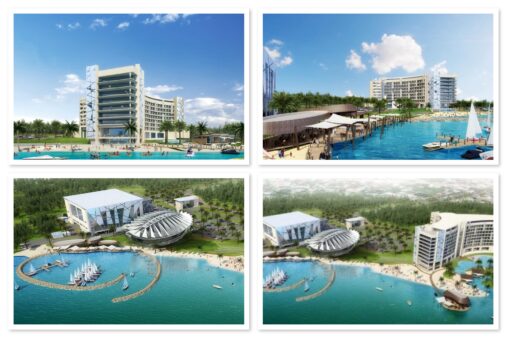
 Ruparelia Group Wins Key Entebbe Land Case, Clearing Path for the New Mega Speke Resort and Convention Centre, Entebbe
FDC proposes expanding and maintaining road networks, reviving rail, and investing in water transport to cut costs and open new trade corridors.
On energy, the manifesto notes that despite increased generation capacity, many households and small firms face unreliable supply and high tariffs.
The party pledges to accelerate renewable energy projects, particularly solar and small hydropower, to provide reliable and affordable power.
Social equity
The manifesto insists that growth must be inclusive. It highlights youth unemployment, regional inequalities, and underfunded services as signs that too many have been left behind.
To address this, FDC promises to allocate more funding for education, healthcare, and social safety nets, alongside targeted investments in underserved regions.
The manifesto illustrates FDC’s “production-led growth framework.”
Agriculture feeds industry, which drives trade and exports. These, in turn, generate revenues for social services, which build human capital to sustain productivity.
Reading the numbers
The most striking part of the manifesto is its set of economic projections.
Between 2016 and 2024, Uganda’s economy grew at 4–5%. FDC says its policies could raise this to 7–8%.
Public debt, which ballooned from under UGX 20 trillion to more than UGX 90 trillion in the same period, would be stabilised and gradually reduced.
Industry’s share of GDP, stuck at 20%, would be lifted above 30%.
Youth unemployment above 60% in some areas is presented as the strongest case for urgent reform.
These figures are meant to dramatise the contrast between a stagnant present and a more dynamic future if the FDC’s programme is adopted.
Challenging the status quo
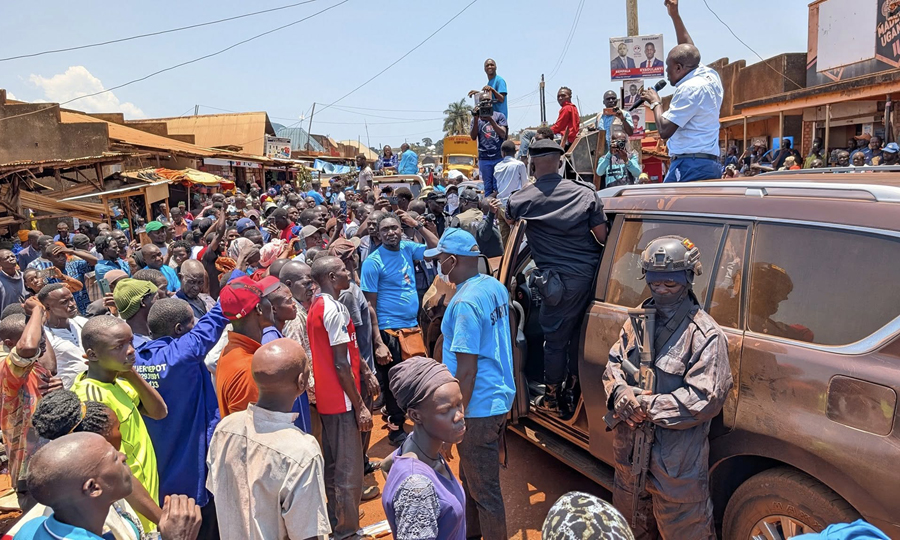
Though the manifesto does not name individuals, its critique is clearly aimed at the ruling National Resistance Movement (NRM).
It argues that despite investments in roads and electricity generation, Uganda has not achieved structural transformation.
Tariffs remain high, power is unreliable, and industry is weak. FDC contrasts this with its promise to invest in production-driven sectors that can create jobs and build export capacity.
Questions of feasibility
The plan, however, raises questions of feasibility. Cutting borrowing while expanding social spending and industrial investment may strain resources.
FDC says savings from fighting corruption and cutting waste will fill the gap, but details on enforcement are limited.
Uganda’s dependence on aid and foreign capital complicates any sharp pivot to self-reliance.
Still, by offering detailed charts, projections, and targets, FDC has gone further than many opposition platforms in presenting a coherent alternative.
At its core, FDC’s manifesto is a call for Uganda to change course. Through a production-led model anchored in agriculture, industry, trade, and equity, the party says it can lift growth, cut debt, and create jobs.
Its manifesto paints a picture of stagnation under the current model, contrasted with projected expansion, fiscal stability, and agro-industrial growth under its plan.
As Uganda approaches the 2026 elections, FDC has put forward a comprehensive economic blueprint.
Whether voters see it as realistic or aspirational will be tested at the ballot box.