The Uganda Police has confirmed the arrest of nine officials from the Ministry of Finance, including the Accountant General, Lawrence Semakula, in connection with the alleged theft of over UGX 60 billion from the Bank of Uganda.
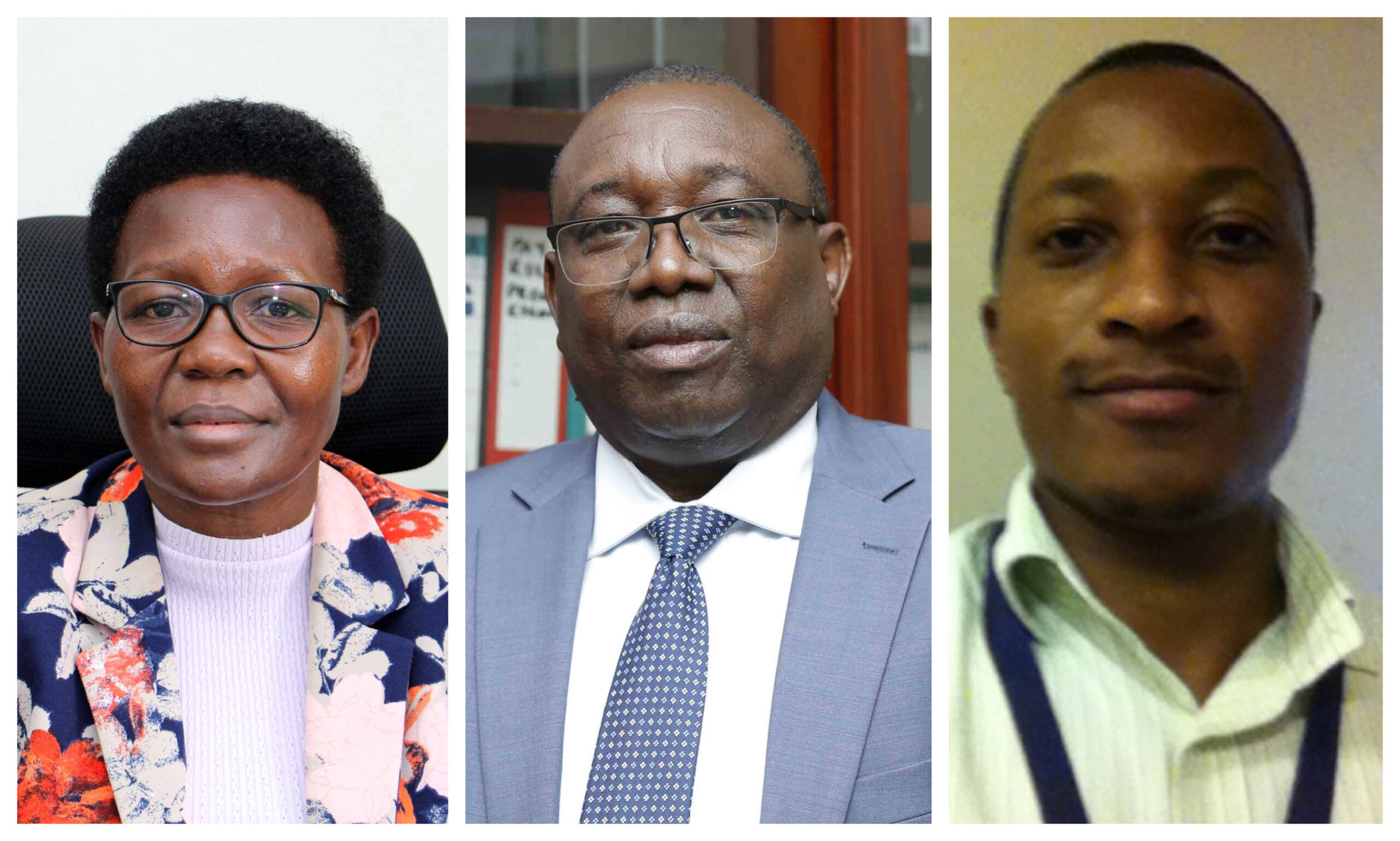
Rusoke Kituuma, the Uganda Police spokesperson, confirmed the arrest of other top officials, including Muhuruzi Jennifer, the Acting Director of Treasury Services and Asset Management in the Office of the Accountant General, and also the Board Director at Roko Construction Services.
Data obtained from the Ministry of Finance website and other private sources, such as LinkedIn, reveals details about the arrested officials.
For instance, Mubarak Nasamba, Assistant Commissioner of Accounts, has spent the last 10 years at the Ministry of Finance and once served as Principal Accountant in charge of Debt Management. Nasamba also had a short stint at the Judiciary in 2014.
Another official, Tonny Yawe, is an IT professional at the Ministry of Finance and a graduate of Mbarara University of Science and Technology. In 2012, while working as a systems administrator at the same ministry, Yawe was quizzed by the Police over the fraudulent transfer of 20 billion shillings from the Office of the Prime Minister (OPM), which was meant for the Peace, Recovery and Development Program (PRDP) in Northern Uganda.
Lumala Paul is also an Information Technology Systems Officer who has spent the last 16 years at the Ministry of Finance. Kasiiku Mark is an IT specialist who has spent the last 7 years at the Ministry of Finance, and Bettina Nayebare is an accountant who has spent the last 9 years at the Ministry of Finance.
Other staff include; Kusiima Deborah, a senior accountant and Ashaba Judith, whose details we couldn’t confirm by press time
“By the time the Police holds you, then that means internally you’re highly suspected to be connected to the loss which we feel was fraudulent in nature,” Rusoke told the CEO Magazine.
On January 9th, the CEO Magazine reported that Uganda Parliament Speaker Anita Among had forwarded the Auditor General’s forensic audit report on the alleged loss of over UGX 60 billion from the Bank of Uganda (BoU) to the Uganda Police Directorate of Criminal Investigations (CID) for further investigation.
Speaker Anita Among sent the report to the CID after it was laid before Parliament by the Government Chief Whip, Hon. Denis Hamison Obua, on Thursday, January 9, 2025.
The Speaker noted that she consulted with President Yoweri Museveni and a decision was taken to investigate the report further.
“Looking at the ingredients of the report, they are criminal in nature and because of their criminality, we will direct this report to the CID for further management,” she said.
The Speaker also declined requests by Ndorwa County East MP, Hon. Wilfred Niwagaba and Tororo North County MP, Hon. Geofrey Ekanya to have the report scrutinised by committees of Parliament before the CID’s investigations.
“I thought that since this is part of the Auditor General’s report, it would ordinarily be sent to the relevant committee of Parliament, then later it is debated and we decide whether to send it to the CID,” Niwagaba pleaded.
The Auditor General’s investigation followed a request for a forensic audit by Parliament on 28 November 2024, when the Leader of the Opposition, Hon. Joel Ssenyonyi, raised concern about the loss of money from the Central Bank.
In November 2024, over UGX 60 billion had been lost from the BOU after hackers accessed the treasury system.
State Minister for Finance, Hon. Henry Musasizi later admitted in Parliament that the Central Bank accounts had been hacked but added that the figure lost was less than what had been reported.
The BoU Deputy Governor, Michael Atingi-Ego, appeared before the Committee on Commissions, Statutory Authorities and State Enterprises (COSASE) on 17 December 2024 and said that the fraudulent transactions resulted from a faulty order from the Ministry of Finance, Planning and Economic Development, leading to two debt servicing payments that were mistakenly paid to the wrong beneficiaries in Japan.
He added that BoU recovered US$ 8.2 million of the stolen funds.
Background
On December 9th, Parliament Watch Uganda, a monitoring initiative of the Centre for Policy Analysis, reported details on how the Accountant General, Lawrence Semakula, denied allegations of authorising the payment of UGX60 billion to Roadway Company in Japan and MJS International in the United Kingdom.
“We have reviewed our records and found no evidence of these beneficiaries being registered service providers for the Government. For any supplier to receive payment, they must be registered on the Government payment system, and these entities were not. This is a serious matter under investigation, and we aim to uncover the facts soon,” Semakula stated while addressing the Committee on Commissions, Statutory Authorities, and State Enterprises (COSASE) on December 18, 2024.
 Ruparelia Group Wins Key Entebbe Land Case, Clearing Path for the New Mega Speke Resort and Convention Centre, Entebbe
Central Bank Points to Finance Ministry
The Bank of Uganda blamed the Ministry of Finance for failing to confirm payments as required for external transactions. Charles Mugisa, the Central Bank’s Director of Banking, explained that the Bank operates under a service-level agreement with the Ministry, which mandates confirmation of transactions within a specific timeframe.
“When we process payments, electronic statements are sent to the Ministry of Finance for verification. If the Ministry does not respond by 4:00 PM on the same day, we consider the instructions correct. In these two transactions, no confirmation was received,” Mugisa told the Committee.
Timeline of the Transactions
Jennifer Muhuruzi, Accounting Officer for Treasury Operations, provided a detailed timeline of the transactions. She revealed that the payment intended for the World Bank, amounting to $6,134,137.75 (approximately UGX 22.6 billion), was initiated on September 9, 2024, and remitted to the Central Bank on September 12. Similarly, a payment of $8,596,824.26 (about UGX 31.65 billion) for the ADF was processed on September 20. However, it wasn’t until October 10, 2024, that the Ministry of Finance flagged discrepancies in the transactions, prompting a request for confirmation from the Bank of Uganda.
Parliamentary Scrutiny
The delayed discovery of the misdirected funds drew sharp criticism from MPs. Medard Sseggona (Busiro East) questioned the competence of both institutions, emphasising the public’s anxiety over the prolonged investigation.
“With such a significant amount of money at stake, why has it taken three months to identify the issue? Is this the best you can do?” Sseggona demanded.
In response, Semakula described the case as unprecedented and complex. He assured the Committee that a thorough investigation, including forensic audits and system reviews, was underway and expected to conclude within a month.
Call for Independent Oversight
Yusuf Nsibambi (Mawokota South) raised concerns over the credibility of the forensic audit, noting that the same institutions implicated in the saga had hired the Auditor General to investigate.
“The public demands accountability. How can the institutions at fault commission an audit without external oversight? This compromises the transparency of the process,” Nsibambi argued.
Nathan Itungo (Kashari South) criticised the Accountant General’s handling of the matter, accusing him of treating it with undue laxity.
“This appears to be an insider scheme. The casual approach to such a colossal financial loss is alarming. Internal controls should have detected this immediately,” Itungo said.
Ferigo Kambale (Kasese Municipality) echoed these sentiments, stating that the failure to identify the issue promptly reflects poorly on the Ministry of Finance’s internal controls.
COSASE Demands Documentation
The Accountant General’s office’s refusal to provide certain documents to the Committee further fueled tensions. Sseggona demanded full disclosure, pointing out that external auditors, including PricewaterhouseCoopers, had already accessed the documents.
“There is no document you can withhold from Parliament. We are the custodians of public funds, and we demand transparency. Provide the instructions for these transactions immediately,” Sseggona insisted.
Naome Kabasharira (Rushenyi County) supported Sseggona, arguing that without the documents, the Committee could not verify claims made by either institution.
The UGX60 billion heist has exposed significant lapses in the Government’s financial controls and raised concerns about accountability within key institutions. As investigations continue, both the Ministry of Finance and the Bank of Uganda face mounting pressure to restore public trust by ensuring a transparent and independent audit process.