In an extraordinary act of shareholder resolve, a majority of the minority investors in Uganda Breweries Limited (UBL) stood their ground against a high-stakes buyout offer from East African Breweries Limited (EABL), rejecting what was marketed as a generous cash-out opportunity.
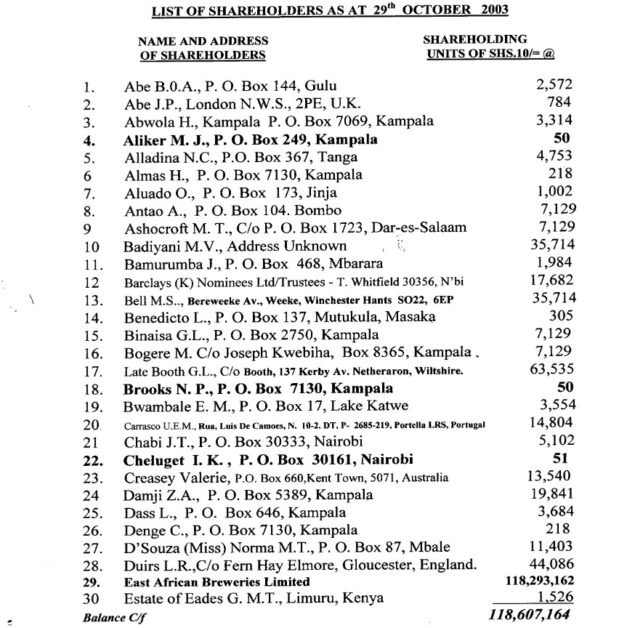
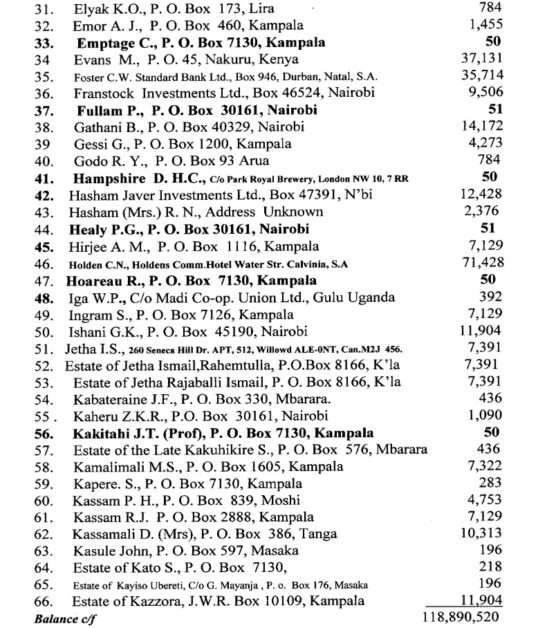
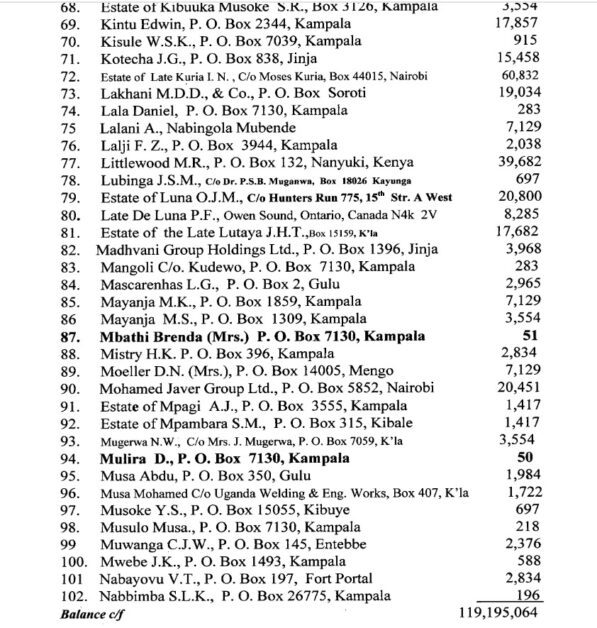
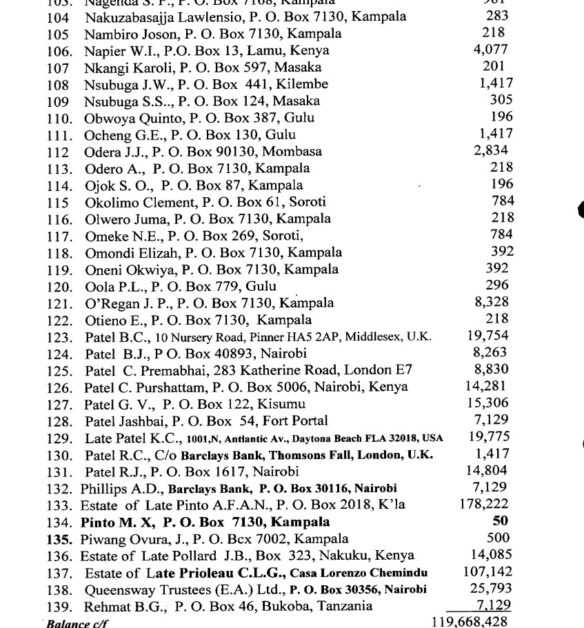
Now, through extensive research and access to regulatory filings, CEO East Africa Magazine can reveal the names behind the two sides of this gripping corporate showdown – those who sold, and those who refused.
The high-stakes offer
In September 2024, EABL – already holding a 98.19% stake in UBL – launched a final push to acquire the remaining 1.81% of shares, offering UGX 5,630 per share to achieve full ownership.
The deal was sweet, backed by a generous valuation of UBL at UGX670.4 billion, based on an assessment by accounting firm Mazars BRJ.
With only 2.18 million shares left in the hands of approximately 165 minority shareholders, EABL expected to complete the mop-up effortlessly.
Instead, only 151,156 shares were tendered in response to the offer, and after regulatory vetting, a mere 78,268 shares were accepted, pushing EABL’s stake marginally from 98.19% to 98.32%.
Regulatory filings tell the story of the majority of minority refusing to let go of their shares.
Who sold
According to filings obtained by CEO East Africa Magazine from Uganda Registration Services Bureau (URSB), slightly nine shareholders – individuals and families – sold a combined 136,322 shares to EABL, receiving over UGX 730 million in total:
- Damji Zarin Begum – 19,841 shares
- Elizabeth Kibuuka-Musoke – 3,554 shares
- Malcolm John Warrack – 19,034 shares
- Samir Bipin Gathani – 14,172 shares
- Aliyulah Husainali Jetha Ismail – 7,391 shares
- Lilian Alwedo – 1,455 shares
- Lesley Margret Russel Bell, Simon Christopher Russel Bell, and James Alan Russel Bell – 35,714 shares
- Mawji Amin Mohamed – 10,311 shares
- Innocent Muhangazi – 24,850 shares (filed in three separate entries)
Notably, these transactions represented less than 8% of the total shares of the 2.18 million EABL had targeted.
The majority of shareholders declined to part with their equity.
Who refused
Through an exhaustive review of UBL’s 2003 shareholder register, matched against 2024 transaction data, CEO East Africa Magazine identified at least more than 85 shareholders who declined to sell.
These include some of the most historically loyal investors – individuals, families, and entities – who have held onto their shares through decades of political and economic change.
Among the notable names who held out:
- Estate of the Late Kuria I.N., with 60,832 shares
- Littlewood M.R., based in Nanyuki, Kenya – 39,682 shares
- Holden C.N., of Calvinia, South Africa – 71,428 shares
- Mohamed Javer Group Ltd – 20,451 shares
- Estate of Luna O.J.M. – 20,800 shares
- Madhvani Group Holdings Ltd, one of Uganda’s most prominent industrial families – 3,968 shares
- Hirjee A.M., Kampala – 7,129 shares
Most of these investors cited UBL’s strong financial position, consistent dividend history, and the brewer’s growing market share in spirits and premium drinks as reason to stay put.
Not Just about the money
David Bateme, a research analyst at Crested Capital, says the mass refusal was about far more than valuation.
“UBL is a rare asset in Uganda’s corporate landscape – profitable, growing, and diversified. No rational investor would walks away from that lightly,” he says.
UBL’s robust financials support this sentiment.
In recent years, the brewer has seen increased growth in its spirits portfolio, driven by brands like Uganda Waragi, Johnnie Walker, and Smirnoff, appealing to a younger, premium market segment.
With strong cash flows and market resilience, UBL has proven to be more than just a legacy holding – it’s a high-value growth asset.
 World Bank bans PwC Africa, Rwanda and Kenya affiliates from Bank Group-financed projects over fraudulent practices
EABL’s quiet move – and a stubborn resistance
EABL’s motivations for the full acquisition may have been twofold: streamline its ownership structure and increase its control over one of its most profitable subsidiaries.
UBL contributes about 21% of EABL’s group revenue, second only to Kenya.
But in Uganda, loyalty runs deep. Some analysts speculate that following the passing of UBL’s long-serving board chairman Dr. Martin Aliker, who may have held influence or shares within the group, EABL saw an opportunity to consolidate.
Still, the resistance has now become a powerful statement.
“This is a victory for local shareholder confidence,” said Simon Mwebaze of Cornerstone Asset Managers. “What we’re seeing is an educated investor base choosing long-term value over short-term cash.”
The lesson
While only a handful cashed out, the vast majority chose to keep their stakes—an endorsement not just of UBL’s performance, but of Uganda’s broader business resilience.
For EABL, the message is clear: even with money on the table, the hearts – and shares- of some companies are simply not for sale.
Results of the offer
On September 3, 2024, EABL published a tender offer to acquire 100% of UBL.
The offer had attached a value of UGX12.3b on the 2.18 million ordinary shares, which translated to 1.81% of UBL’s total share capital.
At the time, EABL owned at least 98.19 percent of UBL.
An offer of Shs5,630 per share – significantly higher than the then share price of UGX 4,388.24 – had been placed – a premium for minority shareholders – who are mostly retail investors.
But results released in April indicated that the offer had fallen short of the target, realising just 7.9% of the 2.18 million shares EABL had hoped to buy.
EABL indicated it had received sale offers of just 151,156 shares.
URSB regulatory filings indicate that 136,322 shares have since been transferred from individuals and families.
This, therefore, means that EABL increased its holding in UBL to 118,444,469 ordinary shares or 98.32% of the issued ordinary shares, which represents an increase of 0.13%.
Market analysts say the offer could have collapsed because some shareholders felt that EABL could have undervalued their shares, while others could have decided to hold onto their holding to continue sharing into the company’s growing profitability.
EABL had earlier hired Mazars BRJ, an independent valuer, to assess the value of its Ugandan subsidiary, which returned a valuation of UGX 670.4b, slightly higher than the UGX 659.2b EABL had recorded as book value.
It is from this that EABL priced the offer at UGX 5,630 per share, in an offer that opened on September 3, 2024.