What is the Institute of Certified Public Accounts of Uganda and what does it do?
The Institute of Certified Public Accountants of Uganda (ICPAU) is a member based professional accountancy body established in 1992, with the mandate to regulate the accountancy profession in Uganda. ICPAU’s mandate is to: regulate and maintain the standard of accountancy in Uganda and prescribe and regulate the conduct of accountants in Uganda.
In executing the above mandate, ICPAU performs various activities, including prescribing accounting standards for use by the various sectors of Uganda’s economy; ICPAU adopted the International Financial Reporting Standards (IFRS) in 1998, International Standards on Audit in 1999, International Public Sector Accounting Standards (IPSAS) in 2006 and IFRS for SMEs in 2009, and is now developing syllabi for accountancy courses for the Certified Public Accountants (CPA) and the Accounting Technicians Certificate (ATC) course.
CPA is the professional course for accountants while ATC is the course for accounting technicians. We also admit members to the Institute, prescribe a Code of Ethics and ensure strict adherence to its clauses (This includes disciplining errant members), license practitioners of accountancy, inspect audit firms under the audit monitoring programme and offering professional advice to members among other things.
What does it take to become an ICPAU member?
To become a full member of ICPAU one must either: have completed the Certified Public Accountants of Uganda CPA(U) course and attained the requisite 3 years of relevant practical experience or be a member in good standing of any of the East African Community Institutes of Accountants (EACIAs) or be a holder of a foreign professional accountancy qualification with at least 3 years of relevant practical experience and have your qualification localised by attempting CPA papers that are unique and important for the profession in Uganda.
So, how would you describe/identify an accountant in Uganda? How many certified accountants does Uganda have?
In Uganda, and in accordance with the Accountants Act 1992, an Accountant must be a member of ICPAU and to be a member one must have a professional accountancy qualification such as Certified Public Accountant (CPA). Currently, ICPAU has enrolled over 1,800 Certified Public Accountants (CPAs).
1,800 seems a small number. What are you doing to increase the number of accountants in Uganda?
On paper, Uganda appears to have few accountants but many qualified accountants are under employed implying that either there are individuals who qualified and have never enrolled or their services are not being adequately consumed by the economy. Nevertheless, ICPAU is taking all possible measures to increase the number of registered accountants in the country. Firstly, ICPAU guarantees training and nurturing of professional accountants through; developing relevant curricular for accountancy courses, and conducting accountancy examinations.
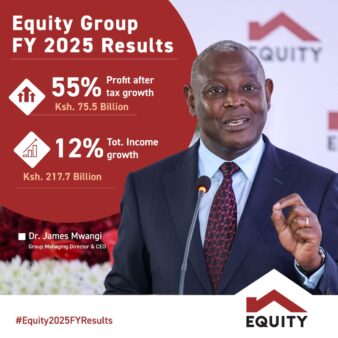
 Equity Group Posts Record 55% Surge in Profit to KSh75.5b: Uganda Bounces Back With 500% Growth in Net Profit - A Defining First Year for MD Gift Shoko
Every year, over 200 individuals qualify through the ICPAU education scheme to become accountants. ICPAU also provides career guidance to school and university students, educating them on the value of choosing accountancy as a profession in the development of our economy. We also ensure quality and professional conduct of existing accountants by; Conducting Continuing Professional Development (CPD) seminars throughout the year, to ensure that accountants are continuously updated regarding changes in accounting standards so that they remain relevant to the economy and ensuring compliance with the Code of Ethics for accountants and disciplining errant members.
What is the role of accountants in the growth of business and the economy at large?
Accountants I would say are the life blood of businesses. In the first place, they offer leadership and governance; accountants participate in strategy formulation and administrative policy formulation of organisations. They are the CEOs, MDs and CFOs of today’s lucrative businesses. Accountants make the best CEOs because they understand and appreciate finance which is the backbone of any business. Accountants are the trusted business advisers among many professions.
Accountants also offer resource management; they ensure efficient resource management through providing expert counsel on procurement and providing accurate accountability for resources, and provide finance counsel; they are the strategic business advisers of the economy.
They provide informed advice on investment decisions, expenditures, asset management, procurement, etc. Other roles of accountants include risk management and audits & assurance. Under risk management, accountants identify and control operational business risk and opportunities, e.g inflationary shocks, economic depressions and upsurge, etc, to ensure business growth and survival with respect to prevailing economic conditions.
Accountants control an organisation’s cash flows, record financial transactions and prepare reports. On audits & assurance, accountants review the financial statements and operating systems of an organisation to ensure that the financial records are a true representation of the transactions that transpired. Based on their finding, systems and controls are improved for the smooth running of organisations.
Despite ICPAU existence and efforts to professionalize accountancy, many Ugandans strongly feel accountants are the perpetrators of the high levels of corruption in Uganda. What measures have you put in place to control corruption and clean your image?
Firstly, we note that the accountancy profession over the years is being blamed in a number of cases for the wrong reasons. That problem arises from individuals who do not belong to the profession but hold out to the public as professional accountants. We must be cognizant of the fact that not all prepares of books of accounts are actually accountants. All professions have levels for example “Doctors