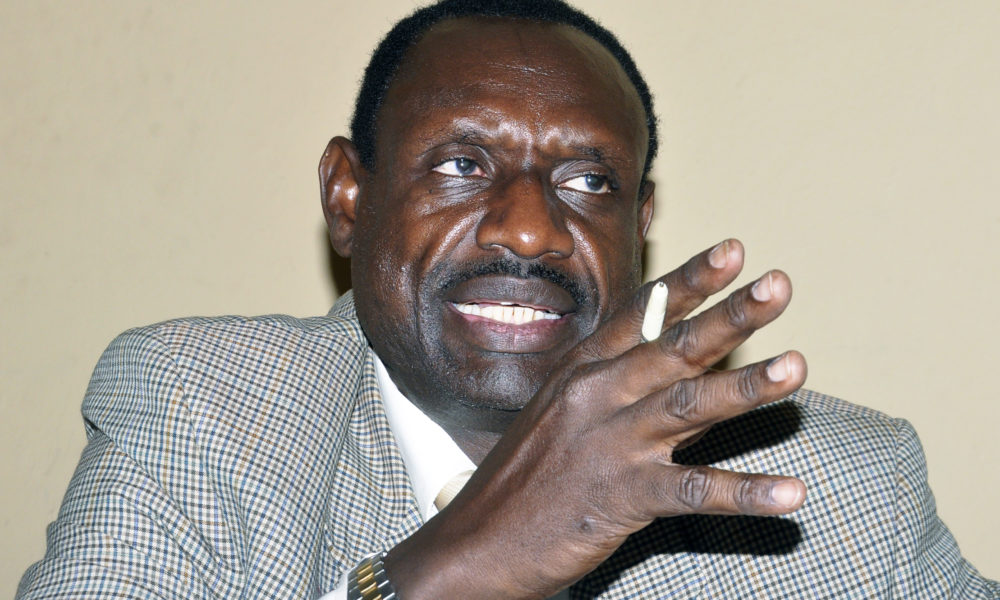
Lino Criel Icila, Secretary General Uganda Clearing Industry and Forwarding Association (UCIFA). Photo: Bruno Birakwate


Over the years, the government, with support from development partners, has invested billions of shillings into international trade facilitation. Injection of these endless funds are meant to improve the trading environment and consequently fetch more revenues from exports.

At the end of 2016, the government, together with TradeMark East Africa, rolled out the Uganda Electronic Single Window, a paperless platform that leverages technology to facilitate international trade through allowing for electronic submission of information, documentations and processing of import, export and transit-related trade documents and requests.

Today, more than 10 agencies involved in international trade are using this system. These include Uganda Coffee Development Authority, Uganda Revenue Authority, Ministry of Trade, and Ministry of Energy.

At the heart of cargo movements are clearing and forwarding agents.  The CEO East Africa recently had a candid discussion with Lino Criel Icila, the secretary-general of Uganda Clearing Industry and Forwarding Association (UCIFA).  He gave us his perceptive on the electronic single window and trade across the East African region.

Excerpts;-

Lino Criel Icila, Secretary General Uganda Clearing Industry and Forwarding Association (UCIFA). Photo: Bruno Birakwate

How was business like in 2017?

2017 had a lot of challenges because of the many changes taking place and several new incentives being implemented, all intended to ease doing business in Uganda and across the region. But as you know, whenever there are changes, there are always shortfalls which come along with them. So, for me, 2017 was more about trade processes improvement. It wasn’t the best of years though.

In November 2016, the Government launched the Electronic Single Window intended to improve trade through electronic submission and clearance of trade documents. Among the key trade stakeholders targeted by this system and Clearing and Forwarding Agents.  As the Secretary General of UCIFA, what are your views about the single window?

The Uganda Electronic Single Window is a very good facility because it is a single platform where you log all trade information at once through one point. Through the Single Window, you are able to access all the relevant agencies involved in international trade clearance. It actually cuts down the process of clearance. Unlike before when you had to move from one agency to another chasing for clearances, today you find everything in one place and one platform. Once you have logged the documents, all the other agencies can access them. You can even apply for relevant certificates such as certificate of origin through this system. Single window is also reducing human contact, thus curbing on corruption.

How many active members do you have in UCIFA and how many of them are aware of and using the Single Window for cargo clearance?

We have about 360 active members. Like I have told, you, some agencies have allowed joined the single window while others haven’t. Even us as UCIFA, we are also just getting on to the system. For now, we access the single window indirectly through the URA online portal. But even before we are able to fully access the entire system, what we have tested proves that it is a good development.

So, are your members aware of and using the Single Window?

They are aware but still need to be sensitised. Right now, they are accessing it from the URA system not directly through the one-point single window portal. We are at the early stage of usage.

We have some information that several clearing and forwarding players don’t like the single window because, it is reducing on their work and rendering them under-employed. What do you think about this?

That is not a correct perceptive. Single window doesn’t really have a direct impact on the jobs. It is a system of operation. Of course, it is true that with any automation, some processes are cut down thus the necessity to reduce staff. But it won’t be a very big impact. Because, even with the electronic system, there are still several things that still require man power. Electronic only does document logging, reading and accessing information and getting releases. Our staff still do physical verifications, cargo delivery and supervision among others.

Now that you are using this system, how do you compare the pre-Electronic Single Window (manual clearing) period with the current period (electronic clearing)?

There is certainly a big difference. Firstly, there is a significant reduction in the time involved in cargo clearance. It is about 30 per cent reduction in time taken. The system is also cutting costs of handling cargo because the faster the clearance, the lesser costs involved. It is making clearance work very fast and thus enabling us get paid on time. Clearing agents are paid when goods are delivered so when you deliver on time, you are paid immediately and when you delay, your payment also delays. In all the system is facilitating trade and benefiting all stakeholders.

Any challenges encountered with the Single Window so far?

We need to incorporate all the relevant agencies involved in international trade, ensure that all potential users are able to open up accounts, have their own passwords and thus manage their accounts. This will make it a very good self service system. If we can achieve this, it will be fantastic.

There is also a major challenge of network connect which is always interfering with the process. This system is dependent on the internet and thus poor network translates in to no work. Of course, we appreciate that the network issue is a general problem that needs to be solved by the entire government.

The single window system is easing doing business for traders.

If you met the MD of TradeMark East Africa (project funder) and Ministry of Trade (Lead Agency), what would you tell them in regards to making this system better?

The first thing is getting everybody on the system. All agencies and stakeholders involved in international trade should be using the single window. TradeMark, Ministry of Trade and URA have done a good ground work job. I thank Trademark for the funding and Trade Ministry for leading this incentive. But now they should work towards having everyone on board.

The other issue would be the network problem. Because, if all agencies are integrated on the system and network fails, then there would be a very big problem.

So, three things; fix network issue, have all agencies on board and massive sensitization so that all stakeholders move in the same direction.

As a major trade stakeholder, has the prolonged Kenya electioneering period affected business in Uganda, mainly transportation of goods from Mombasa to Kampala?

Well not so much. There was some interference but if you compared it to what happened in 2007, then it hasn’t affected so much.  This time, people have only been careful and monitoring all developments in Kenya. Since we are now on the single customs territory, we just do our declarations and the goods are transported here.

The only problem we are having now is disappearance of goods between Mombasa and our borders. We have had some incidences of goods leaving Mombasa and not reaching Malaba.  That is direct theft and sabotage. It seems like some people identify some high-end goods and they make sure they don’t reach Uganda. These are isolated incidences but they are happening.

In case of instability in Kenya, is Tanzania a reliable alternative for cargo transportation?

Certainly yes. We are exploring that possibility. In this business, we must always have an alternative – option B. The challenges we have had in Tanzania are distance because Dar el Salaam is very far, Tanzania has also been having problems with their roads and lastly problems connecting with Port Bell in case you are to use water transport.

The good thing though is that Tanzania is trying to solve these issues through improving their roads and also constructing an inland port in order to cut the distance involved for us. For us, we are happy when both Kenya and Tanzania have the infrastructure because, it gives us an alternative in case of any emergency.

What is your view about the Standard Gauge Railway in regards to goods transportation? Should Uganda connect to Kenya SGR or Tanzania SGR?

We are at cross roads so we need both Kenya and Tanzania. Much as Kenya is working on its SGR and will even connect to Uganda faster, we need to appreciate that trade increases every other day so we still have a problem of volumes. You can’t solely relay on Mombasa because there will always be congestion as cargo increases every year. There is always a need of an alternative as this will safeguard us from monopoly problems.  We can’t choose one over the other. Instead we shall use both.

As an East African Citizen, what is your view about regional integration, considering that Kenya and Tanzania continue to fight for the control of the region?

When you talk about East African integration, you are talking about a very beautiful thing. There are protocols that specify what this should be. If we were living by this, then it would be a wonderful thing.

Problem is we have conflicting national interests and issues. This is killing the integration spirit. Whenever there is a conflict, there is somebody who suffers. In this case, when there are misunderstanding between Kenya and Tanzania then it is us that suffer because their issues impact our business.

Actually, it would have been better if we could have started with political integration as this would address the political problems and enable the other things.

From where I sit, a lot needs to be done for the integration dream to be achieved.

Tagged:

Leave a Reply

beylikdüzü escort