

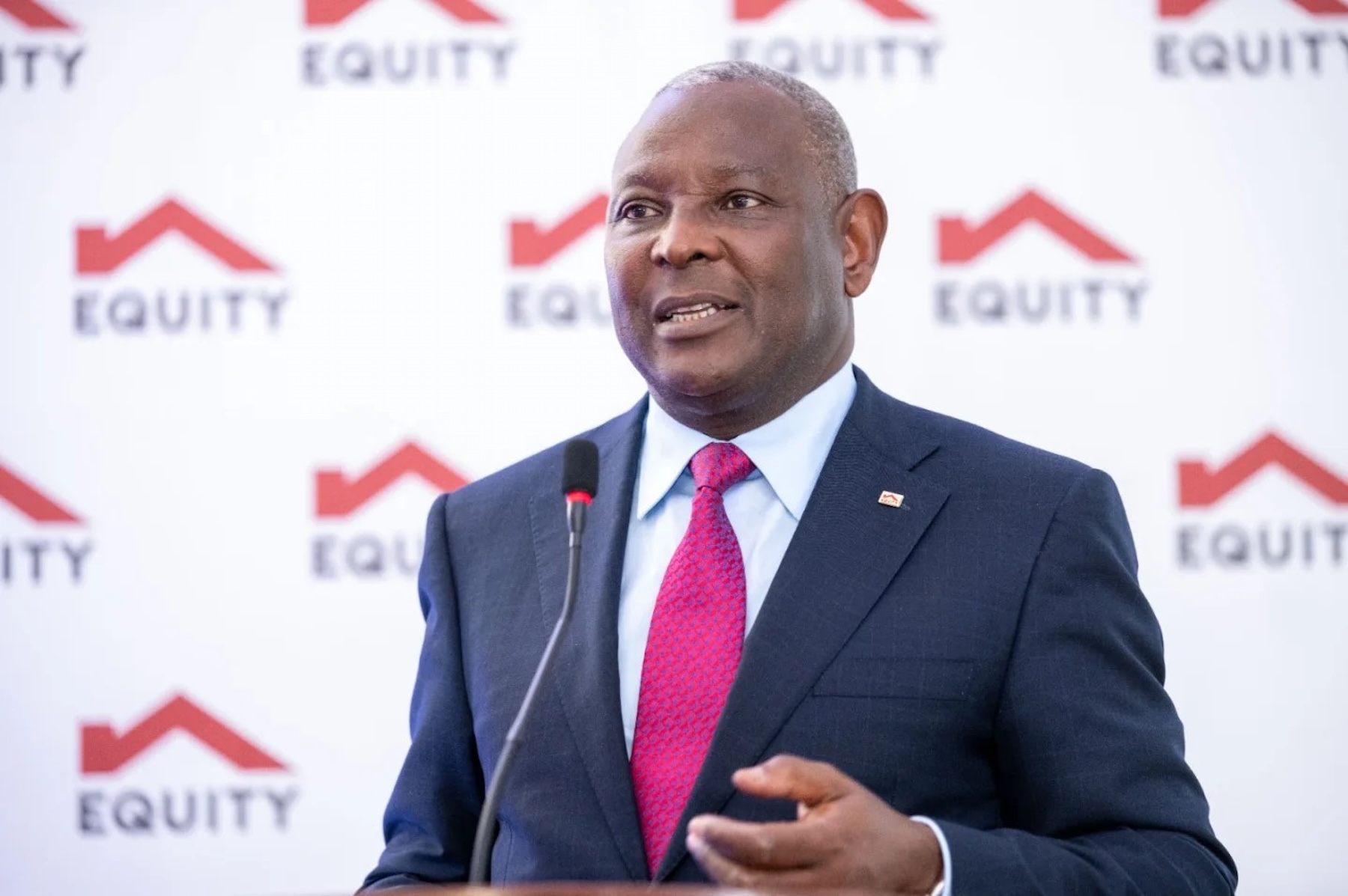
In a region where internal financial fraud is both rampant and routinely swept under the rug, James Mwangi’s bold decision to confront it directly within Equity Group is a powerful—and all too rare—example of leadership with integrity.
Rather than excuse or quietly cover up unethical behaviour, Mwangi has launched an unprecedented internal audit across all Equity Group subsidiaries, starting with Kenya—where over 1,400 employees were purged—and now extending into Uganda, Rwanda, Tanzania, and South Sudan. His approach: full transparency, public accountability, and zero tolerance for staff who exploit their positions to solicit bribes or manipulate customer accounts.
And the need for such action is undeniable.
The PwC Global Economic Crime and Fraud Survey – Eastern Africa Report 2022 found that 38% of all reported fraud in Eastern Africa is committed by internal perpetrators, most often middle managers and junior staff. Meanwhile, only 16% of organisations that experience fraud report it to law enforcement—a culture of silence driven by fear of reputational harm and distrust in the justice system.
The Uganda Police Annual Crime Report 2024 reveals that internal fraud is widespread:
- 1,126 cases of forgery,
- 221 of embezzlement, and
- 124 of false accounting were registered in 2023 alone—costing billions in public and institutional losses.
Internal actors such as bank staff, bursars, and accountants were frequently cited, and most cases only came to light through audits or whistleblowers.
Yet if further evidence was needed of the scale and gravity of the challenge in Uganda’s financial sector, it was provided at the Financial Fraud Forum 2023, hosted by the Uganda Bankers’ Association (UBA). According to UBA Executive Director Wilbrod Owor and Sarah Arapta, the association’s the Chairperson:
“From 2017 to 2022, UBA members reported a cumulative loss of at least UGX 43.6 billion in cash and value equivalent due to fraud,” Arapta revealed, noting this figure excludes mobile money fraud, as mobile money operators are not UBA members.
Of this total:
- 42.4% was due to impersonation, identity theft, forgeries, and cash suppression,
- 31.9% stemmed from cyber, digital and payment fraud, and
- 25.7% involved loan fraud.
In 2022 alone, UBA members reported 206 fraud incidents—a number Arapta described as “grossly underreported.”
“The number of incidents must have been much higher than was reported. But it is very revealing to indicate that 91% of attempted cases resulted in a loss,” she noted, with mobile and agent banking, as well as loan impersonation fraud, leading both in frequency and in financial damage.

Her warning was stark:
“The impact of fraud on financial institutions is immense—not just in monetary loss. It damages customer confidence, trust from stakeholders and regulators, and increases regulatory scrutiny. All these contribute to higher costs of doing business, eventually passed on to customers in higher interest rates.”
 Stanbic Accelerates Uganda’s Digital Future with “Kikole Ku Speedii” Campaign
This is the context in which Mwangi’s crackdown must be understood—not as a disciplinary wave, but as a corrective movement to restore integrity in an industry dangerously close to normalising its own rot.
Mwangi’s Moment of Reckoning
Speaking during the Q1 2025 results briefing, Mwangi declared:
“It doesn’t matter how many I will lose. I don’t even care. I have just started the journey.”
“I will protect the customers and the bank. If you have ever eaten mama mboga’s chicken, the moment of reckoning has come.”
And he meant it. Equity Bank has already sent “show-cause” letters to staff in Uganda, asking them to explain questionable payments received on the same day as loan disbursements. These aren’t symbolic acts—they are part of a new institutional ethic being built in real time.
“The currency of the financial sector is trust. I made a promise to mama mboga that when they come, they will get a loan. Taking mama mboga round because she has not paid ‘lunch,’ I won’t take it,” Mwangi said—a quote that now echoes as a mission statement for ethical banking in Africa.
A Model for Others
While other institutions conduct integrity reviews in silence—or avoid them altogether—Equity’s choice to self-police and fight the vice from within, openly and decisively, is revolutionary. Mwangi has proven that the path to reputational recovery is not secrecy, but sincerity—and that restoring trust begins with confronting uncomfortable truths head-on.
By institutionalising integrity audits, tying them to staff appraisals, and committing to replace—not retain—rogue actors, Mwangi is reshaping the culture of one of Africa’s largest financial institutions. He’s not waiting for the problem to escalate; he’s dismantling it from within.
And in doing so, he poses a clear question to the rest of East Africa’s financial sector:
Will you follow suit? Or will you continue to pretend everything is fine?
At CEO East Africa Magazine, we salute James Mwangi for choosing integrity over optics. He has shown that in the fight against financial crime, it is possible—and necessary—to lead from the front, even when the spotlight is harsh and the stakes are high.
This is the leadership East Africa deserves.