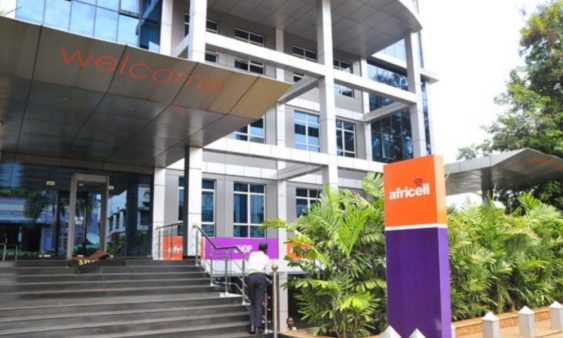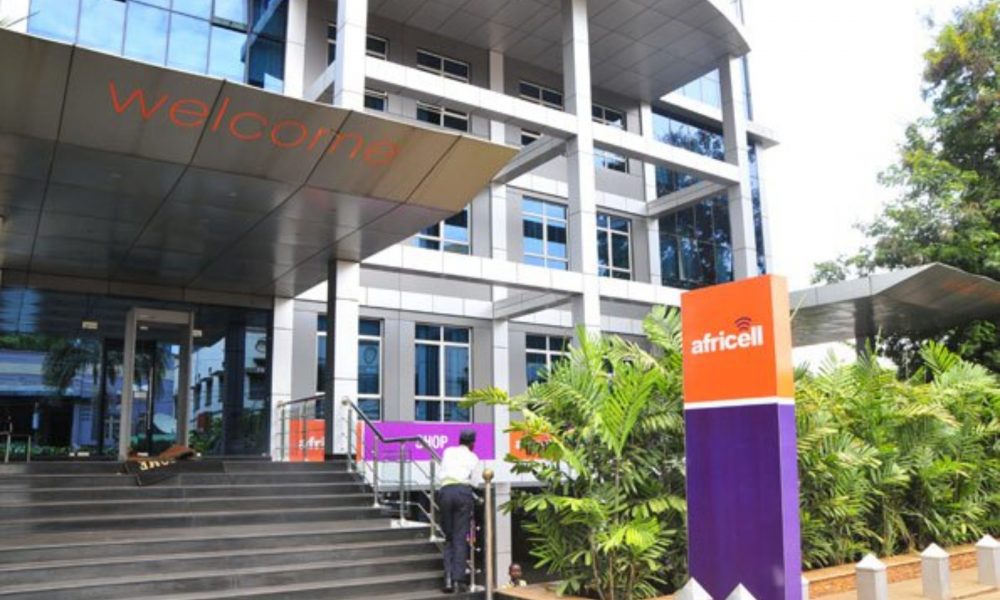
Employees of telecommunication operator Africell are in a state of panic as the telecom is said to be winding business in Uganda, leading to hundreds of job losses.
“The employees know that they will have to go home and so some of them are consulting legal professionals on the way forward,” a source close to the telecom told CEO East Africa Magazine.
The move to exit Uganda has largely been accelerated by a difficult business environment brought about by the Covid-19 pandemic, although the telecom itself was already in free-fall.
In September 2019, the CEO East Africa Magazine reported about how Africell was struggling having accumulated over UGX1.5 trillion in losses and UGX258.3bn in debts. Some of the losses were inherited from their predecessors, Orange Uganda whose operations they took over in 2014.
We also do understand that Ziad Daoud, who came in June 2019 to stabilise the telecom, also quietly left the company in March 2021, under unclear circumstances. He was replaced by Houssam Jaber the former Africell Sierra Leone Chief Operating Officer who only arrived in the country in November 2020 as the Africell Uganda COO.
When CEO East Africa spoke to Houssam on the phone, he declined to comment on the matter.
“I do not have any comment,” he said.
This website has corroborated the news of the exit with several industry sources, who have all confirmed the unfortunate news but requested not to be quoted.
Some of the big debts were owed to Eaton Towers and ATC Uganda, the two biggest operators of cell towers in Uganda, who at some point had to switch of the telecom operator over unpaid bills. It took the intervention of the Uganda Communications Commission to switch them back.
Africell Holdings, mid-2014 acquired then Orange Uganda at an undisclosed sum, a move questioned by analysts, given that Orange, part of a bigger and more experienced Orange Group had failed to meaningfully penetrate the Airtel Uganda and MTN Uganda duopoly.
 Ruparelia Group Wins Key Entebbe Land Case, Clearing Path for the New Mega Speke Resort and Convention Centre, Entebbe
At the time Orange quit, they were faced with UGX771.8 billion in accumulated losses and with almost no significant market share gains to show for it.
Africell’s imminent departure follows the exit of Smart Telecom which closed operations in Uganda at the end of last month. Smart Telecom, owned by the Aga Khan Fund for Economic Development (AKFED), indicated that the effects of the Covid-19 was the last straw that broke the camel’s back.
Africell’s pending exit comes on the back of South African retail giant Shoprite’s exit-in-progress, after more than 20 years of operating in the country. Unconfirmed market reports indicate that another South African retailer Massmart, the parent company of Game Stores has announced plans to also exit East Africa, including Uganda.
Airtel and MTN duopoly
The telecom industry in Uganda continues to be dominated by MTN which recorded its 15 millionth subscriber last month and marked the milestone by handing over UGX15 million to the subscriber. Available statistics show that MTN commands 46% of the market share while Airtel commands 44%. Africell comes in a distant third at 9%.
Telecom sector performance
Amidst a global pandemic and associated national lockdowns, the sector showed extreme resilience posting a single-digit quarter-on-quarter drop of 7% in revenues.
The Uganda Communications Commission Market Performance Report of the second quarter of 2020 says this followed a record quarterly revenue performance of UGX 1.05 trillion in the first quarter of 2020.
This resilience in light of the extreme economic circumstances is indicative of economy-wide dependence on ICTs and changing consumer expenditure patterns.