
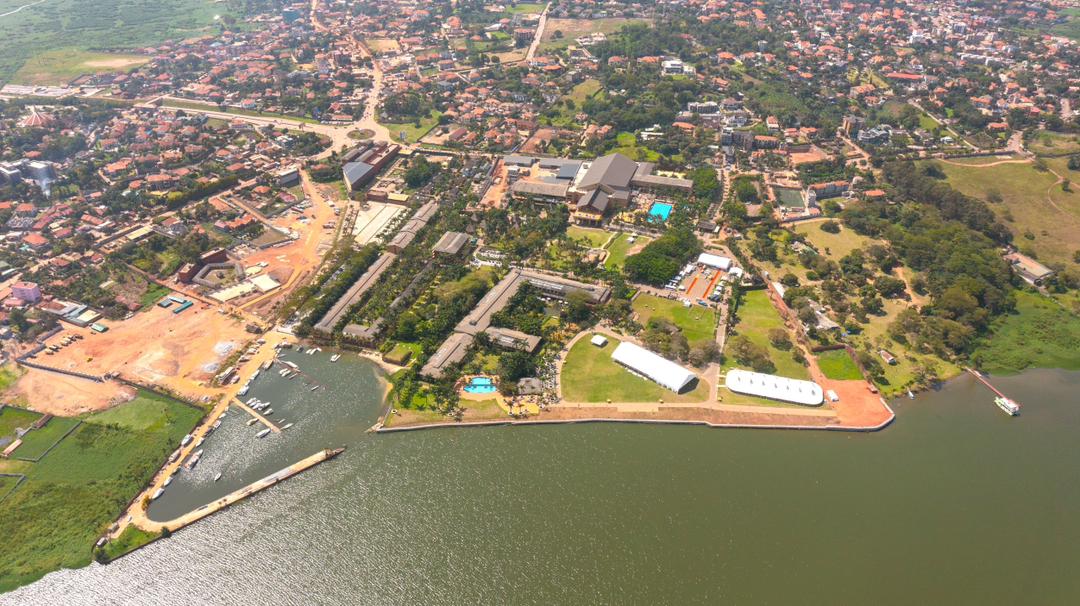
Every Easter, Kampala faces a familiar dilemma: stay in the city or escape it.
Speke Resort Munyonyo is betting that you can do both.
Through a carefully curated Easter campaign, the lakeside resort is not merely selling rooms or brunch—it is packaging an entire holiday experience into a single destination. From as early as Friday through to Easter Monday, the resort transforms into a multi-layered ecosystem of family entertainment, dining, and soft luxury.
At the heart of the campaign is a simple but powerful idea: Easter is no longer just a day—it is a weekend experience.
A Holiday Reimagined as a Journey
Rather than focusing on a single marquee event, Speke structures Easter as a progression.
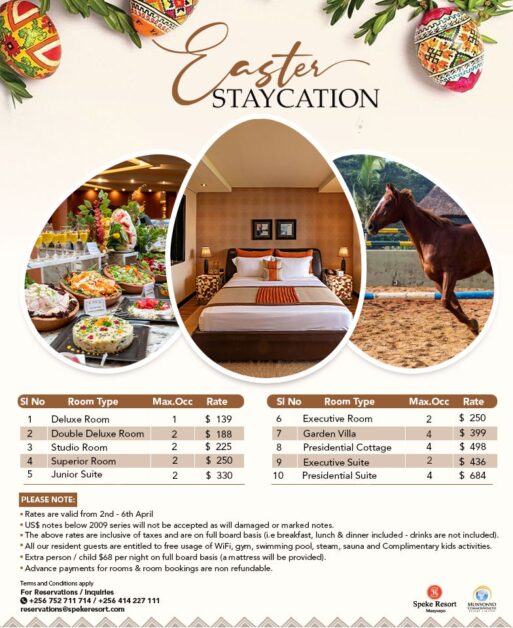
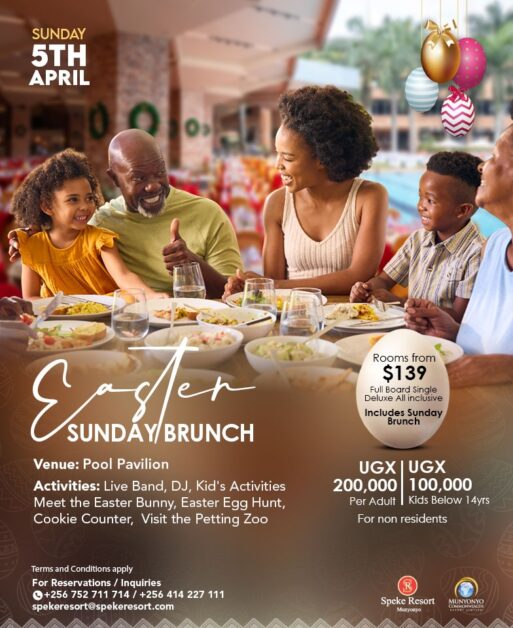
Good Friday opens with relaxed entertainment—live bands, lakeside dining, and evening bonfires—easing guests into the holiday mood. By Sunday, the experience reaches its peak with an elaborate Easter brunch, complete with egg hunts, children’s activities, and appearances from the Easter Bunny. Monday then offers a softer landing, with family-friendly activities designed for relaxation rather than spectacle.
The sequencing is intentional. It encourages longer stays, deeper engagement, and ultimately, higher spend per guest.
The Rise of the Staycation Economy
Pricing reveals another layer of strategy.
With entry-level rooms starting at $139 and premium suites stretching beyond $600, the resort captures a wide economic spectrum. Yet the real hook lies in the bundling: full-board meals, Easter brunch, recreational access, and children’s activities are all folded into the package.
The result is a shift in perception. Guests are not booking accommodation—they are buying an all-inclusive holiday.
This aligns with a broader trend in urban hospitality: the rise of the staycation. For Kampala’s middle and upper-income residents, the appeal lies in escaping routine without the friction of travel.
Designing for Families First
 I&M Bank Hosts Fire-Side Chat on Uganda’s Financial Markets in the Oil Era
If there is a single unifying thread across the campaign, it is family.
Children are not an afterthought—they are the centerpiece. From pony rides to petting zoos, movie nights to marshmallow bonfires, the programming is built around keeping younger guests engaged.
For parents, the value proposition becomes indirect but powerful: relaxation through children’s happiness.
This dual-layered design—activity for kids, leisure for adults—is what transforms the experience from a simple outing into a shared memory.
Beyond Overnight Guests: Opening Up the Easter Experience to Everyone”
Not every guest checks in.
By pricing brunch and event access separately—UGX 200,000 for adults and UGX 100,000 for children—the resort opens its doors to non-residents. This hybrid model allows Speke to maximise footfall while maintaining premium positioning for overnight guests.
It is a subtle but effective expansion of the revenue base: the resort becomes both a destination and an event venue.
Owning the Easter Narrative
Ultimately, the campaign does more than promote a holiday—it attempts to own it.
Through consistent visuals, family-centric messaging, and a clear multi-day structure, Speke Resort Munyonyo positions itself as the default answer to a seasonal question: Where should Easter be spent?
In doing so, it taps into something deeper than hospitality. It taps into ritual—the creation of an annual tradition.
And in the experience economy, tradition is the most valuable asset of all.