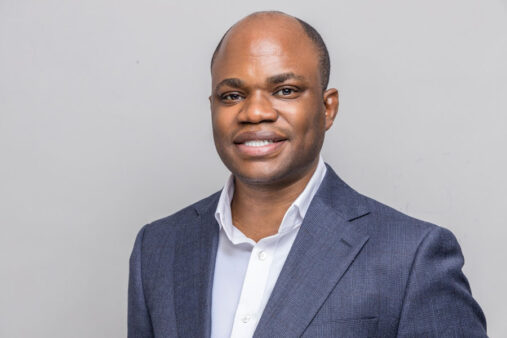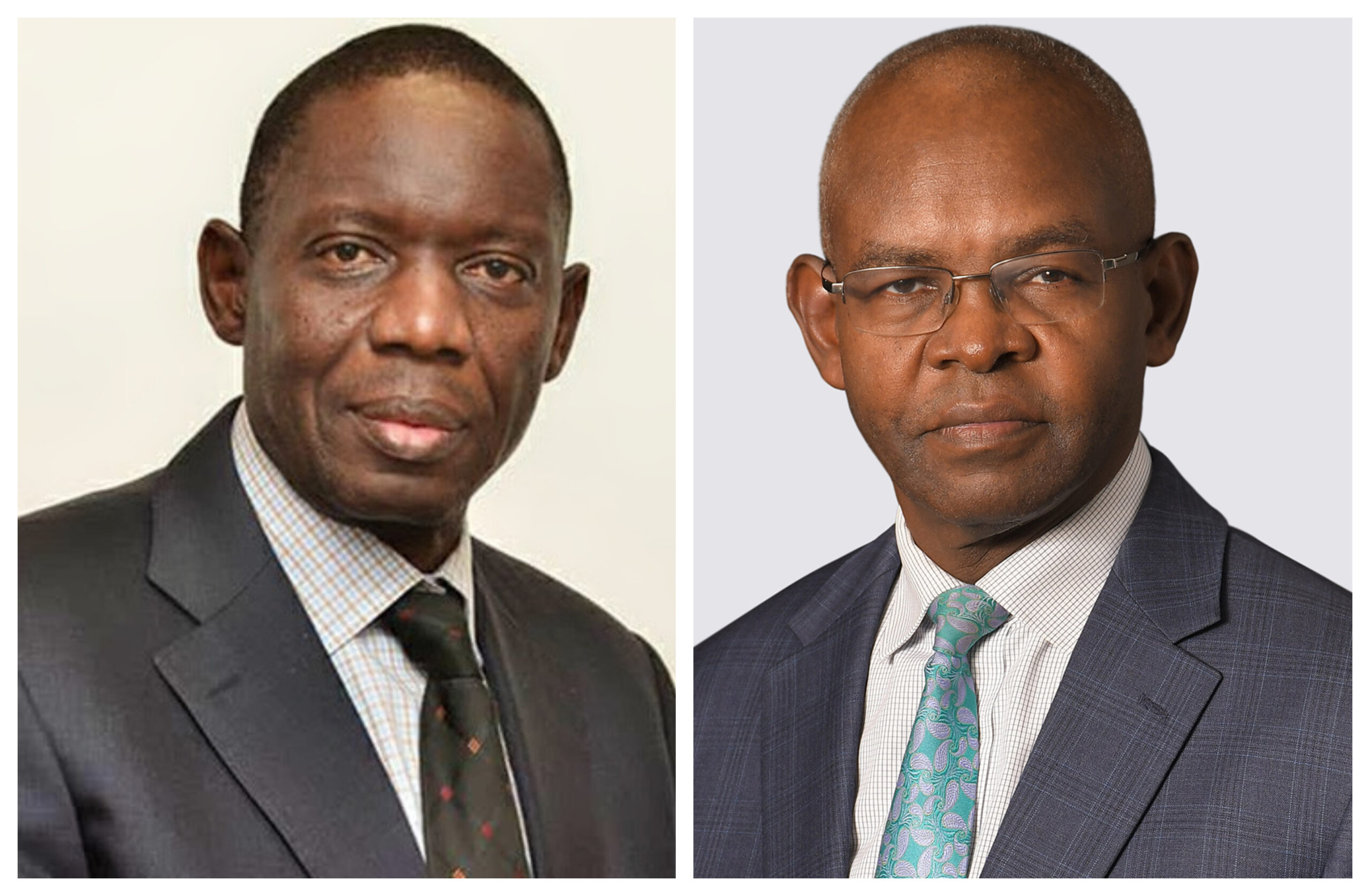
East Africa’s monetary chiefs, Michael Atingi-Ego of Uganda and Kamau Thugge of Kenya, have emerged among the world’s best-performing central bankers, according to London-based Global Finance Magazine’s 2025 Central Banker Report Cards.
Atingi-Ego received an “A-” while Thugge earned a higher “A”, reflecting their decisive responses to inflationary pressures, currency volatility, and debt headwinds.
The recognition underscores how both men, though operating in distinct national contexts, have anchored stability in a region where fiscal and external vulnerabilities remain acute.
For Uganda, the recognition of Atingi-Ego carries deep symbolism. Taking over the Bank of Uganda in 2022 after the death of long-serving governor Emmanuel Tumusiime-Mutebile, he inherited an economy wrestling with high inflation driven by global commodity price spikes and domestic supply bottlenecks.
His immediate priority was restoring stability, and he moved firmly to raise interest rates and anchor inflation expectations.
By July 2025, headline inflation had eased to 3.8 percent, with core inflation at 4.1 percent, both comfortably within the central bank’s medium-term 5 percent target.
In its August 2025 Monetary Policy Report, the Bank of Uganda maintained its key Central Bank Rate at 9.75 percent, signaling confidence that inflation was under control even as global uncertainties persisted.
The Ugandan shilling has also shown resilience under Atingi-Ego’s stewardship. It appreciated by 3.2 percent year-on-year, trading at UGX 3,587 per USD in July, buoyed by strong coffee and cocoa exports, mineral earnings, and remittances.
At the same time, growth momentum has strengthened. Uganda’s economy expanded by 6.3 percent in FY2024/25, up from 6.1 percent the previous year, with agriculture posting 6.6 percent growth and industry rising 7.0 percent.
Fiscal performance has improved as well, with the deficit narrowing to 6.1 percent of GDP thanks to a 16.1 percent rise in tax revenues, driven by corporate taxes and import duties.
Looking ahead, the central bank projects growth of 6.0–6.5 percent in FY2025/26, with scope to average 8 percent in the medium term if oil sector investments and infrastructure expansion proceed as planned.
Yet risks remain. Public debt remains elevated, fiscal pressures continue to weigh on macroeconomic stability, and the benefits of oil production are only expected to materialize in 2025 and beyond. Atingi-Ego himself has stressed vigilance, warning that while inflation is contained, upward pressures could return from global markets or domestic financing needs.
His “A-” grade thus reflects both the success of stabilizing Uganda’s economy during transition and the challenges that remain unresolved.
Thugge’s Decisive Approach in Kenya
In Kenya, Thugge’s “A” grade reflects his more aggressive, yet adaptive, approach to monetary policy. Appointed in 2023, he was immediately confronted with steep currency depreciation, inflationary spikes, and the strain of debt repayments.
He responded with sharp interest rate hikes and targeted foreign exchange interventions, which calmed markets and signaled CBK’s independence.
Inflation cooled to 3.8 percent in May 2025 and 4.5 percent in August, well within the target range of 2.5 to 7.5 percent. With price stability secured, Thugge cautiously pivoted, cutting the Central Bank Rate to 9.50 percent in August, marking the seventh consecutive reduction of the cycle.
 Ruparelia Group Wins Key Entebbe Land Case, Clearing Path for the New Mega Speke Resort and Convention Centre, Entebbe
The shilling has steadied around KSh129.24 per USD as of September 2025, supported by foreign exchange reserves of USD 11.17 billion—equivalent to 4.9 months of import cover, and resilient remittances, which rose 9.4 percent year-on-year to USD 426.1 million in August.
Liquidity conditions in the money market remain robust, with commercial banks holding KSh20.6 billion in excess reserves, while oversubscribed treasury auctions highlight investor confidence in CBK’s policy credibility. Growth, however, has been more subdued than in Uganda.
Kenya’s economy expanded by 4.5 percent in 2024, with projections for 5.3 percent in 2025, driven by agriculture, exports, and easing inflation pressures.
High debt levels and tight lending conditions continue to restrain private sector dynamism, underscoring the delicate balance Thugge must strike.
Nevertheless, his decisiveness in taming inflation, followed by measured easing, resonated strongly with global evaluators and earned him a higher grade than his Ugandan counterpart.
Africa’s Growing Monetary Credibility
The recognition of Atingi-Ego and Thugge mirrors a broader trend across Africa, where monetary chiefs are increasingly being acknowledged for their credibility in global markets.
South Africa’s Lesetja Kganyago and Ethiopia’s Mamo Mihretu also earned “A-” grades, while Morocco’s Abdellatif Jouahri secured a full “A”. Collectively, these results point to the growing stature of African central bankers as they manage inflation, currency pressures, and fiscal imbalances with professionalism and independence.
Globally, the highest “A+” honors went to Jerome Powell of the United States Federal Reserve, Christian Kettel Thomsen of Denmark, and Nguyen Thi Hong of Vietnam. European Central Bank president Christine Lagarde and Chile’s Rosanna Costa were also recognized for steady policy management during periods of global uncertainty.
For East Africa, the strong grades awarded to Atingi-Ego and Thugge matter beyond prestige. In Uganda, investor confidence is critical as the country prepares to harness oil revenues.
In Kenya, the CBK’s credibility remains central to maintaining market stability as the government grapples with fiscal consolidation.
Their recognition by a respected international publication signals to global markets that East Africa’s central banks are not only credible but also independent and capable of discipline in the face of political and fiscal pressures.
Ultimately, the 2025 report cards highlight that East Africa’s economic story is being shaped not just by politics but also by the professionalism of its institutions.
By earning global recognition, Atingi-Ego and Thugge have demonstrated that credible, decisive monetary stewardship can steady economies, attract investor confidence, and anchor resilience even in turbulent times.
Their success affirms a wider truth: in a region vulnerable to shocks, strong central banking has become the cornerstone of stability and growth.