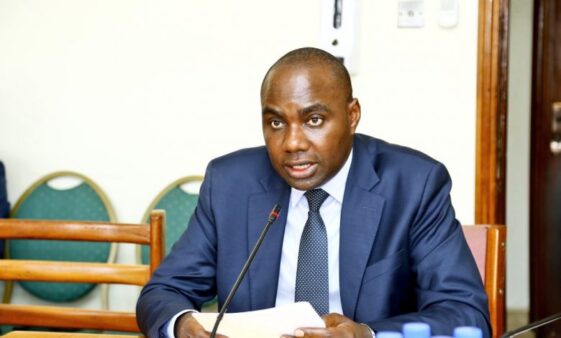
I know that in October you completed about 5 years as a Commissioner General You had the chance to work around the Corporate Plan of 2016/17 to 2019/20 whose focus was on cultivating a tax-paying culture. To what extent would you say you’ve been successful in cultivating that?
Yes, last year in October, I completed 5 years as Commissioner General and I have started on my sixth year. Altogether, these are about 16 years as a senior Executive at URA, having joined senior management team in 2005. I have been very much involved in the growth and expansion of URA and I have seen it evolve. As a Commissioner General, I have been at the forefront of implementing the corporate plan (2016/17-2019/20) which focused on driving compliance because compliance is what grows the tax revenue base and our answer to compliance was inculcating a tax paying culture.
In those economies that we admire; the reason they do not struggle to collect taxes is because everyone knows that they must pay their tax- there is a strong tax paying culture. It is an honour for someone to be seen to be compliant and that is the kind of culture that we want to introduce here- that is why we focussed our corporate plan and strategic direction on creating a tax paying culture.
We’ve tried to do that through understanding, what is it that affects people’s willingness and ability to pay tax-because willingness and ability, consistently is what creates a culture. Willingness has to do with, do they know their obligation? Do they even know that there is something called tax that they should pay? What kind of taxes are there that people are supposed to pay; the income taxes, the excise duties, import duties? We therefore have had to go full thrust into creating awareness, doing tax education around peoples’ obligation to pay taxes, the nature of taxes that have to be paid and the circumstances that lead to the taxes being paid.
It is important to draw the distinction between tax education and taxpayer education because tax education is what alerts you that when you go out to the market and you sell something you earn income; make a profit and therefore you’re supposed to pay income tax. Tax education reminds you that if you have a building that you let out to tenants and they pay you some money, you have to pay rental income tax. Taxpayer education on the other hand is for someone who is already a tax payer and addresses issues like: how and when do you file your tax returns? What must the return look like? Taxpayer education enables the tax payer to comply more conveniently at the right time and in the right amount.
Beyond just the tax education we also recognise that there are certain impediments to our businesses remaining alive or not being stressed by taxes and one of the biggest impediments is literacy- we can call it financial literacy, tax literacy, business literacy etc.; people are doing business but they are not doing business as business.

They have a passion, they have an interest- they saw someone else doing it and they go out and look for the capital and set up a shop. They are not able to distinguish between the capital and profit; they do not know how much money to re-invest or when it is important to re-invest. When they take out loans from the bank they do not know and or for whatever reason, they do not pay back these loans. They do not plan for taxes- they’ll plan for rent, they’ll plan for salaries, utilities etc., but they’ll not plan for taxes, they’ll not plan for insurance- some of those business essentials.
We’ve gone out to educate our business people that, you know when you’re going to do business, the government is a silent shareholder. The government will expect you to pay your tax when you earn profit. So, progressively that is something we have been doing.
How have all these tax paying culture initiatives, paid off? How does it look in terms of numbers? Is the culture coming through in terms of revenue corrected?
You can tell culture through change in behaviour- change in behaviour is one of the quickest ways to tell/talk about culture. We believe there is a beginning of a cultural change because now we see people coming forward voluntarily to say, look, I have not been doing this and I want to do it. We see people coming voluntarily to ask, am about to do ABC & D and I want to know what the tax implications are. We see people who are now filing more, than they used to file. The filing ratios are going up consistently.
People are coming in droves to URA events, to know more about the budget; you’ve been seeing what’s been happening at our customer appreciation days- that kind of change in behaviour. People are no longer afraid of dealing with URA. In fact, people want to be associated with dealing with URA; so, for us those are some of the small results that we are beginning to see.
In terms of the numbers, figures are confessing- revenue is growing and each year we are collecting more than the preceding year. We have moved progressively and are collecting surpluses against our targets- UGX900 billion (in the first year of the corporate plan), then UGX1 trillion and it moved to an extra UGX1.2 trillion, then to UGX1.5 trillion. Last financial year we had an extra UGX1.7 trillion and this year it may be UGX2 trillion and above. So in short, the numbers are confessing that both the culture and the willingness to pay taxes is increasing.
What would you say are the hits and misses in the four years of the URA Corporate Plan (2016/17 – 2019/20) that’s coming to an end? What have been the challenges?
One of the biggest challenges is that when someone moves out of a non-compliant environment and are on a journey to become fully compliant, in the tax world, their ledger; their tax account does not rub out. Their liability remains and must be collected, thus placing a historical burden or a huge tax arrears burden to pay and that includes even interest which then ultimately discourages compliance.
But this is making us think about what we can do to change the policies and laws. One of the things that has come out is to ensure that previous tax obligations, provided one has come out, do not stifle business. We try and freeze interest to a certain amount of money so that the interest cannot exceed the principle amount. We also allow people to pay taxes in instalments and when they are on a journey of compliance, we do issue them with tax compliance certificates so they are able to compete for government contracts and remain in business.
Another challenge we get of course is the economic strain. It has a bearing on how people are able to pay their taxes. Taxes are a matter of cash flow for many businesses especially VAT. For example you have clients out there doing business; they have done a service; they have delivered the goods but maybe they have not been paid- because their client also has cash flow issues and yet, although they have not been paid, we expect them to account for VAT; but because they do not have cash, they are not yet able to account and that creates a bit of a strain on tax payers. We are having an on-going conversations on how we can enable them to pay. We are trying to invite financial institutions that are able to come through with bridge financing to enable our clients to meet their tax obligations, even as they wait for their own clients to pay.
Another issue is the resourcing of URA – resourcing of URA is never sufficient, we’re like Oliver Twist; we always want more. Our budget has been growing and we are appreciative to the Ministry of Finance for that but it is not the amount that we need- keeping in mind that government has other demands. Because of those shortages in financing we’re not able to roll out the numbers of staff that we need and yet, tax revenue is a function of visibility/presence. In some areas where we are very thin on the ground, we see thin compliance.
We have a very huge border mass- on water and on land, but we do not have customs stations in those places and because of that, smuggling continues unabated in some of these areas. We need to be able to send enforcement teams there to camp and then we can collect something. So, resourcing is an issue and we are looking at how to continue revamping the budget of URA to cover all those issues.
How have both the successes and misses shaped the new Corporate Plan 2020/21 – 2024/25 which is in the works? What is going to be the next focus?
The new Corporate Plan that we are rolling 2020/21 – 2024/25 is one that I would say is taking us from one level to another level. One of the things we recognise is that that although we were already a model of tax administration, our vision and mission were no longer stretching us. Now we want to be a centre of excellence in revenue administration as well as innovation for taxpayer administration. So we have designed for ourselves a new vision, a new mission and mission statement.

The previous mission statement has been to “collect revenue with passion and purpose”, but these days we no longer collect only revenue, we are collecting other government fees and levies, appropriation in aid etc., There are certain services that we offer that are not necessarily revenue services and we are also heavily involved in tax education and taxpayer education. We also do trade facilitation – now customs does not only collect revenue anymore. Over the length of the next 4-5 years, customs is going to be a function of trade facilitation and border security or border control.
So we said that, URA through whatever platforms we have, we must provide a delightful environment, so that when people come to deal with us not only do, they get satisfied for the reason they came but they also enjoy their experience with us.
Another aspect to the next period is that we have decided that we are not only going to interface with our partners for a purpose of delivering on a result for us. Our interaction with our clients should be a win-win; that both sides are benefitting from this relationship. We before, were talking about productive relationships- that a partnership with CEO Magazine should lead to publicity for URA only, but now we are talking about collaborative partnerships, so that not only are we engaging together for an interview and telling the URA, but also making sure that we have an ongoing relationship which expands your view of revenue collections services and the economy but also gives some kind of publicity to URA.
So, with all our stakeholders, we are looking at collaboration and not just stakeholder engagement, it has to be a collaborative relationship. This has made us to change one of our strategic themes from productive partnerships to collaborative partnerships. We’ve also brought on a new core value of collaboration. When staff are engaging with each other, it should be at a higher level, than just teamwork- it should be collaboration. Collaboration is all about team work for results, team work for growth, team work for expansion etc., so collaboration is one of our core values.
We also have a new core value- called agility that we have adopted. Because we are in a very uncertain but also fast-paced environment- technology is upon us, revenue collection is not only about knowing numbers but now it is also about harnessing data about revenue collection. So, that agility- agility of mind, agility of response is what we want to be known by.
I’d also like to highlight that one of the things we have left constant from the first corporate plan to this one is the thought leadership of URA. We set out and I think we are firmly on that path of creating URA into being an institution of national importance- not only by virtue of our mandate but also being at the forefront of influencing policy; influencing conversations, not only on tax administration but on also other aspects of the economy.
That is why you’ve seen us talking about what changes we can do in formalising the economy? What can we do about harnessing the digital economy? What must be done in improving trade facilitation? So, that thought leadership is what we want to maintain as an institution of national importance. People should come to URA when they want to ask questions about tax administration/revenue administration in the country and in the region. So that is something that is still driving us.
Regarding thought leadership, URA has indirectly had an impact on transforming Uganda through its many people who have gone on to transform other government MDAs like UNRA and KCCA. Is this by accident or by design?
We (URA) determined a number of years ago, during the leadership of Mrs Allen Kagina that URA must have a strong focus on leadership development- because by virtue of the work that we do, leadership is key, not only at URA but also in the growth of URA in the future.
In that process and through the leadership projects we’ve had, the trainings, the capacity building leadership development at all levels, we have groomed and supplied leaders to the rest of the country. In one way, it bites us because we build capacity of our people and then they get taken away, but I always prefer to see the glass as half full. I see it as a good thing because we are infusing the culture of strong leadership and growing the country- and there is ample evidence to that effect.
The other advantage to it, is that it creates room for succession planning. URA has mastered that; when someone leaves, we do not have a gap. There’s always someone to take over and that person has already been groomed, exposed and has been given all the skills and equipped to lead. Because of that, in spite of people leaving URA, URA has not suffered because we have put specific emphasis on leadership development and succession planning.
What kind of support will you require from the law makers and the executive to support the new Corporate Plan 2020/21 – 2024/25?
 Stanbic, Absa and Centenary Control Nearly Half of Uganda’s Bancassurance Market as Premiums Top UGX 302 Billion
First and foremost, we need a recognition from the law makers and policy developers that the environment and the landscape for tax administration has changed and because this environment and this landscape has changed, we can not get the same results doing the same things. Technology advancements globally have made our own technology investments as URA, a little bit inadequate for us to be able to deal with the changing needs of our tax payers, our clients and our staff but also for the economy at large.

Secondly, the business models, the business environment is also changing. What we used to do in 2004 is so different from what we are doing now. In 2004, we barely had any online transactions, we barely had any electronic commerce- we didn’t have the Jumias and the Ubers and the Safe Bodas of this world but now we do and we need to deal with those kinds of things. So, the business environment is changing, we have lots of small and micro businesses that are turning around the growth of this country. The engine of this country’s growth is in small and medium enterprises and this is where we need to put our focus. We cannot operate legal frameworks that were targeted to address tax compliance of big tax payers and not design legal frameworks that target compliance of small and medium enterprises. Those are changes in the business environment that we have to address ourselves.
In light of that, the capacity requirements of URA are not the same. URA used to be manual, we are now almost 100% automated. So, there are certain capacity requirements we need for the data, data storage, data capacity, data management, data protection but also data security- security of our IT systems, security of not only for URA but also government systems. Again, because of the nature of the business environment these days as a government; as and efficient government you can not continue to work in silos so, the need for integration of all government systems is a new reality. If the National ID is the single unique identifier for all Ugandans, it must take centre stage in all government systems. Those are some of the things thatour law makers need to keepat the top of their minds.
The competencies of a tax administrator now are no longer the typical accountant that we used to use, because now the tax administrator’s primary raw material is data. So, we need tax administrators who are proficient in data management, data mining etc. We need tax administrators who are proficient in specialised ways of doing business, industrial chemists, engineers, surveyors etc. Those are the new realities of tax administration that our supervisors and legislators need to be aware of and support us.
How is URA preparing herself for these new realities of tax administration as you call them? How ready are you to take us into the future; which is already here anyway?
One of the things we have already done and I think for us it’s one of the biggest steps in having the future now is putting up a data warehouse. This is an electronic hub that stores all the data generated in all our transactions and we use that system for business intelligence, data mining etc., because this is what is informing our next level reforms. Our next reforms are going to be hinged a lot on predictive analytics- that if a client deals with us, there is information that is generated and stored in the system and where, if need be, we are able to automatically generate a predictive tax assessment- that if true, they pay and if not, they object.
Indeed, we have started on the journey. Today, when we are recruiting, we are not only looking at the ability to do numbers, but we are also looking at abilities to interrogate those numbers- we no longer want tax administrators who receive returns and store them; they must interrogate the returns and make sense of things. I will give an example- if someone says that they filed losses continuously for three years but in their tax returns there are expenses for managing a fleet of luxury vehicles, then we have to interrogate how they are able to acquire and maintain those vehicles- because the business is supposed to be stressed. Our staff should be able to interrogate and find out if any incomes are being hidden is some expenditures and activities. May be this is money that was profit and should have been taxed.
So, in our competency framework, we are not only looking at people who can understand the numbers but also can interrogate the numbers as well. That is why we are no longer recruiting only accountants. You’ll be surprised to find that we have engineers as tax auditors- because if am going to audit MTN, I don’t only need to know how the numbers run I must be able to understand how does a telecom system work? Those are the competencies that we are now bringing on board and I think that in so doing we are preparing ourselves for the future.
And then we cannot talk about the future without talking about oil and gas.
Very soon, we are told the final investment decision is going to be made then production will start. We have for a few years now, been beefing up our capacity to understand the economics around some of the oil projects and audit cost recovery- so we are ready and prepared for the production of oil which starts soon.
Given the emerging trends and from the analytics and information available to you, what advice would you give to tax payers so they can do their tax planning better?
One of the things that I can talk about is that we are now able to detect and differentiate between tax planning for ensuring that you are tax efficient or aggressive tax planning whose only economic purpose is tax avoidance or tax evasion. We look at a transaction and the way it is structured and we’re able to say no; it is not possible economically to do something like this unless you are doing it specifically for tax evasion. So, we isolate those and attribute new rules to those transactions and collect revenue out of them and the law allows us to do that.
One example I can give is, why would you in normal circumstances do businesses through four companies located in four different jurisdictions and eventually, one that is doing business with URA, is domiciled in, let’s say- the Netherlands? Yet everything of yours is happening here. So, look we are going to say that this guy has only gone to the Netherlands because he wants to not pay tax in Uganda. So, we’ll say if the ultimate owner of the company that is in the Netherlands is not based in Netherlands but Uganda, we shall disregard the rules of the tax treaty between the Netherlands and Uganda and apply the rules of income tax that are applicable in Uganda to that kind of transaction.
For the other tax payers, especially the small tax payers but those who hope to grow, I would say that it is important for them to use tax agents- tax agents that are knowledgeable, ethical and diligent to deal with their tax affairs. For example, if you are a media personality, you are excellent in doing media duties, you may not be so proficient in complying for taxes. But there’s a lady or gentleman who studied that and it is their 09am to 05am job- hire that person to look after your tax affairs as you concentrate on what it is that you do best.
I would encourage especially the professionals, lawyers, doctors, and engineers etc. to hire tax agents to look after your tax affairs- because we are having people who are coming to us and are stressed because they missed out on tax-filing deadlines. They didn’t know they had to pay a certain amount of money and yet if they had hired a competent tax agent they would not be in such a position.
Uganda is part of EAC Customs Union and the African Continental Free Trade Area (AFTA) will soon be upon us- what’s your strategy to grow domestic revenue amidst these tax treaties and customs unions?
Progressively, as Uganda becomes more developed, we will have to focus more on increasing our domestic revenue, reason being that international trade taxes are on the decline because Uganda is signing many regional agreements- the East African Community and COMESA, being some of them. Soon, we will be joining the African Continental Free Trade Area (AFTA), so a lot of goods are going to be coming into Uganda at zero duty, further impacting on duties collected. We need to replace that revenue with domestically generated revenue.
The second thing is that in the past there was a bit of leaning on development assistance. But those people who are giving us that domestic assistance are also stressed. They have migrant crises, climate change issues and many other thing, so they are no longer giving us as much assistance as they used to. There are also decisions which we have chosen to take here, which decisions they had tied assistance to, so that money too has also reduced and reduced significantly. As a result, we, in order to become self-sustaining, in order to be able to deliver a quality of life to our citizens that is befitting of what we are as a nation, have to increase our domestic revenue mobilization.
That means you and I have to comply fully with our tax obligations and this is where we say that if everyone pays a little, then the basket would be fuller and because the basket is fuller, tax rates are going to go down. There will be a lesser burden, there will be no need for high tax rates and we will see an automatic reduction in tax rates and more distribution of resources and because of that we will all prosper.
As the Commissioner General of URA, what worries you? What keeps you awake at night?
One of the things, and they are a few things, so I will talk about them, is digitalization; digitalization is upon us. It is the future that is here now, not only in terms of how we do our business- we’ve heavily digitalised, but digitalisation is the new norm. So how are we as a country prepared to deal with the impact, effects and the requirements of digitalisation?
The second is big data, and big data is an outcome of digitalisation and using technology. With big data and associated technologies like machine learning, we should be able to do a lot of things that currently we are relying only on manual systems to do. But where are we positioning ourselves as a country, how are we positioning ourselves as a people to take advantage of big data and the impact of big data that comes with artificial intelligence? If it’s going to take away some jobs, where are we now looking to create the new jobs?
Another issue that concerns me, is harmful tax competition- this is something that I think we will have to deal with for a while. In the region, all of us are competing for investors and therefore country A will say you know in order to attract these investors am going to remove VAT on ABC & D. Then because that country has removed VAT on ABCD all the other countries are going to do that- remove that same VAT because we are all competing for this investor. Maybe they’ll not remove VAT but they’ll remove other taxes, give exemptions, give tax holidays and this harmful competition within the region erodes the tax base.
It erodes our ability to increase the revenue we are talking about but it also creates what we call a race to the bottom. These people were going to come and invest in your economies anyway- they are more interested in having infrastructure, having costs of business being low, having enough skilled labour and affordable labour etc., but we are eroding our tax bases to let them come in and that leads to a race to the bottom.
The other issue is inequality especially created because of those benefits that exemptions and incentives bring. We find that the bigger companies or those that can actually afford to pay tax have a lower effective tax rate, probably ranging from 1% to 3% and yet the effective tax rate on other tax payers is relatively, leading to inequalities. It leads to repressiveness and it increases the income inequalities that we are beginning to see and these also create the unethical tax issues in taxation. The rich are paying less and the poor are paying more which is not something that we should be seeing.
There is also an issue of politics leading tax policy- we see some tax policies coming in for purposes of political expediency. One of the examples I can give, is the exemption of SACCOs from income tax. I believe this was a political sweetener; it doesn’t make economic sense but is a political sweetener.
Those are some of the things we worry about and how much more are we going to see of that coming through.
What is your final message to taxpayers out there, as we start 2020?
I just want to encourage the tax payers of Uganda that in spite of what it is they feel- even if it may look like our taxes are not doing much, our taxes are actually doing a lot of good and because of them, we are seeing a lot of good things happening in this country. If we tell you how much money is collected on a daily basis, and how much money is spent by government, on service improvement, there is a lot that taxpayers are doing.
For example, our elderly people are now going to get an allowance and this is something that is coming off the taxpayer funds. Taxpayers are doing a lot for the country- they are developing the country and we are doing much better than we used to do, in spite of the narrative around us. There is a lot of growth, in tax payer revenue, compliance, and because of that, there is a lot of growth happening in this country.