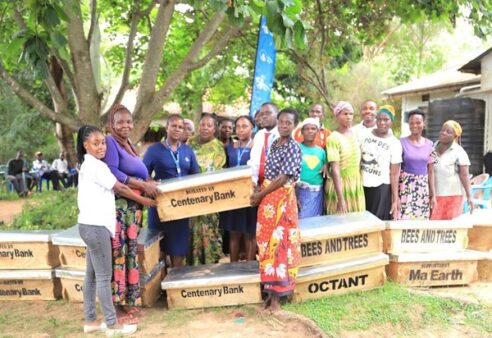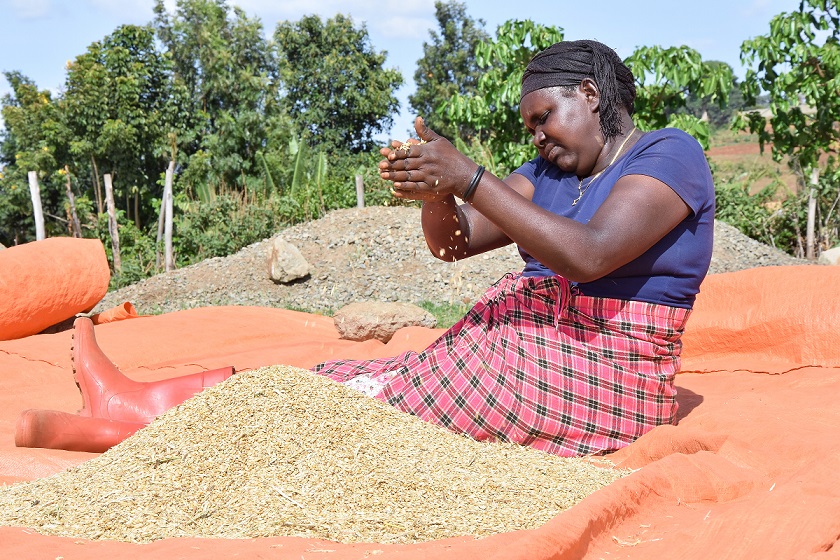
Nile Breweries Limited is Uganda’s largest beer brewer. To sustain, such a large operation, for its production and brewing activities, the company depends on high-quality crops, such as barley produced by farming communities across Uganda, many of whom are female.
The company, according to Theunis Coetzee, the Agriculture Manager, Nile Breweries, uses up to up to 98% local material in beer production.
Prior to 2018, barley output was unable to meet the manufacturing requirement of the business. That is why around 2008/2009 the company started a deliberate programme to improve barley farming albeit on a small scale, under Kapchorwa Barley Technical Center in the Sebei region and Kabale Barley Technical Center in the Southwest of Uganda.
When the company in 2011/2012 built its own Malting Plant, the demand for high-quality grain in large quantities, became even higher, prompting the company, which was now under AB InBev to start a larger and more sustainable, farmers’ capacity building initiative.
“We aim to skill, connect and financially empower all of our farmers by 2025. A critical component of this initiative is the Sustainable Barley Programme in partnership with TechnoServe that uses, the farmer schools’ model,” explains Coetzee.
TechnoServe is an international nonprofit that promotes business solutions to poverty in the developing world by linking people to information, capital and markets.
“The Sustainable Barley Programme helps farmers to be able to supply enough local high-quality barley to fulfil the raw material requirement of the country and also improve their livelihoods. This is achieved by skilling and supporting farmers,” says Coetzee.
Creating prosperous and financially aware women farmers
Chelimo Winnie, a barley and timber farmer from Chepkwutar village, in the Kapchorwa Municipality has over eight years of experience in barley production and has a deep understanding of agronomy― from land preparation to harvesting.
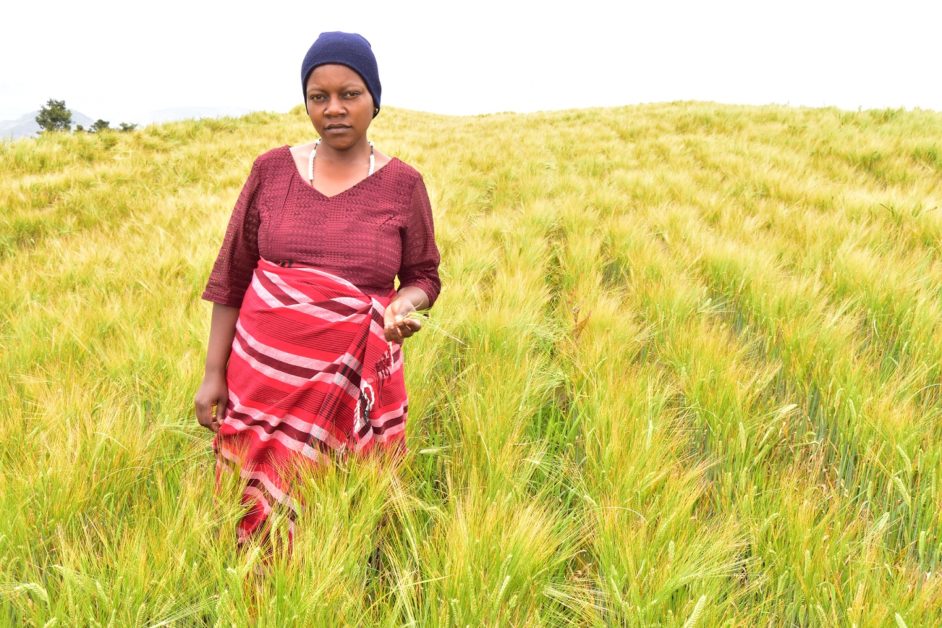
She is one of the beneficiaries of the Sustainable Barley Programme.
The mother of 6 has assumed a mentor role in the local farming community, coordinating other farmers, mobilising them for training, ensuring that farmers pick seeds and deliver grain to Nile Breweries’ buying centre on time.
“I was introduced to growing barley in 2016 through mobilisations done by the company in its presentations on radios, talk shows and the extension staff,” says Chelimo.
However, the lead farmer reveals that while barley production looked lucrative when she started, the farmers faced challenges such as lack of a steady market for their produces as well as low grains. They also lacked the capital to expand their agri-enterprises.
“Most of us also had limited knowledge about barley farming,” she reminisces, but quickly adds that the Sustainable Barley Programme has turned her fortunes around.
“The barley programme has had a huge impact on my livelihood. Through barley farming, I was able to get money to take my children to school, fund my timber business, feed my family and buy clothing. My farm acreage has expanded from two to six acres, and I continue to see a bright future for further growth,” shares Chelimo.
 Stanbic Accelerates Uganda’s Digital Future with “Kikole Ku Speedii” Campaign
Ainomughisha Siria, from Bishaki Village, Rubanda District, in South Western Uganda, joined the programme at inception. She is equally positive about the transformational impact of the programme.
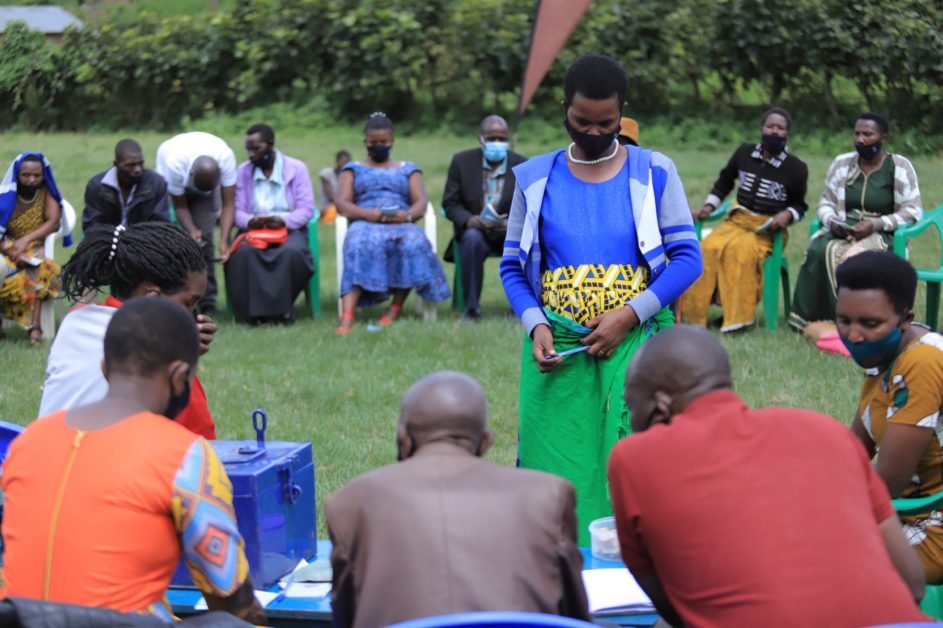
“In the past, I was using traditional methods which are used commonly in the village like seed broadcasting. However, we were taught proper land preparation, planting in lines and using fertilizers. Now my harvest has increased,” she says, adding that these days she doesn’t even have to struggle with agri-advise as she gets regular advice via SMS on her phone from Nile Breweries’ extension workers.
She also says that the beer maker has also set up buying centres near the farms to provide closer and dependable markets as well as cut the cost of transportation.
Ainomughisha who also grows beans says Nile Breweries (NBL) and its implementation partner, TechnoServe encouraged farmers in her village to form cooperatives to not grow barley, but also join Village Savings & Loans Associations (VSLA). Through the VSLAs, the members are trained in financial literacy, savings and credit management in their different communities.
“We set up 30 the VSLA for the barley farmer comprising 34 members in South Western Ugandan district of Rubanda, Kanungu, Kisoro and Kabale. The groups meet on designated days to carry out their activities,” says Grace Nuwagaba, Farmer School Facilitator at Technoserve.
“For sustainable barley production, the farmers do not only need agricultural advice, but they also need financial services to help them save, grow their money as well as grow their enterprise,” adds Nuwagaba.
“I get loans at a very low-interest rate from our VSLA group and I invest in farming. I have been able to add money to my agri-shop business whenever I sell my barley. I also use the money to pay for household expenses. This time when I sell my barley it will help me cover school fees for my child who is in primary school,” Ainomughisha says.
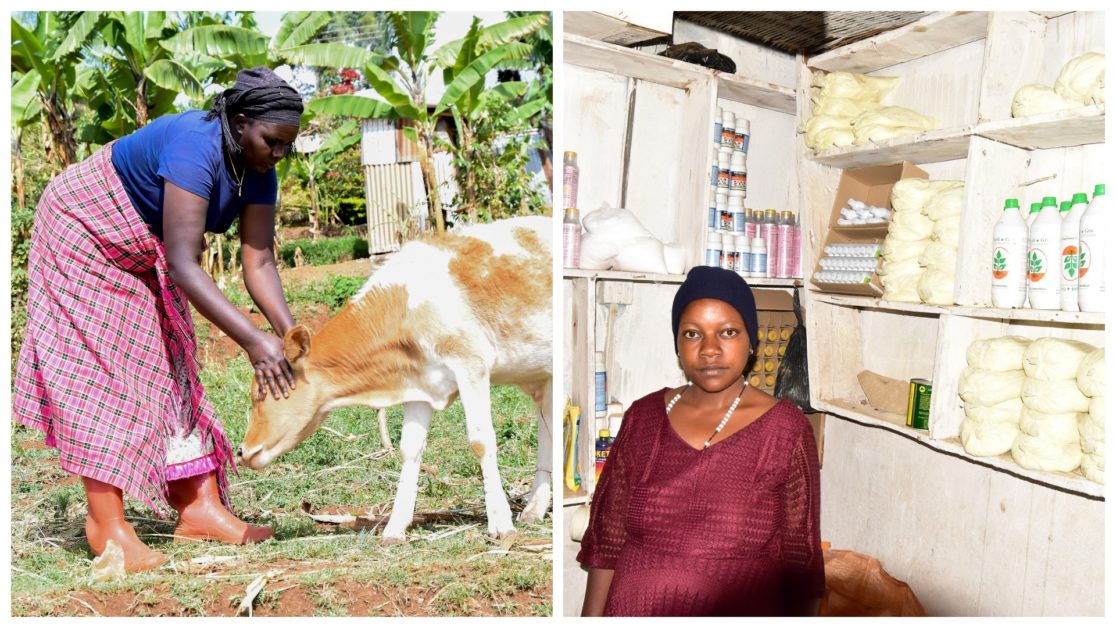
In the three years since programme inception, nearly 10,000 female farmers have benefited from training in finance and agricultural practice, improved access to market and resources, and the development of voluntary savings and loan associations (VSLAs).
NBL invests up to UGX795 million annually to upskill, connect and financially empower its farmers.
In 2019 NBL spent UGX52 billion on agriculture inputs from Ugandan farmers. NBL has since increased its share of local raw materials from 74.3% in 2019 to 98% currently, with a corresponding increase in payments to local businesses and farmers.
An assessment by the International Institute of Tropical Agriculture (IITA) reported significant positive impacts on AB InBev-supplying farmers. The study for example found that AB InBev farmers reported higher yields and productivity. The study also found that the income of sorghum farming households supplying AB InBev was twice more than that of other farmers. 89% of AB InBev-supplying farmers also reported that their quality of life had improved since joining the company’s support initiatives. The IITA study also showed that the inclusion of women in the commercial value chain has improved.
“Women are vital to the agriculture industry, and we remain committed to empowering farmers by incorporating initiatives that will promote gender equality, impart agronomic information, improve business and financial skills development and provide access to training to improve crop yields and quality harvests,” shares Onapito Ekomoloit, Legal & Corporate Affairs Director NBL.
As the world celebrates women this month, he concludes that NBL honours each woman who is making a significant contribution to the agriculture and food industries, as well as to its supply chains across Africa. “Without them, we have no quality crop and no quality beer. So here’s to our women in agriculture and a future with more cheers.”