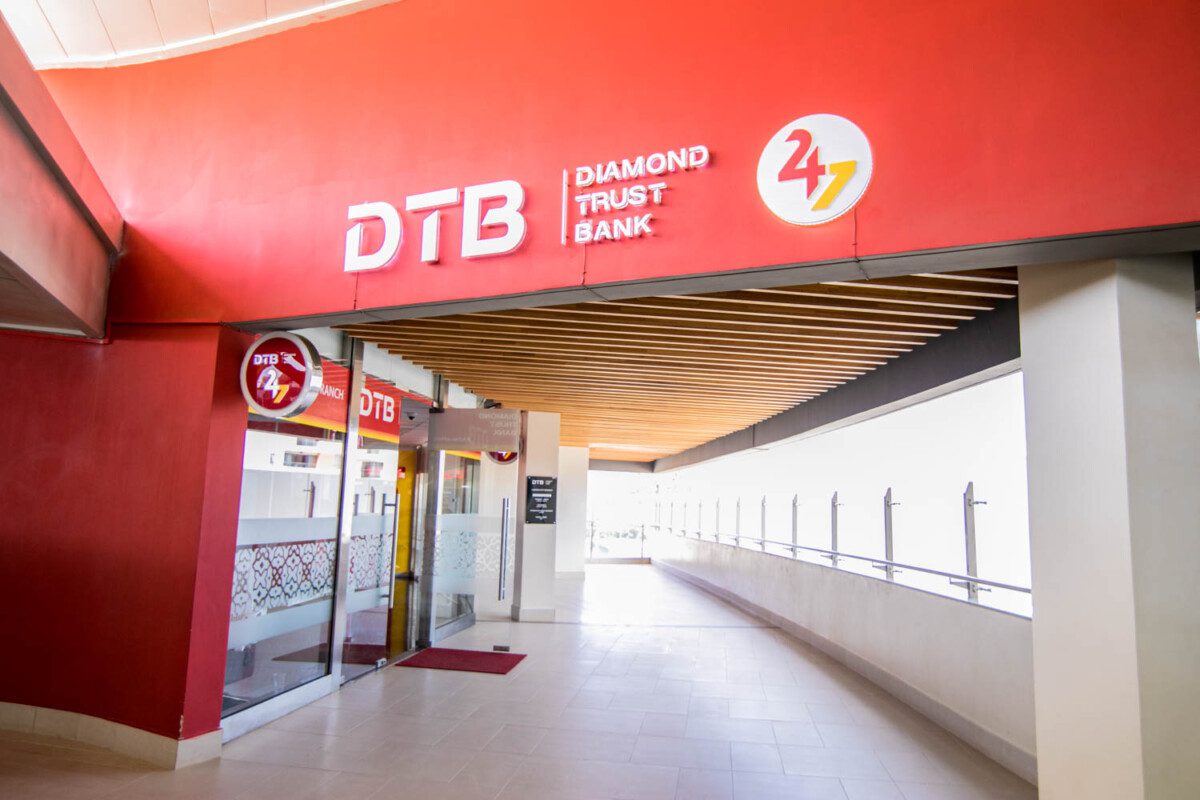
Diamond Trust Bank Group has formally exited the Burundi market after selling its 83.67% stake in Diamond Trust Bank Burundi to a consortium of largely local investors, bringing to a close a 17-year presence in a market that had become increasingly difficult to justify strategically.
The Nairobi-listed lender said the transaction, approved by regulators, took effect at the end of December 2025 following a board decision in September.
While the bank did not disclose the value of the deal, disclosures in its 2024 integrated report provide a detailed picture of a subsidiary that remained operational, but was steadily losing momentum.
By 2024, DTB Burundi had become a small and shrinking part of the group. The subsidiary posted profit after tax of KShs 50.6 million, down sharply from KShs 115.5 million a year earlier.
Profit before tax declined to KShs 114.9 million from KShs 151.6 million, while total operating income eased to KShs 345.3 million from KShs 370.5 million.
The pressure on earnings was not driven by a collapse in revenue alone, but by a combination of tightening liquidity, rising tax costs and a weaker operating environment.
Income tax expense rose significantly to KShs 64.3 million in 2024 from KShs 36.1 million the previous year, further compressing net returns.
More telling was the shift in cash flow dynamics. Cash generated from operations swung to a negative KShs 138.1 million, compared with a positive KShs 638.5 million in 2023, while cash and cash equivalents fell to KShs 214.1 million from KShs 460.2 million.
This deterioration suggests that, beyond profitability, the bank was operating with reduced liquidity headroom.
The balance sheet tells a similar story of contraction. Total assets declined to KShs 4.63 billion from KShs 5.97 billion, while liabilities fell to KShs 3.20 billion from KShs 4.24 billion.
Total equity dropped to KShs 1.43 billion from KShs 1.74 billion, with the group’s share of equity in the subsidiary standing at KShs 1.20 billion, down from KShs 1.45 billion a year earlier.
While DTB does not separately disclose the deposit base for Burundi, interest expense on customer deposits stood at KShs 80.1 million in 2024, suggesting a relatively small funding base that mirrors the subsidiary’s overall contraction.
Despite this, DTB Burundi was not a distressed operation. It remained profitable and adequately capitalised, with capital ratios above regulatory minimums. However, its contribution to the group had become marginal.
For context, DTB Group reported total assets of KShs 573.9 billion and net profit of KShs 8.8 billion in 2024, placing the Burundi unit at the far end of the scale in both size and earnings impact.
Interestingly, DTB noted that Burundi did not meet the quantitative threshold to qualify as a reportable segment under IFRS 8, but was still disclosed separately because it was closely monitored by the board.
This suggests that while the operation was small, it required disproportionate management attention relative to its financial contribution.
 Govt Moves to Ban Importation of Cars Older Than 13 Years
The macroeconomic backdrop helps explain why.
According to the bank’s own assessment, Burundi’s economy expanded by just 2.2% in 2024, down from 2.7% in 2023.
The country continues to grapple with persistent foreign currency shortages and elevated inflation, which averaged about 20% during the year and is expected to remain in double digits.
These conditions have direct implications for banks. Foreign exchange shortages constrain trade and limit lending opportunities, while high inflation erodes purchasing power and weakens borrowers’ ability to service loans.
At the same time, currency depreciation reduces the real value of earnings when translated into group reporting currency.
Financial indicators reinforce this picture. The 91-day Treasury bill rate rose to 7.1% in 2024 from 4.8% a year earlier, signalling tighter domestic liquidity conditions, while the Burundi franc weakened to around 2,914 per US dollar from 2,856 previously.
There were also signs of operational retrenchment. DTB Burundi wrote off its investment in the BI-Switch S.M. project, which supported the country’s ATM and card infrastructure, pointing to a simplification of its local footprint.
Taken together, the numbers point to a business that was still viable, but increasingly constrained. It was profitable, but earnings were declining.
It was liquid, but less so than before. And it was present in the market, but gradually shrinking in scale.
For DTB Group, the strategic logic becomes clearer in that context. Maintaining a small, complex operation in a high-risk macroeconomic environment requires capital, management focus and regulatory oversight that may not be justified by the returns.
The sale to local investors ensures continuity of operations in Burundi, while allowing DTB to redeploy capital to its core markets of Kenya, Tanzania and Uganda, where growth prospects and operating conditions are more favourable.
More broadly, the move reflects a shift among regional lenders towards optimising their geographic footprint.
Expansion across borders remains part of the East African banking story, but there is a growing emphasis on scale, efficiency and risk-adjusted returns.
In that sense, DTB’s exit from Burundi is less a sign of distress and more an indication of discipline. After nearly two decades in the market, the group appears to have concluded that the long-term trade-offs no longer stack up.