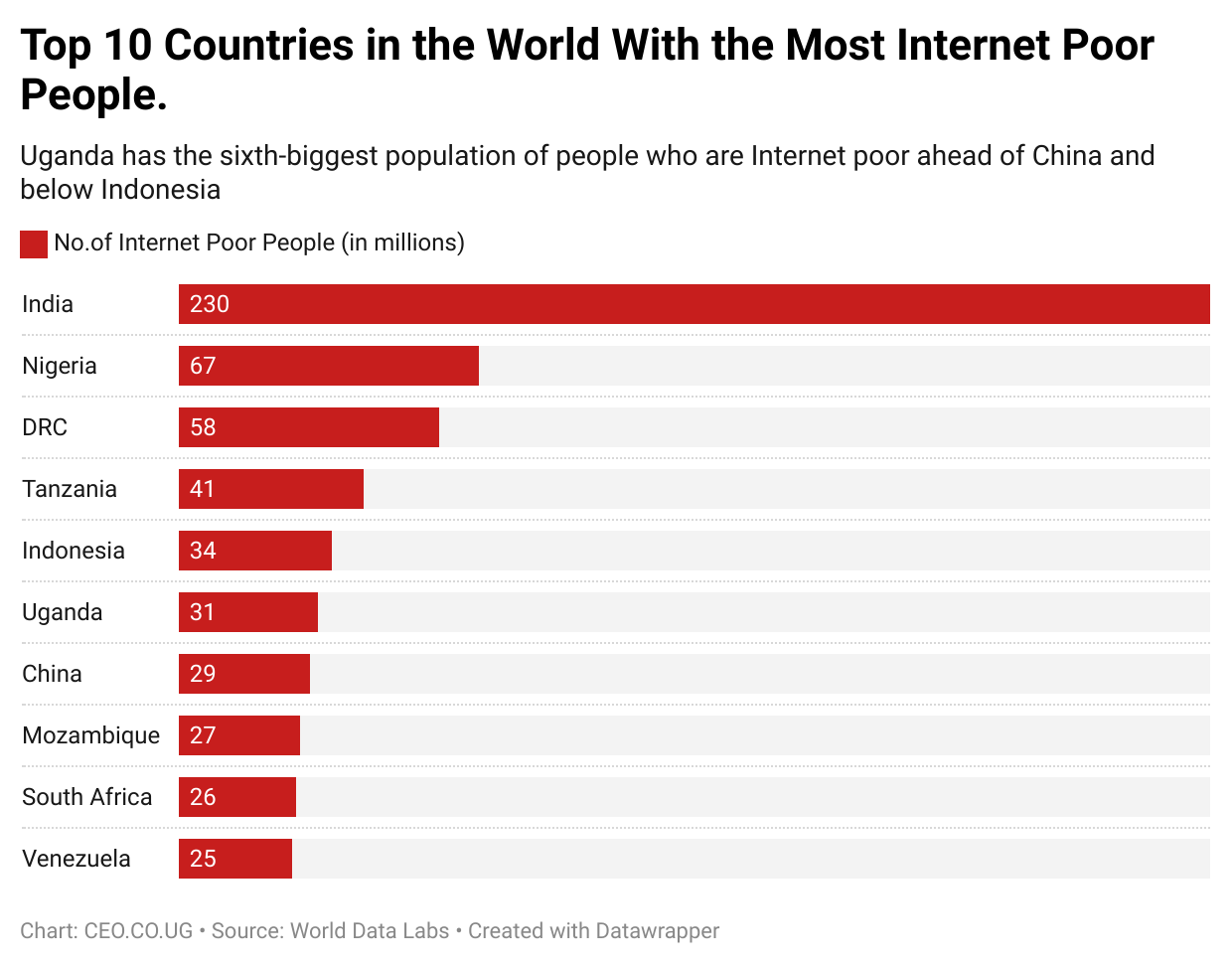
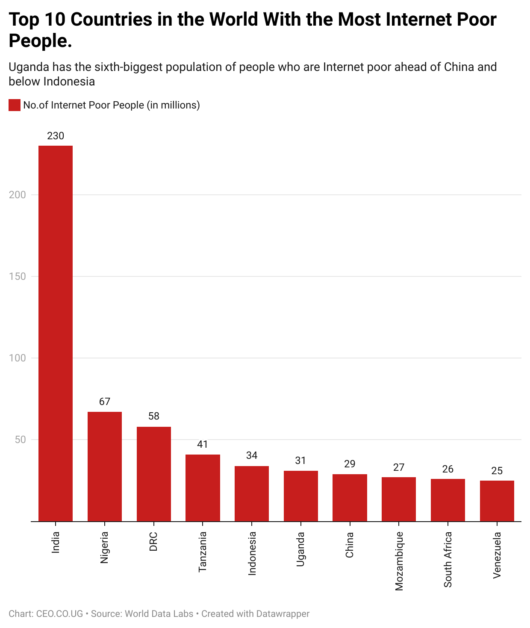
According to the Internet Poverty Index, produced by the World Data Labs and supported by the Internet Society Foundation, 31 million Ugandans can not afford the Internet or live under the Internet poverty line in 2023. This makes Uganda, the country with the 6th biggest number of people that can not afford the internet, ahead of China (29m) and Mozambique (27m), but just below Indonesia (34m) and Tanzania (41m).
What do we mean by Internet Poverty, in this context?
The internet is considered a basic right due to its significance in today’s world. It provides access to vast information, enabling personal growth and learning. Internet access promotes digital participation, allowing individuals to connect, engage in civic activities, and express opinions. It opens economic opportunities by facilitating online business, employment, and skill development. Access to essential services like healthcare, education, and government resources is made easier through the Internet. Recognizing internet access as a basic right promotes social inclusion and equal opportunities for all, though challenges in achieving universal access remain. So measuring internet poverty can help to raise awareness and identify the most vulnerable groups as reiterated by the World Data Labs and the Internet Society Foundation.
The World Data Labs measures Internet Poverty along three pillars; affordability, quantity and quality. Affordability is how much someone can spend on the internet, which should be up to 10% of total individual spending. The second pillar is quantity, where it is assumed the minimum amount of data consumed is 1Gb per month. The third pillar is the reasonable quality of internet connection where the assumed download speed is at least 20Mbps. You can learn more about the methodology here.
Uganda’s sixth position is however not representative of how dire the internet poverty situation is when compared to the other countries in the top 10. 31m, means that 60% of Ugandans can not afford the internet and this is the fourth highest percentage among the countries in the top 10. In fact, if Uganda had India’s population (1.4bn), then it would have over 800m who are internet poor.

How are the 31m Internet Poor Ugandans split?
The World Data Labs estimates that Uganda’s population in 2023 stands at 51.9m of which 30.6m are women, and 21.3m are men. Of the 31m internet-poor Ugandans, women make the bulk with 15.9m, slightly edging men by 400,000.

However, the majority of Ugandans living below the internet poverty line are between the ages of 0-15 (16.3m people), and this is an age group that is mostly associated with school, and thus do not earn an income so they rely on their parents to meet their basic needs. But it should also be noted that this age group has 23.8m people, which is the biggest in Uganda.
 Stanbic’s Five-Year Scorecard: How Profit Growth, Deposits, Lending and Dividends Reshaped Performance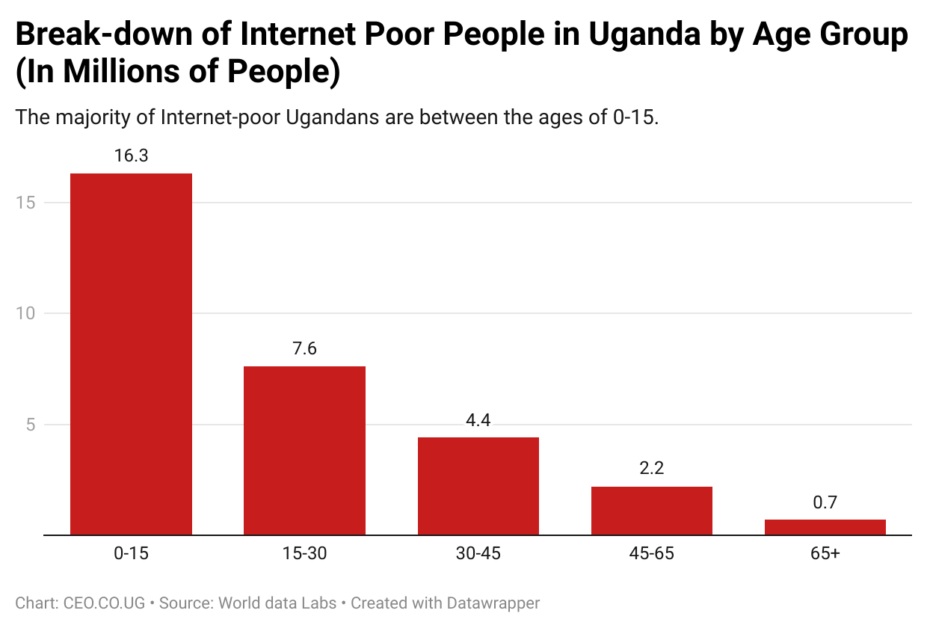
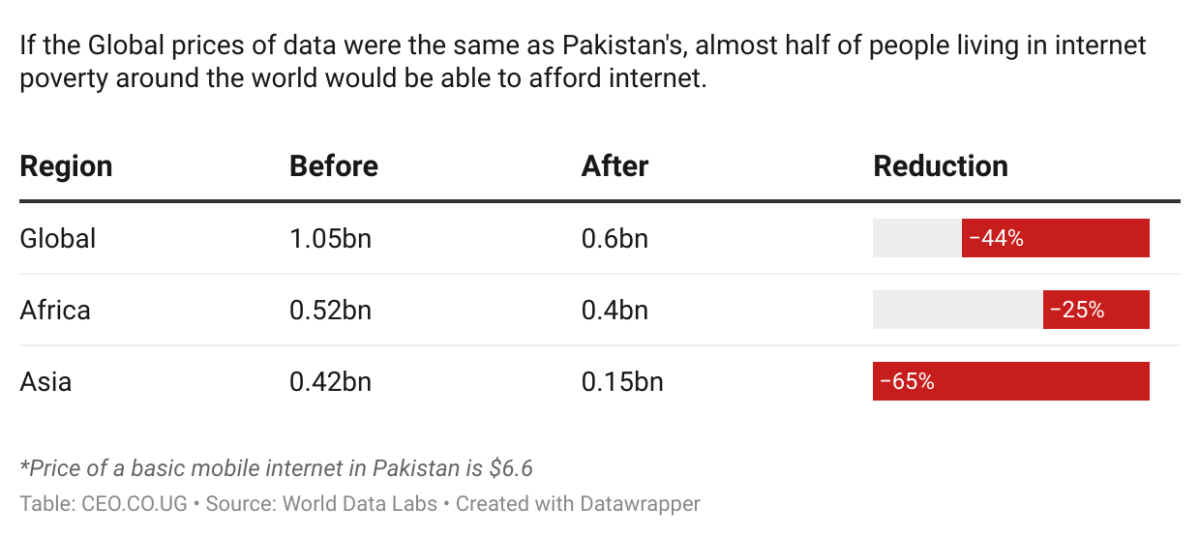
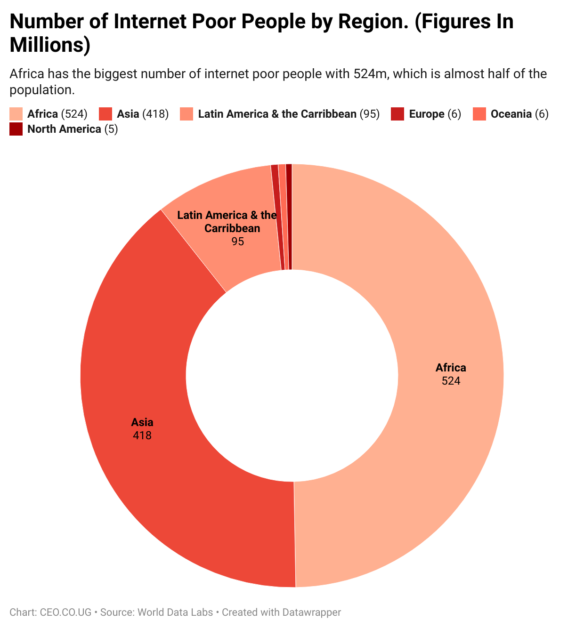
Globally, there are 1.05bn internet-poor people, which is 13% of the entire population. The vast majority of these people live in Africa (524m) and Asia (418m). These two regions account for 60% of the global population, but 90% of the internet-poor people.
How do we end internet poverty?
To end internet poverty, the World Data Labs recommended two ways:- increasing income or reducing prices. The affordability of the Internet is directly tied to the income levels of the consumers. If a basic mobile internet package costs $10, it will take 2% off the income of someone who earns $500, but the same package will cost 10% for someone who earns $100. This makes it unaffordable. But increasing incomes is harder than reducing prices.
Reducing prices could be the most effective way. Africa has made more progress than the rest of the world to reduce prices as shown by this chart.
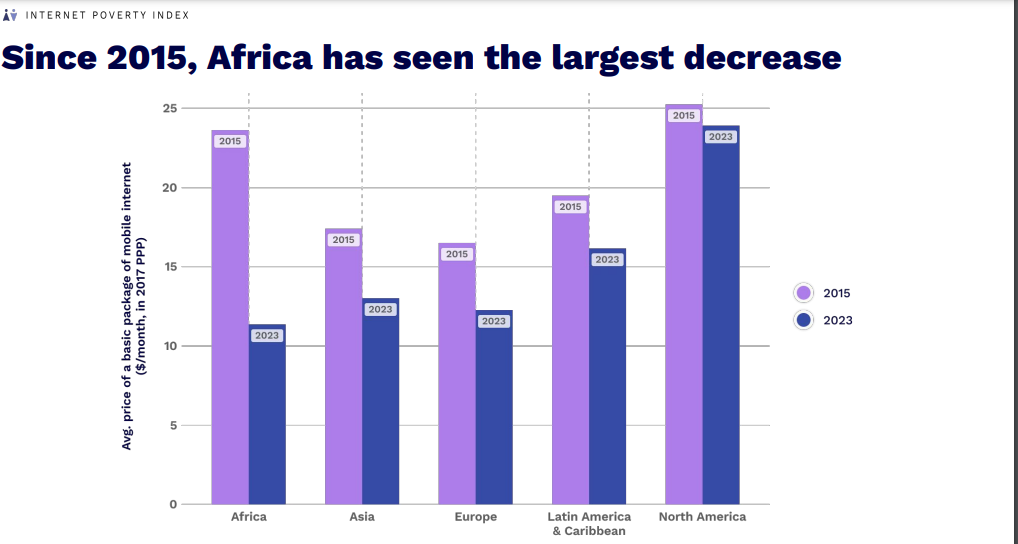
For example, in Uganda, the World Data Labs pegs our mobile internet prices at $11. Reducing prices can involve the government subsidising the costs with providers, removing barriers like waiving taxes for internet-related equipment, allowing competition and regulating the prices.
Pakistan has the fifth lowest internet prices ($6.6), as per World Data Labs, and if the rest of the world adopted that same price, global internet poverty would be reduced by 44%, 25% in Africa and 65% in Asia as shown by this table further explaining why reducing prices is the most effective way.