
By Silvia Nyambura
Uganda’s forests are endowed with a rich biodiversity of bird and animal species, crater lakes, fish, distinctive plant species and communities of indigenous people who live around them. These form a complete ecosystem that among others ensures source of income, food security, favorable climate, prospects for tourism, medicinal herbs and sources of fuel among other advantages.
However, the country’s forest cover continues to dwindle. In a period of 15 years from 1990, forest cover had reduced by approximately 1.3 million hectares as reported by the National Forestry Authority (NFA). The result is that we have prolonged dry seasons unfavorable for crop production, hence the prevailing food shortage in certain regions of the country. To this end, Cooperatives are joining the cause to revive Uganda’s forest cover.
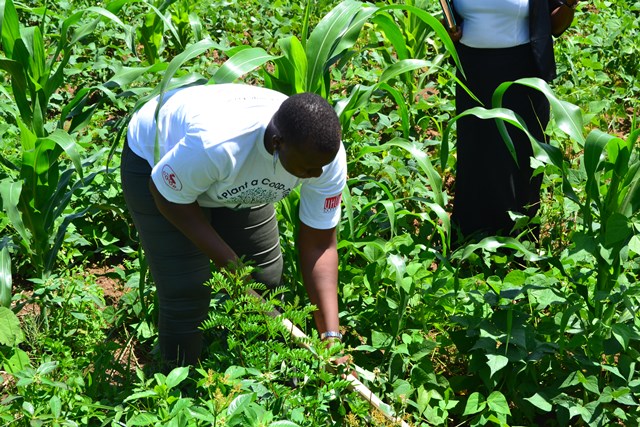
Uganda Cooperative Alliance and the Uhuru Institute for Social Development (TUI) recently launched a tree planting competition for Cooperative Societies. Dubbed ‘Plant a Cooperative Tree’, the competition aims at promoting commercial tree planting as a viable strategy for wealth creation and an opportunity for diversifying cooperative businesses.
 She Chose Humanity: How Miriam Opwonya Laker-Oketta Is Redefining Leadership through Dignity and Compassion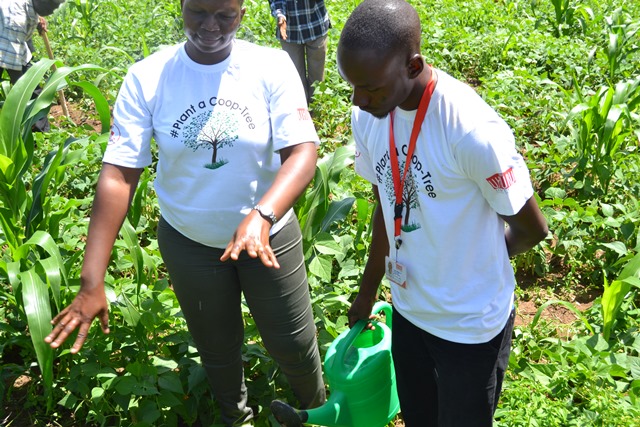
Speaking at the launch event recently, TUI Operations Director Jane Okello said, “Concern for community is one of the seven Cooperative Principles. Cooperatives want to contribute to the increase in Uganda’s forest cover as an intervention towards sustainable economic development. We have introduced the aspect of competition to foster hard work and initiative, which will result in high quality trees.”
The tree planting competition starts with 20 districts with one registered cooperative society representing each district. Cooperatives are expected to avail at least one acre of land for the competition. Each cooperative is given 500 Grevillea tree seedlings. Grevillea is suitable for agroforestry because it has deep roots and therefore good for intercropping, contributes to Nitrogen fixing and its leaves form high quality mulch. It also has numerous other functions such as sturdy stems for timber, good wood for fuel and a spreading branch system for shelter and wind breaks and therefore good for commercial forestry.
