Imagine Kampala’s traffic 10 years from now: sleek electric SUVs gliding past solar-powered charging hubs, heavy-duty trucks running silently on clean energy, and AI-enabled dashboards guiding drivers through congestion-free routes.
Uganda’s automotive sector is edging toward that vision, driven by global megatrends – electrification, automation, and sustainable mobility.
The journey, however, starts from a complex present, with 80% of the over 2.3 million registered vehicles contributing the largest share of urban air pollution, which the National Environmental Management Authority estimates at nearly 60%.
At the center of this transformation is a mix of stakeholders, but nearest to the long stretch is Spear Motors, a 52-year veteran of the automotive sector, betting on hybrids, full EVs, and digital innovation to modernize Uganda’s roads.
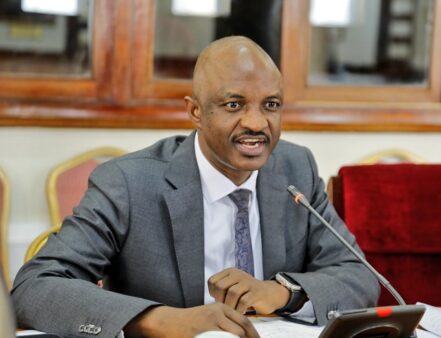
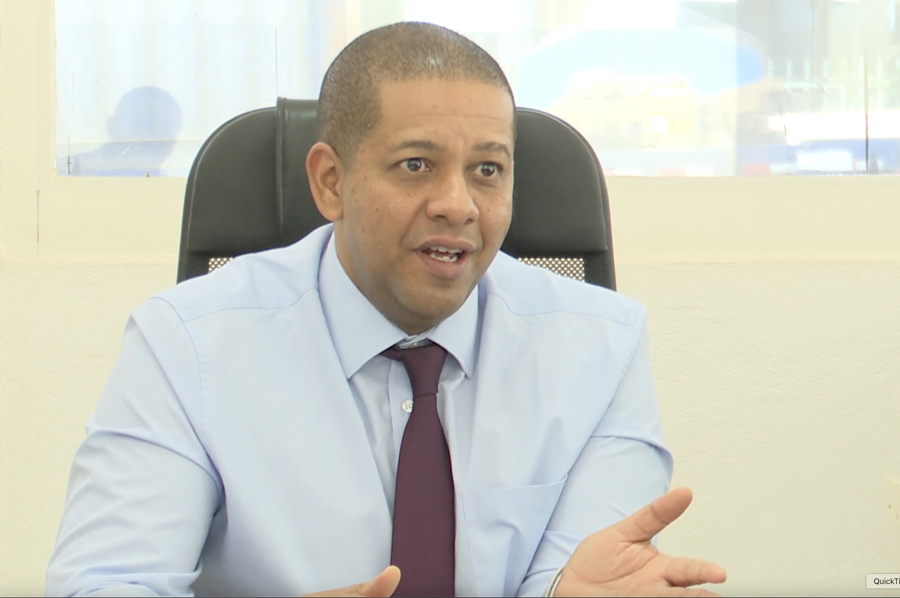
Managing Director Gilbert Wavamuno sat down with selected media houses, including CEO East Africa Magazine, to discuss how the company plans to merge tradition with technology, and why the next five years could outpace the past five decades for Uganda’s auto market.
Give us your straight take — where is Uganda’s auto sector right now, and where does Spear Motors fit in?
It is growing, but at a steady, sometimes sluggish pace. There are still gaps that need collaboration between industry players and government.
Globally, we are seeing a clear shift toward electric vehicles and cleaner technologies.
Locally, air quality is a huge concern — one motorbike can pollute as much as eight to 16 cars. In a dense city like Kampala, that’s serious for public health.
At Spear Motors, we are addressing this by offering cleaner models, including mild hybrids, while preparing for a full transition to electric.
We also remain a key supplier of heavy-duty trucks like the Mercedes-Benz Actros and Arocs, which are cost-effective over time.
And through our training school, we are helping mechanics meet global standards, raising skills across the industry.
And on the global front — how soon will EVs and automation hit Uganda?
Faster than most people think. In China, more than 70% of new vehicle sales are electric, and manufacturers are scaling up EV production.
Eventually, it won’t make sense to build petrol models just for small markets like ours.
At the same time, semi-autonomous tech is already filtering in – automatic braking, lane-keeping, adaptive cruise control.
They are standard in the Mercedes and Jeep models we import, and they will become even more common as electrification grows.
So, EV demand in Uganda — is it real yet or still talk?
It’s real, though still small. It reminds me of when automatics first arrived. People resisted, then adoption took off.
I expect EVs to spread even faster once customers get comfortable with the technology.
How are you staying ahead of the curve?
By being flexible. That’s been our DNA since the 1970s. Quality is non-negotiable – we would rather skip a service than deliver substandard work.
Recently, we opened our spray and panel-beating shop to all brands, not just those we sell. Clients love the finish, and it’s helped us diversify without losing focus on quality.
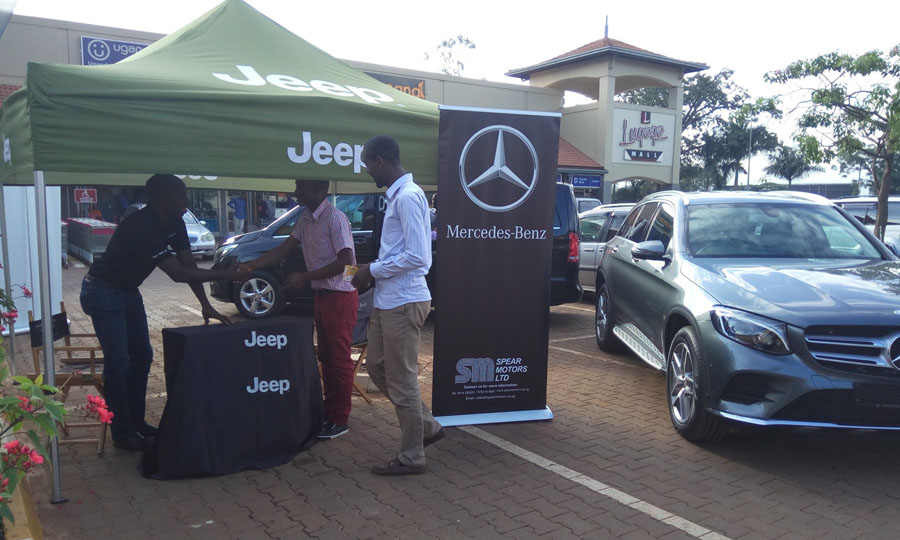
What keeps your dealerships for Mercedes and Jeep performing well?
Close monitoring and fast service. Fleet clients, for example, need quick turnarounds; some services are done in 45 minutes. That reliability, plus quality, is why they stay with us.
 Inside Ramathan Ggoobi’s Plan to Raise UGX 2.3 Trillion in New Taxes and UGX 2.54 Trillion Through Enforcement
What’s the toughest barrier to rolling out EVs here?
Taxes. We’re in discussions with one of the biggest EV makers, but high import duties make the cars expensive.
Other countries offer rebates or waive taxes in the early years; Uganda could do the same to help us invest confidently in charging and servicing infrastructure.
Where do you see technology having the biggest impact on your customers?
Diagnostics. When we plug in a Mercedes or Jeep, engineers abroad can see what’s happening in real time and help us troubleshoot.
We are also automating back-end systems and bringing in AI to reduce waiting times and improve efficiency. In five years, the customer experience will look very different.
What new products or services will differentiate you this year?
We are gearing up to launch full EV models once the policy environment is right. Our spray shop remains top-tier, and we are opening workshops to customers who buy parts elsewhere but want expert fitting.
With our experienced mechanics and AI tools, we can handle far more than just our own brands.
Digitalisation — hype or game-changer for Uganda’s auto market?
It’s a game-changer. From diagnostics to customer touchpoints, digital tools – especially AI – will drive the industry’s next phase.
Sustainability is on everyone’s lips. What’s your practical plan?
EVs are central. Kampala is among Africa’s most polluted cities, with transport responsible for about 60% of emissions. One motorbike can pollute like 16 cars.
We’re advocating for EV incentives, working with stakeholders, and running proper oil-disposal systems in our workshops.
China’s shift to electric has brought cleaner skies – Uganda can achieve the same.
What keeps customers loyal, and how do you scale that trust?
Integrity and quality. Clients know we stand by our work. Even those who once bought used imports often return because they value our after-sales support.
Expansion plans — should we expect new branches or a Kampala focus?
We’re well-positioned in Kampala with space to handle big truck volumes. New branches will only happen if demand justifies it.
For now, we serve outlying areas with mobile units and remote support.
Finally, what’s your annual import range, and how do you see the next five years?
Imports fluctuate – some years hundreds of trucks, others around 50 – but the trend is up, especially for high-end new cars where we lead.
Looking ahead, the pace of change will be unprecedented: EVs, AI, advanced safety, even remote-start features. The next five years will outpace the last 50.