By Our Reporter
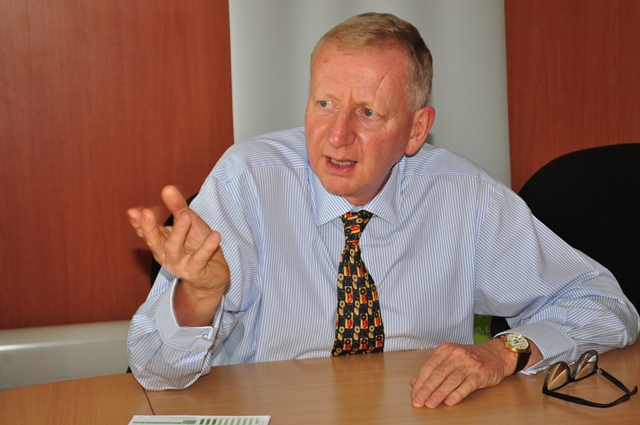
UMEME Ltd recently made changes in its top management, with Selestino Babungi, formerly Chief Commercial Officer appointed Managing Director, replacing long time serving MD Charles Chapman, who has since been appointed Non-Executive Director on the UMEME Board. Babungi will officially take over office effective April, 2015. The CEO Magazine caught up with Chapman at UMEME offices in Kampala, about his tenure which saw the company become one of the most profitable entities in Uganda (it recorded net profit UShs84bn in 2013, up from UShs57bn in 2012) and a wide range of energy related issues.
Below are the excerpts;
You have been at UMEME as Managing Director since 2009, how would you describe your tenure?
I Joined UMEME in February 2009 and took over the Managing Director designation in May2009, so I have been here for 6years. It has been a great time to be involved in the energy sector because at that time we were preparing to increase customer numbers, reducing losses and preparing for the onset of Bujagali.
The sector has grown at an average of 10% per year and the customer numbers have grown from 200,000 to 600,000. The supply has improved and the viability of UMEME is very significant probably one of the smaller but the best utilities in Sub-Saharan Africa. But we are not there yet because only about 15% households in Uganda have power.
What are the major memorable milestones you have recorded during your reign?
In 2008, we had 305,000 customers and when you check by the end of 2014, it was 650,000. So we have more than doubled the number of our customers. So my success has a lot to do with my team because we have achieved it together. The IPO (Initial Public Offering) has been a success for a number of reasons, first we got more people to understand and buy shares in UMEME and the company has been well ranked in the financials.
In terms of investments, in 2008 we were investing in an average of less than US$20M but last year we invested in nearly US$100M.
If you take losses, at the end of 2009 they were 35%, in 2014 they were around 19%. In terms of collection rates, we drew up to 109%, so if we happen to turn around this company and do as much as we did, then we would be able to make the sector more competitive.
 dfcu Bank Deepens 11-Year Partnership to Transform Lives as Best Farmers Awards 2025 Celebrate Uganda’s Agricultural Champions
Your reign has been characterized by some controversies but you remained calm and managed to overcome them. What is your management style and factors behind your success?
My management style is trying to keep my objectives very clear and very straight forward. I gave commitment to our customers, staff and government to introduce prepaid metering, bring losses below 28%, to connect more customers efficiently, to allow people in Uganda to buy shares in the company. I looked at five or six things and delivered those.
In relation to the calmness, as long as you are determined to deliver and people that matter recognize it, you can be confident and strong.
Once you start not giving your performance targets, you then lose confidence and then another thing you can become is defensive and there is no point in that. Politics is the same in all countries, but if you get too much distracted, annoyed or get things too harsh, you get distracted. Politics has a role to play, but we have a job to do and it’s clearly laid out in the concession and as long as we keep performing, our customers will be satisfied.
What are the key challenges facing Uganda’s energy sector and how can they be overcome?
One of the challenges is “short termism
