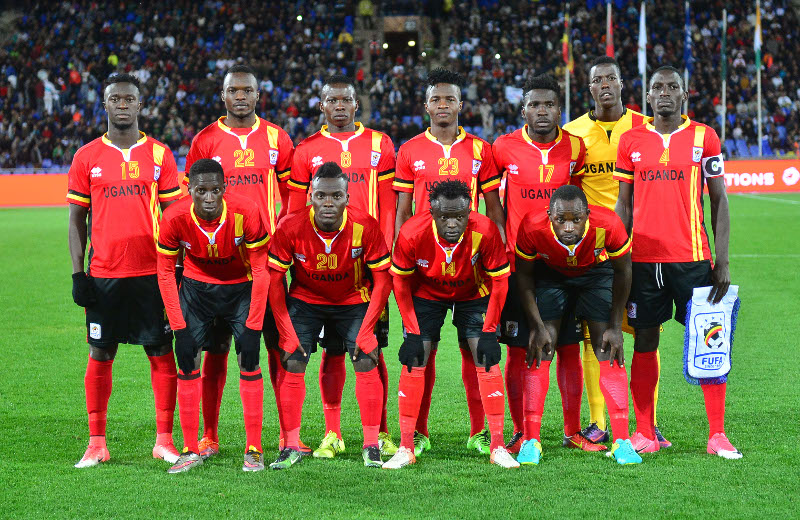
In a joint record four appearances, Uganda Cranes have only managed to fetch $550,000 (Shs2 billion) when a championship run at a single tournament would fetch $2.25 million (Shs8 billion) to the association.
[ih-gallery id=”6603″]
The nosy Wikipedia has already updated Uganda’s status at the 2018 African Nations Championship (CHAN) in Morocco. It says GS. Group Stage. In fact, the free online encyclopaedia has the same GS status for each of the four times Uganda has participated in the continent’s biennial soccer showpiece for home-based players.
Put another way, Wikipedia’s GS status on Uganda corresponds with the lowest possible prize money in the lucrative competition that any participating team can win.
Uganda Cranes early also ran status the fifth edition of the tournament, being held in Morocco, means the team returns home with second lowest prize money CAF gives competitors—for the fourth time in a row.
Cranes head coach Sebastian Desabre said after the match that it was important to finish in third place in the group, ahead of Ivory Coast. They did so on goal difference, the Ivorians having conceded one worse.
For this ‘effort’, Cranes return home with $200,000 (about Shs727 million)—at least $25,000 better than Ivory Coast—of the $5.45 million (about Shs19.8 billion) in total prize money CAF reserves for CHAN tournament. The current prize money is a 67% raise from the total that CAF was giving for the tournament in the previous editions ($3.25 million).
From the same Group B, Zambia and Namibia are already $300,000 richer as they look forward to reaping more if they can progress beyond the quarter finals. A semi-finalist earns $400,000, while a runner up takes home $700,000 and the champion is crowned with a $1.25 million parade.
This year was the first that CAF is paying the improved prize monies for participating teams. For the previous editions, bottom-placed team fetched $100,000 and the other group loser (third placed group team) returned home early with $125,000.
 Equity Bank Rwanda Hit by Fraud, Months After Group CEO, James Mwangi’s Integrity Crackdown
Uganda Cranes did not make the eight-team maiden tourney at which DR Congo returned home with $750,000 winders prize money on top of $175,000 for making quarter final and another $250,000 for making it to semis. DR Congo had beaten Ghana in Ivory Coast in that final. The Ghanaians lost the title and winner’s prize money but were consoled having picked $400,000 for runner up as well as others for making quarter and semi finals.
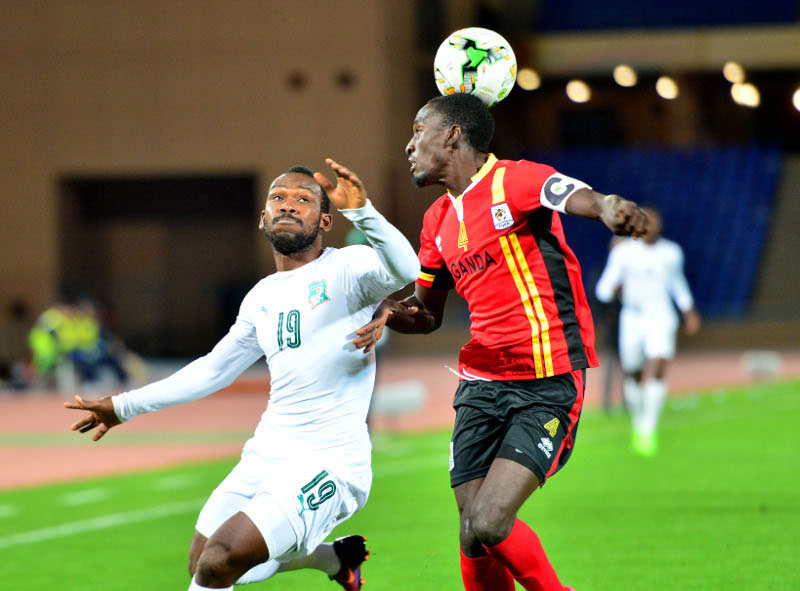
Uganda missed that much by not qualifying in 2009 and their maiden attempt two years later in Sudan was a baptism of fire. Pitted in Group A alongside the hosts and Algeria and Gabon, Uganda scored a consolation goal in three matches as they returned home without a point and just $100,000 for trailing the group.
The Cranes would then watch as their group conquerors Algeria and Sudan match on to the semi-finals, where they lost and were consoled with $175,000 for making quarter final and another $250,000 for making it to semis.
Uganda Cranes’ second shot at the big picture showed improvement, at least by the fact that they managed to pick a win (over Burkina Faso) and a draw (against Zimbabwe). That Cranes team was fuelled by Yunus Sentamus goals (he scored all three) and were unlucky to lose on the Group B progression to Morocco, who score two late goals to see off a spirited Cranes.
For their efforts, Cranes returned home downcast but with $125,000 for finishing third in their group that was topped by Morocco and Zimbabwe. The latter would progress to semi-final where their story ended with $250,000 in prize money.
The Cranes would then again get Zimbabwe in 2016 edition hosted by neighbours Rwanda. In Kigali, Uganda drew with Mali in their opener, lost to Zimbabwe before completing their GS jinx with a disappointing draw against Zimbabwe to bow out at first asking with $125,000.
CHAN is a tournament for home-based players started to give domestic leagues more exposure after CAF realised that the prestigious Africa Cup of Nations was featuring mainly foreign based players and denying locally-based players a chance to represent their national teams at continental level.
In four appearances (joint most with Ivory Coast and Zimbabwe) Cranes have earned a total of $550,000. In contrast, Zimbabwe fetched $750,000 and Ivory Coast $650,000.