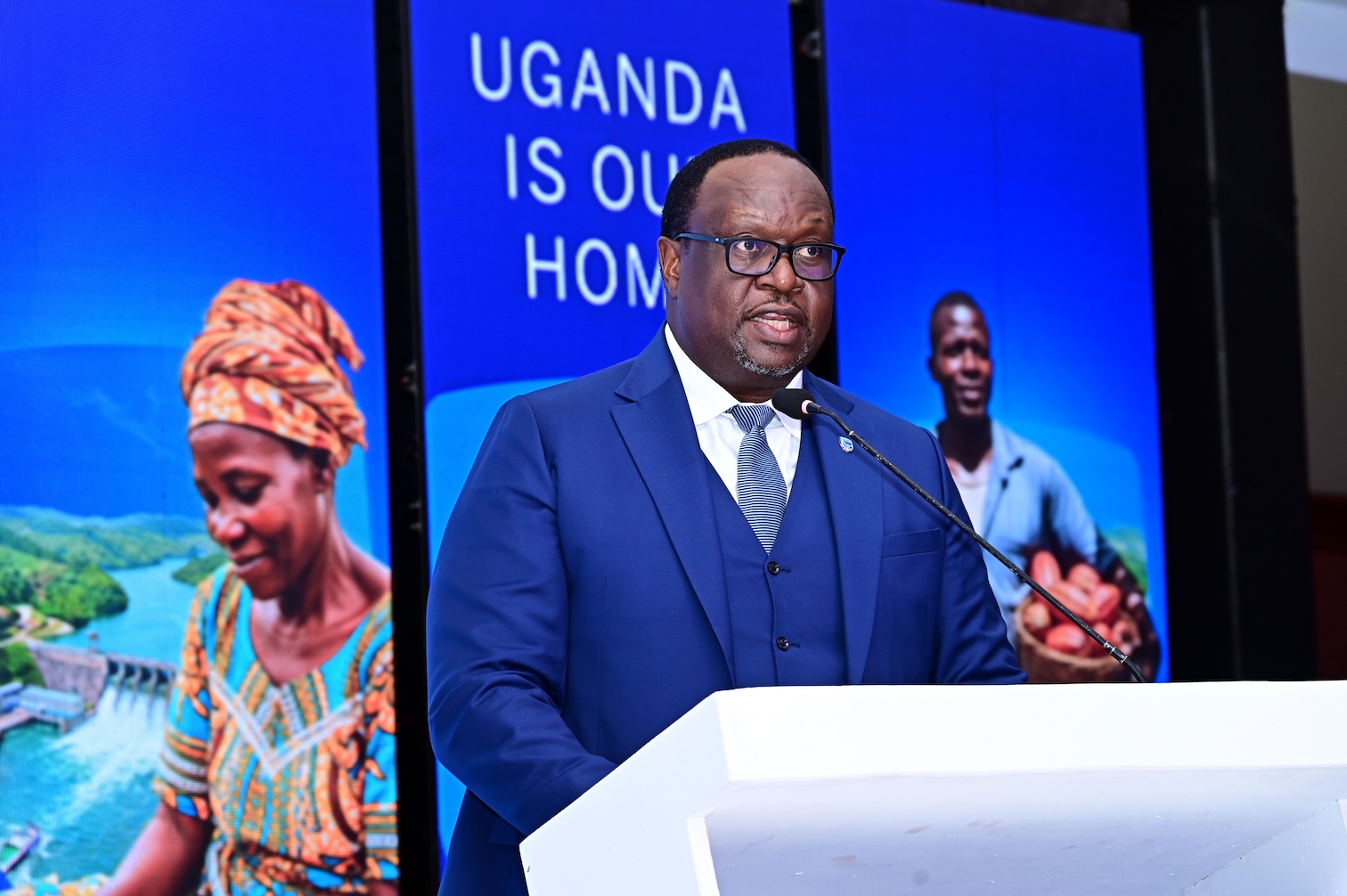
When Mumba Kalifungwa stepped into the role of Chief Executive Officer at Stanbic Bank Uganda in March 2025, he inherited not just the country’s largest bank by assets, but a balance sheet brimming with untapped potential.
For years, Stanbic had done what great banks do best—mobilise deposits at scale, build a strong capital base, and maintain disciplined risk management. But beneath that strength lay a deeper question: could the bank fully translate its size and liquidity into transformative impact for Uganda’s economy?
Barely a year into his tenure, the answer is becoming increasingly clear.
Unlocking the Lending Engine
At the heart of Stanbic’s 2025 performance is a decisive shift—one that goes beyond incremental growth and signals a strategic unlocking of lending capacity.
The numbers tell a compelling story. Loans and advances surged by UGX 717.5 billion in 2025, pushing the loan book to UGX 5.09 trillion. This represents a 16.4% year-on-year growth, a sharp acceleration compared to the more measured expansion seen in previous years.
But percentages alone do not capture the significance.
In absolute terms, Stanbic injected over UGX 700 billion in new lending into the economy in a single year—a scale of credit expansion that positions the bank not just as a financial intermediary, but as a central engine of economic activity.
This was no coincidence.
It followed a deliberate build-up of deposits, which grew to UGX 8.03 trillion in 2025, creating the liquidity base required to support aggressive yet responsible lending. In essence, Kalifungwa’s Stanbic is doing what many banks struggle to achieve—converting balance sheet strength into real economy impact.
From Liquidity to Impact
What distinguishes this phase of Stanbic’s growth is not just the expansion of credit, but where that credit is going.
The bank’s lending is clearly being directed toward Uganda’s productive sectors. Manufacturing alone absorbed over UGX 632 billion, while trade and infrastructure each attracted close to UGX 600 billion in financing. Agriculture—long seen as both an opportunity and a challenge—received UGX 425 billion, reinforcing the bank’s commitment to supporting the backbone of Uganda’s economy.
Beyond sectoral lending, Stanbic is also deepening its reach into households, with lending to individuals rising to UGX 1.5 trillion, up from UGX 1.34 trillion the previous year. This signals a broader credit strategy—one that supports not just large corporates, but also entrepreneurs, families, and emerging consumers.
The result is a multi-layered impact: businesses gain access to working capital and expansion financing, supply chains are strengthened, and household incomes are supported through access to credit.
Financing Uganda’s Strategic Growth
Kalifungwa’s tenure is also marked by a renewed emphasis on strategic, high-impact financing.
Under Stanbic’s leadership, over UGX 700 billion has been deployed into local manufacturing under the Buy Uganda Build Uganda (BUBU) agenda, supporting industries ranging from agro-processing to essential consumer goods. The bank has also played a pivotal role in Uganda’s oil and gas journey, contributing over UGX 270 billion to the financing of the East African Crude Oil Pipeline.
 Julius Kakeeto Steers Pearl Bank to UGX 47.3 Billion Profit as Rebrand Signals Rise of a Homegrown Banking Powerhouse — Paving the Way for the Next Growth Phase
In energy, Stanbic has taken on a lead arranger role in critical national transactions, mobilising over UGX 425 billion to support the management and development of key national assets.
These are not routine banking activities—they are strategic interventions that position Stanbic as a partner in Uganda’s long-term development.
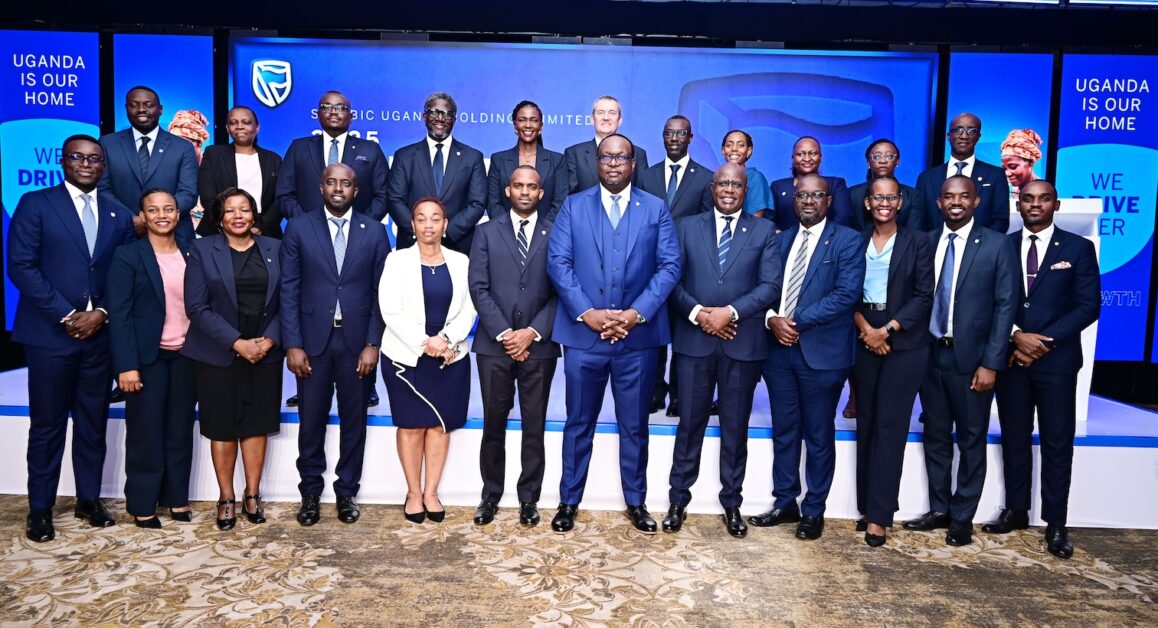
And if there is one defining feature of Kalifungwa’s leadership so far, it is the alignment between performance and purpose.
Stanbic’s internal mantra—“Uganda is our home, and we drive her growth”—is increasingly visible not just in messaging, but in measurable outcomes.
From supporting over 9,000 SMEs and enabling 22,800 women entrepreneurs through targeted programs, to reaching more than 700,000 individuals through financial inclusion initiatives, the bank is extending its impact far beyond traditional banking metrics.
Even within its own operations, Stanbic is reinforcing this ecosystem approach, increasing local procurement spend to UGX 193 billion, ensuring that its growth supports Ugandan businesses directly.
Leadership at the Right Moment
Timing, in leadership, is everything.
Kalifungwa has assumed the helm at a moment when Uganda’s economy is on the cusp of transformation—driven by oil and gas, infrastructure development, and a growing entrepreneurial base. In such a context, the role of a bank like Stanbic becomes critical.
The early signs suggest that his approach is not to reinvent the institution, but to activate its full potential.
By unlocking lending, directing credit to productive sectors, and aligning financial performance with national priorities, Kalifungwa is steering Stanbic toward a more assertive role in shaping Uganda’s economic future.
Looking Ahead
The bank’s forward ambitions reinforce this trajectory. With plans to mobilise UGX 1 trillion by 2028 under its Positive Impact Agenda—targeting women, youth, and farmers—Stanbic is positioning itself for even deeper engagement with the real economy.
As Kalifungwa himself puts it: “Our success as a Bank is inseparable from Uganda’s success. When farmers thrive, when young people create businesses, when communities prosper—that is when we truly fulfil our purpose.”
It is a statement that encapsulates both philosophy and strategy.
And if the momentum of 2025 is anything to go by, Stanbic Bank under Mumba Kalifungwa is not just growing—it is lending with intent, scale, and purpose, unlocking the full power of Uganda’s biggest bank to drive the country’s next chapter of economic growth.