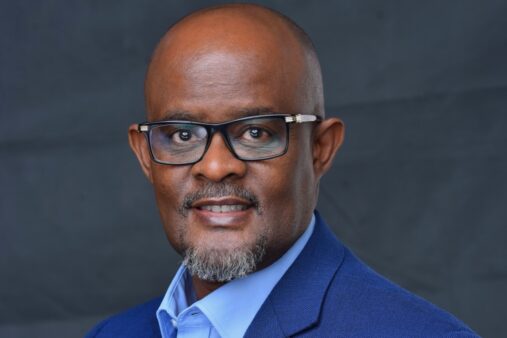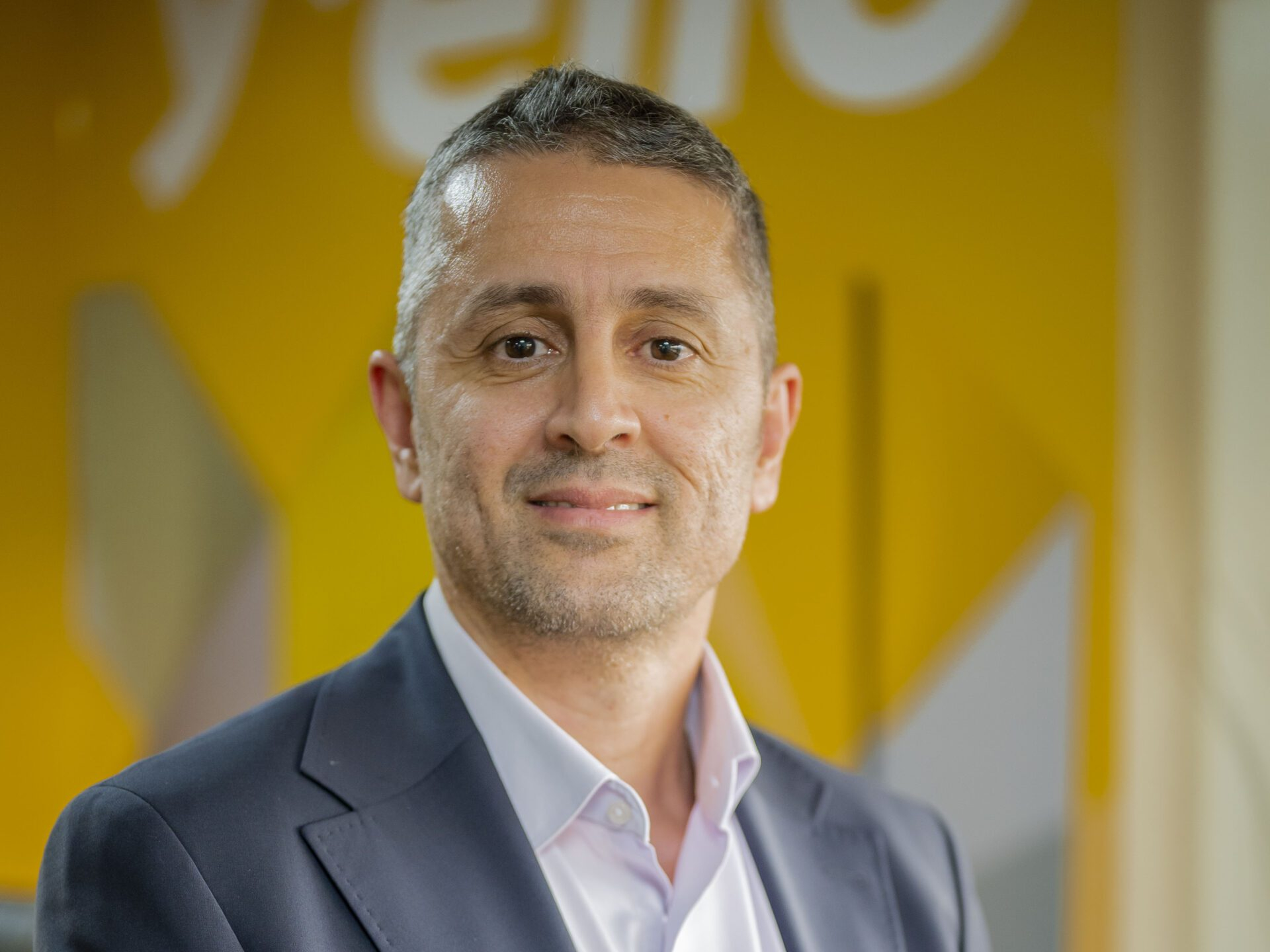
After a turbulent 2024 that saw MTN Rwanda plunge into a full-year loss, the company has staged a powerful turnaround under its new Chief Executive Officer, Ali Monzer.
The former MTN Uganda Chief Technology & Information Officer, who took charge earlier this year, has not only stabilised the business but returned it to profitability, driven by a disciplined focus on fintech growth, operational efficiency, and digital inclusion.
A veteran of the MTN Group, he had spent years building and optimizing networks across Africa and the Middle East.
Before Rwanda, he served as Chief Technology Officer at MTN Uganda, where he helped modernize the network and scale 4G and 5G rollout.
He later had a short but notable stint as Chief Executive Officer of MTN South Sudan, a tough posting in a volatile market that sharpened his operational reflexes.
When the MTN Group Board called to offer him the Rwanda job, it wasn’t just a promotion; it was a test of whether his engineering discipline could translate into strategic leadership.
Nine months later, the answer is clear: MTN Rwanda is back in the black.
From loss to leadership
For the nine months to 30 September 2025, the company posted a profit after tax of Rwf 13.3 billion (UGX 31.9 billion), a sharp turnaround from a Rwf 10.9 billion (UGX 26.2 billion) loss over the same period last year.
Service revenue rose 14.2% to Rwf 216.2 billion (UGX 518.8 billion), while Earnings Before Interest, Tax, Depreciation, and Amortisation (EBITDA) jumped 36.7% to Rwf 89.7 billion (UGX 215.3 billion), lifting the EBITDA margin to 41.2%.
It’s not just a rebound; it’s a re-engineering of how the business makes money.
Monzer’s approach has been simple: “grow digital, tighten costs, and focus where customers are already moving.”
Under Monzer, the operator crossed the symbolic eight-million-subscriber mark, up 6.9 percent year-on-year.
Of these, 2.5 million are active data users and 5.8 million use MoMo, MTN’s fintech arm. The company also grew its merchant network to 578,000 outlets, building the backbone of Rwanda’s cashless economy.
“Reaching the 8 million subscriber milestone marks a defining moment for MTN Rwanda — a reflection of the deep trust Rwandans continue to place in our brand and services. This achievement underscores our unwavering commitment to growth, operational excellence, and innovation with purpose,” Mozer said.
Ali Monzer’s turnaround at MTN Rwanda is backed by a strong team of ten seasoned executives.
The leadership includes Chantal Umutoni Kagame, CEO of Mobile Money Rwanda Ltd; Dunstan Ayodele Stober, Acting CFO; Eugene Gakwerere, CTO; Somdev Sen, Chief Consumer and Digital Officer; Norman Munyampundu, Chief Customer Operations and Experience Officer;
The list also includes; Enock K. Luyenzi, GM Human Resources; George Kagabo, GM Internal Audit & Forensics; Oscar Oboma, GM Risk & Compliance; Sharon Mazimhaka, GM Corporate Services and Company Secretary; and Didas Ndoli, GM Enterprise Business Unit.
Mobile Money: the new heartbeat
The clearest proof of transformation is in fintech. Mobile Money Rwanda Ltd now drives more than half of group revenue.
MoMo income jumped 30.2 percent to Rwf 109.4 billion (UGX 262.6 billion), and advanced services like merchant payments, remittances, and micro-loans grew 37 percent year-on-year.
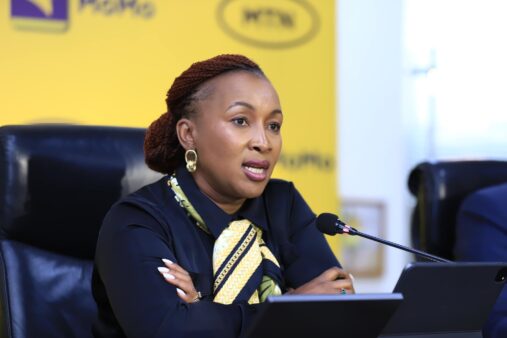
CEO Chantal Kagame calls MoMo “the bloodstream of Rwanda’s digital life.”
She says transaction volumes have hit 246 million per month, proving how tightly the wallet is woven into daily commerce.
“Our MoMo customer base grew by 634,000 reaching 5.8 million, a strong testament to the trust and adoption Rwandans continue to place in us as they embrace a digital lifestyle,” Kagame noted.
That ecosystem effect means more users beget more merchants, who attract more users again. It is what analysts say gives MTN Rwanda its defensible edge in a crowded fintech race.
 Ignored Presidential Directives in UGX34b Debt Push Emin Pasha Owner Toward Crisis as Equity Bank Again Targets Charged Properties and Puts Radisson Hotel Project at Risk
Data rises, voice steadies
Data remains the other growth pillar. Data revenue increased 7.9 percent to Rwf 35.8 billion (UGX 85.9 billion), boosted by a 43.7 percent surge in 4G users to 1.5 million and 120 percent traffic growth.
The company’s new smartphone-financing scheme, Tunga Taci na MTN, launched in August 2025 with Yellow Digital Retailers, allows customers to buy smartphones on easy monthly plans — a smart play that’s helping shrink Rwanda’s digital divide.
Voice, meanwhile, is no longer free-falling. After years of double-digit declines, revenue eased just 2.7 percent to Rwf 50.4 billion (UGX 121 billion), cushioned by the reintroduction of mobile-termination rates and better value-bundle design.
A friendlier regulator, a calmer balance sheet
The Rwanda Utilities Regulatory Authority (RURA) formally closed its quality-of-service dispute with MTN Rwanda in July 2025, after months of network upgrades and corrective measures following service disruptions and an administrative fine earlier in the year.
Though the penalty was painful, it proved catalytic—prompting MTN to fast-track system fixes and reliability improvements that ultimately restored regulatory confidence and reinforced investor trust in the company’s operational discipline.
Rwanda’s economy has stayed on a steady climb with GDP growing at 7.2 percent in the first half of 2025 and the ICT sector jumped 11.8 percent.
Inflation averaged 6.5 percent, manageable by regional standards, while the franc’s depreciation slowed to 9.9 percent, compared with 15 percent the year before.
That macro stability has quietly supported MTN’s turnaround. With incomes rising and digital payments embedded in everyday transactions, the telco’s sweet spot has been connectivity plus financial inclusion.
At the same time, MTN Rwanda’s capital expenditure (ex-leases) dropped 27.1 percent to Rwf 25.4 billion (UGX 61 billion), a deliberate pivot to “smarter spending” rather than slowdown.
Free cash flow doubled to Rwf 64.4 billion (UGX 154.5 billion), giving room to modernize the network and fund new fintech platforms.
Dunstan Ayodele Stober, Acting Chief Financial Officer of MTN Rwanda described the third quarter performance as a demonstration of the telco’s strength of our financial foundation and the discipline of our capital allocation.
“The improvement in EBITDA and profitability is evidence of our focus on operational excellence and efficient deployment of financial resources,” noted Dunstan Ayodele Stober, Acting Chief Financial Officer of MTN Rwanda.
Learning from the hard year
To appreciate 2025’s rebound, it’s worth remembering how bruising 2024 was.
Total revenue increased 4.9 percent to Rwf 261.6 billion (UGX 627.8 billion), and service revenue grew 4.6 percent to Rwf 257.7 billion (UGX 618.5 billion).
Fintech was the only bright spot, with MoMo revenue up 30.3 percent to Rwf 116.7 billion (UGX 280.1 billion), contributing 45 percent of service revenue.
However, EBITDA fell 19.8 percent to Rwf 92.9 billion (UGX 223 billion), and the margin compressed to 35.5 percent from 46.4 percent the previous year.
Operating costs rose amid currency depreciation and the temporary zero-rating of MTRs.
Voice revenue dropped 17.8 percent to Rwf 68.7 billion (UGX 164.8 billion), while data revenue remained flat at Rwf 45.2 billion (UGX 108.5 billion).
The result: a Rwf 5.5 billion (UGX 13.2 billion) loss.
Looking ahead, MTN Rwanda remains focused on executing its Ambition 2025 strategy, enhancing customer value and delivering cost-efficient growth.
The company expects continued commercial momentum in the final quarter of the year reflecting confidence in the resilience of its operating model and the scalability of its digital-platform strategy.