Majid Al Futtaim, the Franchise holder for French Supermarkets giants in the Middle East, Africa, and Asia is finalising talks with South Africa’s Shoprite Group to acquire the Shoprite business in Uganda, CEO East Africa Magazine can exclusively confirm.
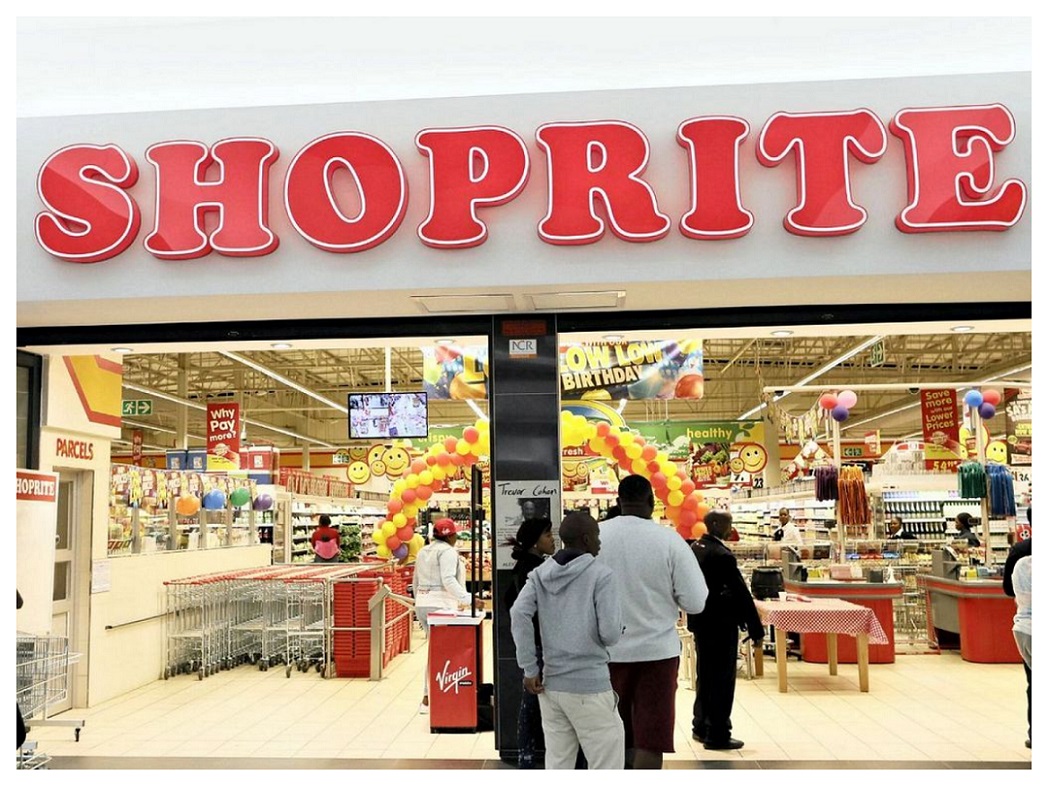
Shoprite has 5 stores in Uganda and a sixth was on its way at the newly constructed Arena Mall in Nsambya, on the Eastern outskirts of Kampala’s Central Business District.
“Carrefour approached them, and Shoprite is listening and waiting for an offer they can’t resist,” one source deeply knowledgeable about the deal, confided in this reporter.
“Between you and me, this deal is closed. They are finalising the practical details and possibly filing the necessary regulatory paperwork, before formally announcing the deal,” another source told CEO East Africa Magazine.
However, when CEO East Africa approached both the Shoprite Group and Majid Al Futtaim, they both neither denied, nor confirmed the deal.
“At Majid Al Futtaim, we continually explore and evaluate opportunities that support the sustainable growth of our businesses, including Carrefour. Accordingly, we work to ensure we meet the changing needs of our customers and increasing demand for our products, while sustainably growing our business,” Ahmed Al Derazi, the GM Corporate Communications at the Majid Al Futtaim, told this reporter via email on Wednesday, May 26th, 2021.
“In 2019, we launched our Carrefour operations in Uganda, where we remain committed to the country and the customers, we are so proud to serve. We provide business updates as and when they occur, but we do not comment on market speculation of any kind,” Mr Ahmed added.
On their part, the Shoprite Group which owns Shoprite Checkers Uganda Ltd said: “The Shoprite Group constantly reviews its business operations as part of its ongoing evaluations of current and future performance and it will update the market as and when appropriate to do so.”
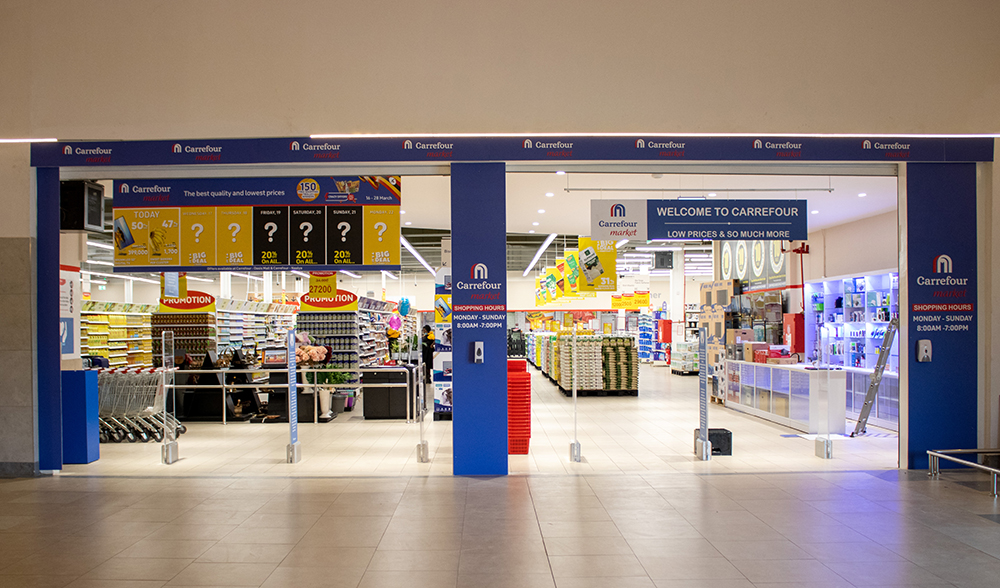
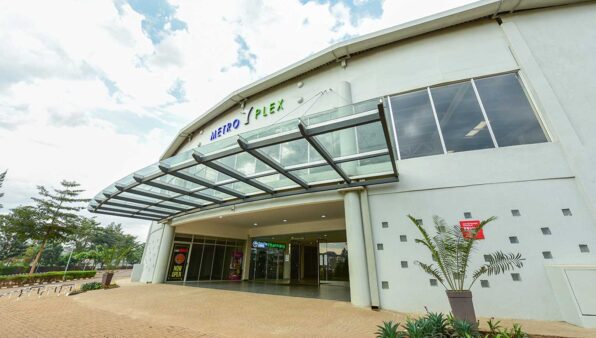
If the deal sails through, Carrefour which opened its first outlet in Uganda in 2019 at the former premises of the failed Nakumatt Stores, at Oasis Mall and a second one, in May 2021, at the Metroplex Mall in Naalya, also in premises formally occupied by Nakumatt and Shoprite later, will now have 08 stores across Kampala. This will hand Carrefour the No.1 position in the supermarkets’ marketplace.
The exit of Shoprite, on the heels of other exits by Nakumatt, Tuskys, Uchumi raises questions around the sustainability of big supermarket chains in Uganda. Interestingly though, local brands such as Quality Supermarkets and Capital Shoppers are said to be performing better.
Who will protect suppliers against Carrefour’s negative anti-competitive behaviour?
The market dominance of Carrefour also raises issues of supplier protection, especially that just this April, the Competition Tribunal, agreed with the Competition Authority of Kenya (CAK), that Carrefour was abusing its market dominance to conscript suppliers into unfair contracts. The unfair contracts would subsequently give it a competitive edge over other players in the market. Carrefour, in Kenya, ordered to revise all its agreements with some seven hundred suppliers within a month.
Among others, Carrefour was found guilty of forcing suppliers to pay a non-refundable fee to do business with it and compelling merchants offering the retail chain goods to provide extra rebates or discounts. They were also found to be in breach of the law for forcing suppliers to post their staff at its outlets at the expense of the suppliers. Carrefour was also found on the wrong side of the law for rejecting goods already delivered.
Again, in March 2021, the French Paris Commerce Court also fined the Carrefour Group, in France, some €1.75 million (UGX7.6 billion) for unfairly squeezing its suppliers on prices during annual contract negotiations. The French court also ordered Carrefour to stop what it called ‘practices that restrict competition.’
Unfortunately, Uganda does not have a competition Authority. CEO East Africa Magazine could also not independently verify from Carrefour’s suppliers, the nature of contracts signed with the company.
End of a 20-year shopping rite experience?
 Why April–June is Known as the Transfer Window in Uganda’s Banking Industry
The exit of Shoprite will mark the end of 20 years of ‘shopping rite’ experience, since the Group opened their first store in Kampala in 2000.
It has been 20 years of mixed performance, for the South African retail giant, which is also facing a tough operating environment, in Sub-Saharan Africa, including, next door in Kenya where it has closed shop.
By 2015, Shoprite ran a cautious expansion strategy, operating three stores. Faced with losses and poor sales, the company closed its Metroplex Mall branch in mid-2015, remaining with only two. That year, the company reported a 7% decline in sales, from UGX56.9 billion to UGX53 billion. The same year, losses worsened from UGX3.5bn in 2014 to UGX11.4 billion in 2015.
In the subsequent year, sales only picked up by 3.4% to UGX54.8 billion from UGX53 billion but thanks to the savings made because of closing the Metroplex store, the firm posted a UGX4.6 billion profit. In 2017, again sales improved slightly by 4.8% to UGX57.3 billion, but the 2016, profit could not be sustained. Profit for 2017 was only a minuscule UGX19.6 million profit.
By end of 2017, Shoprite registered UGX24.5 billion in accumulated losses.
The company then decided to undo its conservative expansion strategy. In April 2018, a third branch was opened the Acacia Mall in Kamwokya, Kampala. A fourth store was opened at Entebbe’s Victoria Mall in June 2018, followed by the fifth one on April 4th, 2019, it opened its fifth store in Uganda at Village Mall, Bugolobi. Interestingly, the three premises were previously occupied by the failed Nakumatt.
It appears, that although by opening 3 new stores in rapid succession, the company jumped its sales by 81% from UGX57.3 billion at the end of 2017 to UGX103.7 billion at the end of 2020, and even made a decent UGX3.6 billion profit, these gains came at a disproportionate cost.
CEO East Africa could not readily access Shoprite’s 2018 and 2019 financial results, but according to the 2020 results, the company’s accumulated losses were reported at UGX43.5 billion, up from UGX24.5 billion in 2017. This can only mean that in 2018 and 2019 the company made combined losses of about UGX19 billion.
Heavy accumulated losses aside, the company is also burdened by debt.
At the end of 2020, the company reported that it had total short-term liabilities of UGX40.1 billion, including UGX31.5 billion owed to suppliers and other creditors. With total current liabilities (UGX40.1 billion), outstripping current assets (UGX32.5 billion) by nearly UGX10 billion, it appears things are not all that rite at Shoprite.
That’s not all, the company had to borrow significantly- at the end of 2020, Shoprite Uganda reported, it owed financial institutions, some UGX25.9 billion and an additional UGX21.8 billion was owed to related parties- understood to be Group loans.
Heavy debt, especially in Uganda where interest rates are in the range of 15-22%, also comes with a heavy cost of financing. Shoprite in 2020 paid UGX2.5 billion, in interest payments alone, yet in 2017, interest payments were only UGX320.8 million.
Although no one will admit it, it appears, Shoprite, like many other players before it, burnt its fingers by over-expanding, in a market where most shoppers rely on their neighbourhood retail shops (duukas) for their groceries.
As the market welcomes the triumphant entry of Carrefour, into Shoprite’s premises, most of which were previously occupied by the failed Nakumatt, we wait to see how Carrefour plans to succeed where Shoprite has failed.
And like they say, only time will tell.