For decades, the story of Uganda’s agriculture has been one of bittersweet potential.
We sing about being the Pearl of Africa, blessed with fertile soils and two rain seasons, yet every harvest, we watch heart-wrenching scenes of mangoes, oranges, and tomatoes rotting in the gardens of Teso, Acholi, Lango, and West Nile.
At Nilezilla, when we set out to change this narrative with our fruit processing facility in Lodonga, Yumbe District, we learned quickly that “potential” does not pay the bills. Value addition does.
But moving from a garden to a supermarket shelf is not a simple walk in the park; it is an industrial marathon that requires grit, massive capital, and a patriotic commitment to rural development.
The myth of “pocket change” industrialization
Let us be honest with ourselves as a business community: you cannot build a competitive, export-grade industry on a shoestring budget.
There is a misconception that agro-processing is something you can fully set up in your backyard with as little capital as UGX 500 million.
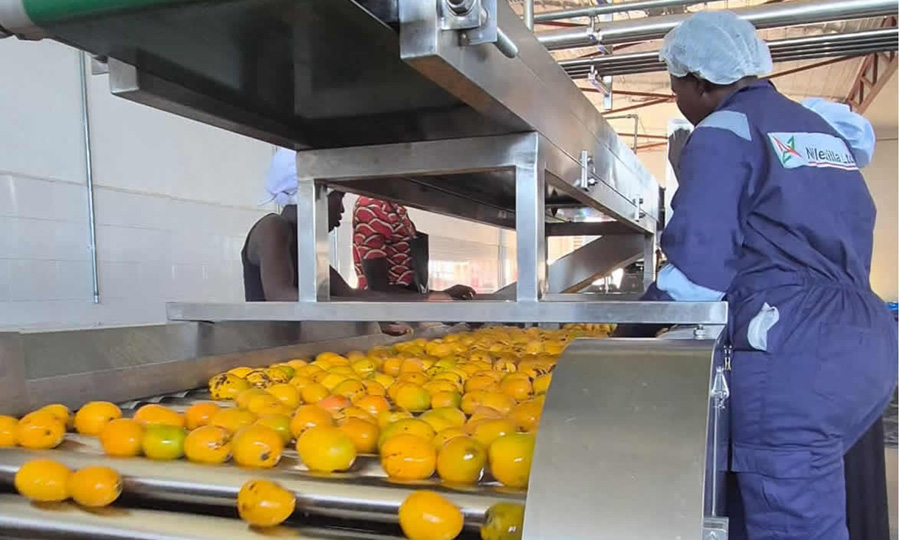
While UGX 500 million is a lot of money to an individual, in the world of agro-industry, it is barely the starting line. When we built the Nilezilla facility, we weren’t just buying a blender; we were installing a state-of-the-art aseptic processing line, high-pressure steam boilers, and industrial-grade pasteurizers capable of handling 5 metric tons per hour.
This is where a strategic partnership becomes vital. Nilezilla is a testament to the power of shared vision, with the government of Uganda, through Uganda Development Corporation (UDC), Food and Nutrition Solutions (FONUS), and Aringa Fruit Farmers Cooperative Society Limited (AFFCSL) coming together as shareholders to make this possible.
The reality is that setting up a facility that meets international food safety standards requires investments in the billions. This unique shareholding structure recognizes a fundamental truth: if we want Uganda to stop donating money to foreign economies by importing juice concentrates, government and the private sector must co-invest ‘serious money’ into our own backyard.
Why rural areas? The “logistics vs impact” equation
Why build a multi-billion-shilling factory in Yumbe, hundreds of kilometers from the capital? Why not just stay in the Kampala Industrial Park?
The answer lies in the Kagogwa mango. This unique, fiber-rich local variety is the gold of West Nile.
By placing the industry right at the source, we solve the first logistical nightmare: freshness. Mangoes are perishable; trucking them raw to Kampala leads to massive post-harvest losses.
However, rural industrialization comes with its own logistics beast. Obtaining raw materials isn’t just about buying fruit; it’s about aggregation.
We deal with thousands of smallholder farmers. The roads from the farm gate to our factory are often impassable during the rainy season, ironically, exactly when the harvest is ready.
 Inside Ramathan Ggoobi’s Plan to Raise UGX 2.3 Trillion in New Taxes and UGX 2.54 Trillion Through Enforcement
To overcome this, we have had to innovate our supply chain. We don’t just wait at the gate; we work with farmer groups and cooperatives to create aggregation centers.
We use boda-bodas and smaller trucks to ferry fruit to collection points before the big haulers take over. It’s a logistical ballet that happens daily, but it pumps money directly into the village economy.
The ripple effect: Jobs beyond the factory floor
The most engaging part of this journey is seeing the transformation of the community. A factory in a rural area is an ecosystem.
- Direct employment: While we employ specialized engineers, food scientists, and machine operators, we are most proud that ‘sons and daughters of the soil’ make up the bulk of our workforce.
- The multiplier: Looking outside the gate, we have women cooking food for workers, youth transporting mangoes, and mechanics fixing delivery trucks. But most importantly, we have the farmers who now have a guaranteed market and can pay school fees without selling their land.
When you process in the village, you stop the migration of youth to Kampala’s slums. You give them a reason to build a life where they were born.
The last mile: Branding and packaging
Finally, let’s talk about the elephant in the room: Marketing. You can have the best mango pulp in the world (and we believe Kagogwa pulp is superior to some of the imported purees), but if your packaging is poor, the market will reject it.
Packaging materials in Uganda are expensive and often imported. This is a hurdle the entire sector faces. At Nilezilla, we are tackling this by focusing on B2B (Business to Business) first, supplying the big juice makers with high-quality pulp in drums so they don’t have to import.
But for our consumer goods, we are investing in branding that screams “Premium Uganda.” We need Ugandans to feel pride when they pick a local product.
The way forward
Developing Uganda’s agro-processing industry is not for the faint-hearted. It requires patience, deep pockets, and a government that supports manufacturers with reliable electricity and better feeder roads.
But is it worth it? When you taste a juice made from 100% Ugandan pulp, and you know that the money for that juice went to a farmer in Yumbe rather than a plantation on another continent, the answer is a resounding YES.
To encourage those entering the complex agro-processing sector, the country needs to provide accessible venture capital and a supportive regulatory environment.
Nilezilla Limited is a premier fruit processing company based in Yumbe District, specializing in turning Uganda’s abundant fruit harvest into high-value pulp for local and international markets.