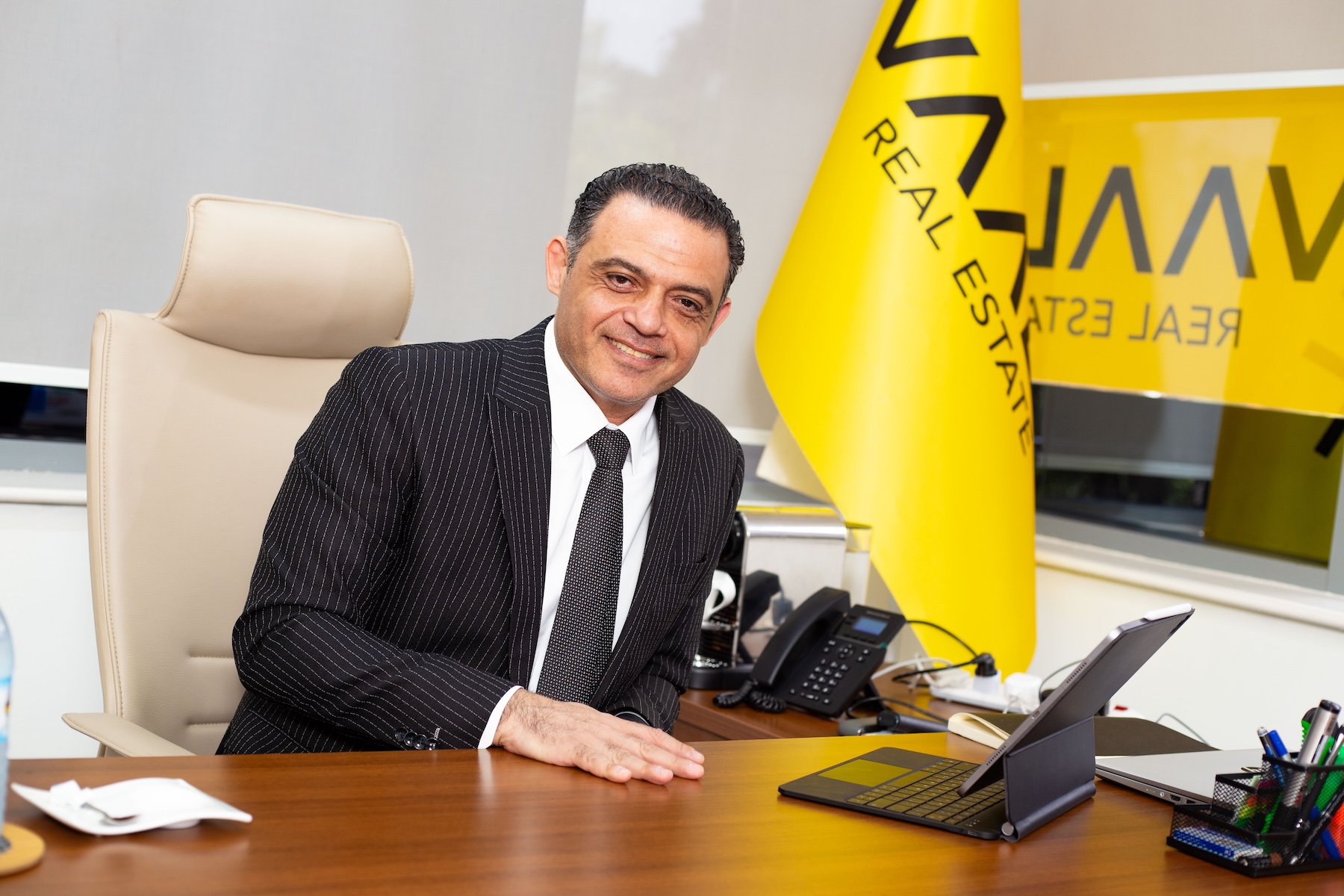
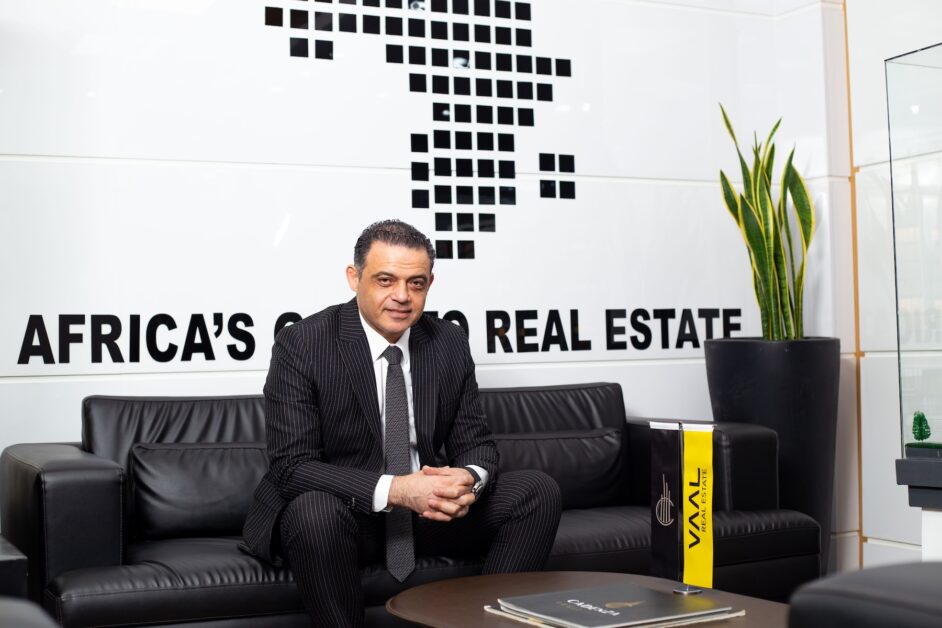
At the centre of this vision is Islam Mohamed, the Chief Executive Officer and Co-founder of VAAL Real Estate Uganda. An electrical engineer by training but a seasoned sales and real estate executive by career, Islam brings nearly 20 years of experience across Egypt, Turkey, Kenya, and Ghana. His leadership has helped VAAL establish a reputation for delivering not just buildings, but lifestyle-driven communities designed to global standards.
In this conversation with CEO East Africa Magazine’s Executive Editor, Muhereza Kyamutetera, Islam opens up about what first drew VAAL to Uganda, the company’s distinctive joint-venture model with local partners, and why he believes Uganda offers some of the best returns on investment in Africa today. He shares insights on market trends, the evolving expectations of Ugandan buyers, and his own leadership philosophy that drives a passionate team to sell projects still under construction.
From the challenges of building iconic, one-of-a-kind developments to the opportunities of cross-border investment and the promise of Uganda’s untapped real estate market, this is a candid conversation with one of the visionaries redefining Kampala’s property landscape.
What first attracted you and VAAL to consider Uganda as an investment destination, and when did you personally make your first visit here? Can you take us through that initial experience — what impressions you had of the country at the time, what factors convinced you that Uganda was ready for high-end real estate, and how those early visits shaped your decision to establish VAAL’s footprint here?
You know, I was really surprised the first time I came to Uganda. Honestly, I didn’t expect the country to be like this. But when I arrived here in March 2023 for the very first time, it was completely different from what I imagined.
Our story actually starts much earlier. Back in 2015, we began expanding beyond Egypt. The headquarters of the group is in Turkey, and from there, we started touring different African countries to see where we could establish ourselves. Uganda was part of that 2016 tour, but at that time, we felt the market wasn’t yet ready. Nairobi was booming then, so we started in Kenya. A few years later, in 2021, we opened in Ghana.
When I later joined Majeed (VAAL Group CEO), we made another tour through many African countries; including Uganda. Then in March 2023, I came with two colleagues and spent two weeks here. In just one week, we visited about 45 plots, met landowners, and tried to shortlist opportunities. We went back to Istanbul to evaluate, and this time Uganda felt different. The economy was improving, buildings were coming up, and there was more energy in the market than seven years earlier.
It wasn’t an easy choice between Uganda and the other countries that seemed more ready at the time. But here, the opportunities were still fresh and the people here were friendly. So, in May 2023, I returned alone.
I didn’t come unprepared. After we made the decision in late March, I spent time drawing up a plan — what we needed to do, and how to start. Because if you don’t have a plan, you can’t achieve anything. So that’s how we began in Uganda.
When you were deciding on Uganda, what were the key factors that ultimately attracted you and VAAL to choose Uganda as an investment destination?
Islam Mohammed 10:04
The first thing that attracted me was the economy. Uganda still feels very original — like everything is just at the beginning. It’s what I would call a “blue market,” very fresh, very open. People here are willing to pay for luxurious things, but only if they get quality. And that’s exactly what is missing in the market — quality.
Many Ugandans travel abroad or live in the diaspora. They’ve seen the kind of buildings in Dubai or Europe, and they know what world-class finishes and amenities look like. They are ready to spend, but here they can’t find that same quality. So when you bring it to them, they will buy 100 per cent — as long as they believe you can actually deliver what you promise.
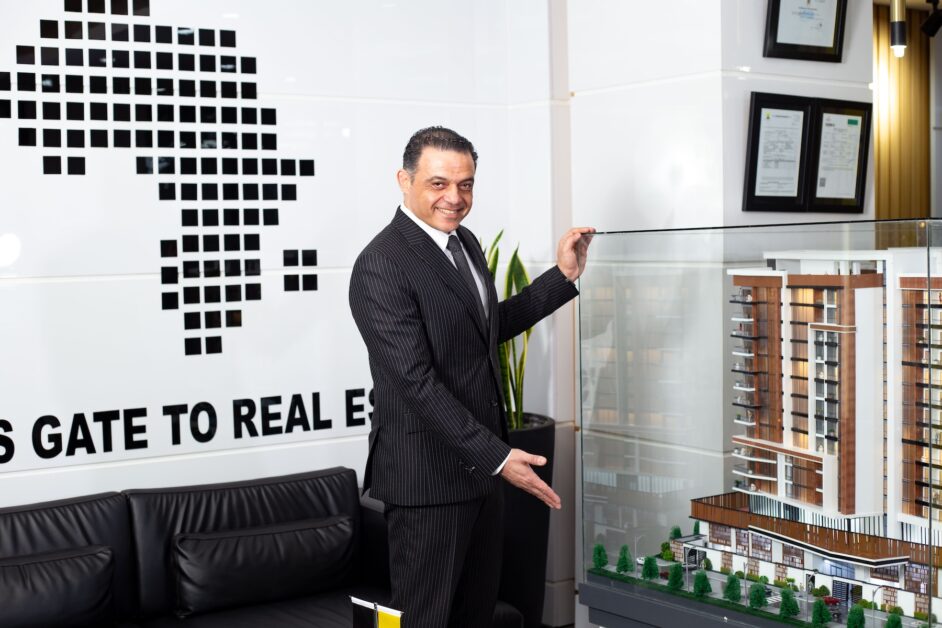
For me, this is the right time for Uganda. If you look around East Africa, Nairobi has already reached that level — it’s a red ocean market now, highly competitive. But here in Uganda, the market is still blue, still fresh, and full of opportunity.
Another thing is the people. From the very beginning, I felt at home. Ugandans are very friendly, very welcoming, not aggressive like in some other countries. You feel like you are among friends right away.
And then of course, the weather. Honestly, you have the best weather I’ve seen in Africa. You don’t even realise what you have here. It’s green everywhere — not the ordinary kind of green, but a deep, rich green. There is no desert. You could put seeds in the ground almost anywhere, and they’ll grow by themselves. This is something very unique about Uganda; this country is very blessed.
I’ve noticed you have a unique model with projects like Cadenza and The Bridge, where you partner with a local investor who contributes land. Is this approach something you apply across all the markets you operate in, or is it specific to Uganda? And what’s the thinking behind choosing this model?
Yes, we always follow that model. When you come to invest in a country as a foreigner, it should be a win–win situation. The people of that country must benefit as well. The first way to ensure that is by entering into joint ventures with local partners.
This isn’t unique to Uganda — we did the same in Kenya, in Ghana, and everywhere else. We always seek out local partners, because it’s good for the country and for us. Beyond partnerships, we also employ and train local talent. You can’t come in with a selfish mindset of just making money and then leaving. That doesn’t work.
Our approach is about building capacity. For example, the staff we hire and train here in Uganda are gaining skills to the point where they can perform at the level of international professionals. Even if they leave VAAL one day, they’ll carry that expertise into other companies and continue adding value to the country. That’s real impact.
Today, we have the Cadenza project and the Bridge project, both with Ugandan partners. They’ve helped us so much, and we’ve also built strong local relationships — even my lawyer here is Ugandan, someone I first met years ago in Nairobi. This model ensures that we are not just here to take, but to build something lasting together.
And in terms of local impact — how much is VAAL investing in Uganda, and what kind of jobs are you creating? Do you have some numbers or estimates you can share, both in terms of the scale of investment you’re bringing into the country and the employment opportunities generated at the peak of these projects?
Let me explain. We are investing/impacting in Uganda in two main ways. First, through direct funding by our group — that’s our own capital coming in. Second, by selling properties to foreigners or non-Ugandans living here — Congolese, South Sudanese, Indians, and many others. In that sense, it’s like exporting Uganda’s real estate. Of course, you can’t physically take an apartment out of the country, but when these people invest here, they bring in money from abroad. And once they live here, they spend on supermarkets, food, cars, and services — all of which benefit the Ugandan economy.
On the jobs side, I started small. I came in May 2023, by August, we had our first employee. By December 4th, when we officially opened the office, we had grown to 20 people — myself and one other foreigner, but all the rest were Ugandans. Today, we have more than 30 Ugandan staff directly employed. And beyond that, there are hundreds of indirect jobs. For example, the companies that handle our events are Ugandan, most of our suppliers for various items are Ugandans, and the construction site workers are Ugandans too.
And we’re still growing. With new projects coming up, we’re hiring more — sales, marketing, call centre staff, and other roles. My belief is that when you invest in a country, you should use local resources and give back to society, not just come in, make money, and leave.
Let’s talk about you for a moment — what personal experience do you bring into this business and the real estate industry, and how long have you been involved in it?
I’ve been in real estate for about 20 years now. I actually started in 2006, not with VAAL, but with my own company, together with my father in Egypt. I spent around 14 to 17 years there, working on all kinds of projects — high-rise buildings, villas, small town houses, and large apartments. That’s really where I gained most of my experience before eventually coming here. So altogether, it’s nearly two decades in the real estate and construction industry.
I came across an interesting story from West Nile, in northwestern Uganda, where Italian priests once built a massive church in the middle of a predominantly Muslim community. Their idea was that the church should be bigger than anything else around, as a kind of statement of faith. I can’t say if the story is fully verified, but it made me think about VAAL’s approach. You’re also putting up landmark, one-of-a-kind projects — like a 24-storey tower that hasn’t been seen here before. What is the philosophy behind this kind of bold, signature development?
When I first came here and met the lady who agreed to partner with us, my thinking was clear — I needed to do something truly unique in Kampala. If I had come to build just another ordinary house or apartment block, it would mean nothing. Ugandans already have that. So the question was: what are we really bringing that is new?
I started by asking myself: What is the tallest residential building here? Once I knew that number, I decided we had to go higher. It had to be the first of its kind — a true landmark. And I know it will become one. One day, people will give directions using Cadenza: “After Cadenza, take the left road or the right.” Believe me, it will happen.
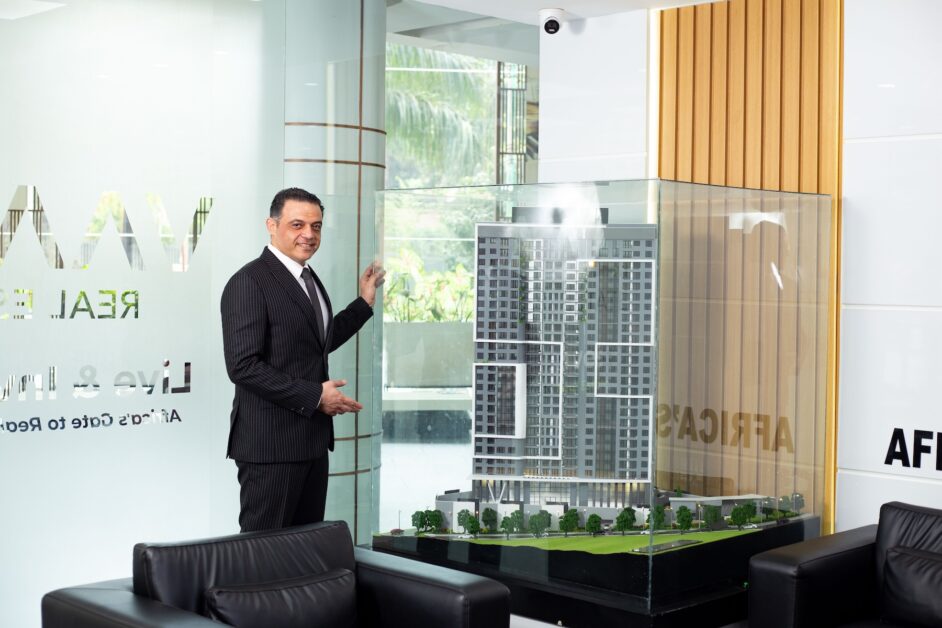
Cadenza is not just a building. It’s more like a hotel — but even better, because it’s a residence with everything a hotel offers and more. You name any amenity in a Ugandan hotel, and I can tell you we have more in each of our buildings. You could spend the whole weekend inside without needing to step out. That’s exactly what I wanted for our investors and residents.
For someone living in Nakasero, or even just staying two nights, when they open Google Maps, they should find our project standing out — with all these amenities, more privacy than a hotel, better security, and a stronger return on investment. That’s what we built with Cadenza. And we added something else: at the top, you get a full 360-degree view of Kampala, stretching all the way to the lake. That was intentional — to make it not just functional, but memorable.
We also thought of the modern lifestyle. For example, there’s a business center inside the building. So if you work from home, or if you need to meet someone, you don’t have to leave your residence. You can host them in a professional setting within the building itself.
Now, with The Bridge, our thinking was different again. After Cadenza became the tallest residential building, we asked ourselves: What can we give people that is truly unique? That’s how we came up with the idea of the twin towers connected by a sky bridge, and packed it with the largest number of lifestyle amenities in Kampala — 25 different experiences in one place. Even on a short weekend, you can’t exhaust them all. It would take four or five days just to enjoy everything on offer.
So the philosophy is simple: every project must be a landmark, something never seen before here, something that gives people not just a home, but a whole new lifestyle.
Talking about these amenities — if I buy, say, a studio apartment, do I get full access to facilities like the pool and other lifestyle spaces as a resident, or are some of them restricted? And beyond that, do I need to pay anything extra to enjoy these services, and how is that arrangement structured?
Yes, of course — once you buy an apartment, all the amenities are yours to enjoy. Whatever you want to use, you can. And importantly, these facilities are exclusive to residents. Outsiders or non-tenants cannot access them — they’re strictly for the people living in the building.
As for the cost, there isn’t anything unusual. You don’t pay extra per service. Instead, there’s just a standard service charge, similar to what you’d find in other apartments with amenities. It’s nothing over the top.
Before we get into the projects themselves, I’d like to tap into your leadership. How do you mobilise and motivate your team — especially the salespeople — to stay so passionate and convincing, even when selling projects that are still under construction? How do you inspire that kind of belief and drive in your people, given that they are competing with other projects that are already complete and visible?
I’m an electrical engineer by profession, but since finishing university, I’ve mainly worked in sales. That’s where I built my career. And sales is all about trust — when you convince people and they truly believe in you, they’ll give everything with passion. That’s exactly what you see in my team. They believe in the projects because they know we deliver.
It’s not just words. Every year, we hand over major projects. This month in Ghana, for example, we’ve completed an 18-floor project with more than 300 apartments. Earlier this year in Kenya, we handed over two towers with 19 floors. So the team here knows this is serious — VAAL doesn’t just talk; we invest, we deliver, and we keep raising the bar. Even our office reflects that. When people walk in, they immediately feel it’s not an ordinary setup. It shows we mean business.
As a leader, I believe in leading by example. Whatever I ask my team to do, I must be willing to do myself, and even more. They need to see that commitment. That’s why we hold weekly meetings — to keep everyone aligned, motivated, and focused. I push them, but I also support them. You need to have a clear plan from the beginning, stick to it, and make adjustments along the way, but always stay consistent in the direction.
Another part of my philosophy is the “open-door policy.” My door is open from the time I arrive until I leave. You don’t need an appointment; you don’t need to go through security or an assistant — I don’t even have an assistant. Anyone in this office, from the youngest staff member to the most senior, can come directly to me. If you want to complain about something, even about me, you’re free to do it. That closeness builds trust.
I also try to be present in my team’s personal lives. I know many of their family issues, and if I can help, I will. Because personal problems always affect professional performance. When you support your people, they become loyal. And when your team is loyal to you, you can achieve anything.
Since launching Cadenza Residence in Nakasero, what has the journey been like? What key milestones have you achieved — from construction to occupancy and investor returns? How has the market responded so far, and what kinds of buyers have you attracted? And looking back, what aspects of Cadenza are you most proud of?
When we started Cadenza, we were initially advised that piling wasn’t necessary for the soil conditions here. We had a soil test done, and the results suggested it was fine. But as we always do, we decided to double-check with another assessment. That’s when the issue came up — the second test showed that, actually, we did need piles.
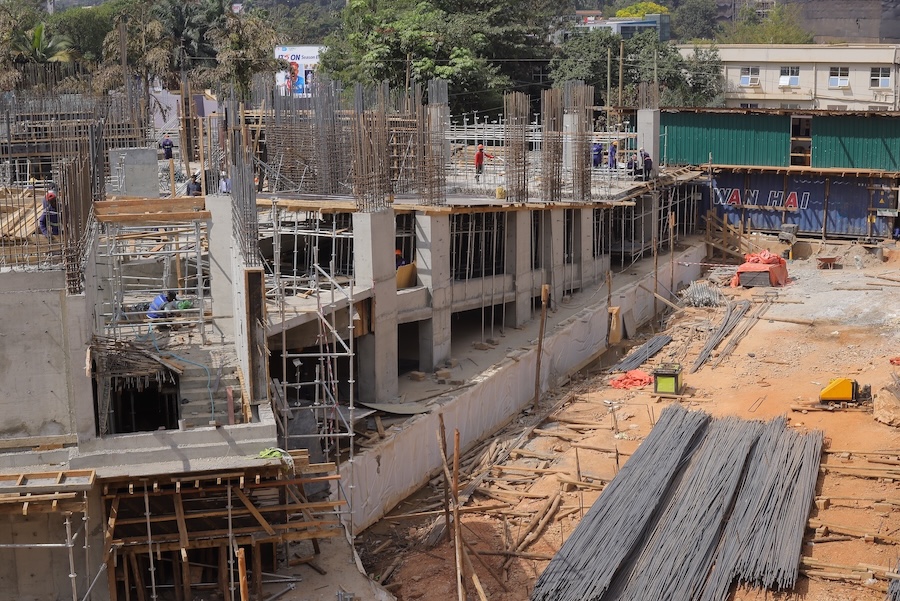
So we had to restructure everything from the beginning. We ended up doing 146 piles, each going down 44 meters — that’s the equivalent of 13 floors underground. It cost us about $2 million and took around three months to complete. Only after that could we move ahead confidently.
From there, progress picked up. We finished the regular foundation, then the main structural foundation. Just last week, we completed the first basement, and we’re now working on the second. By the end of this month, that should also be done. Once we reach the ground floor, construction will move much faster.
The important thing is that Cadenza will not only be the tallest residential building in Uganda, but also the safest. The structure is designed to withstand earthquakes, even though Uganda doesn’t usually face them. We are building something meant to last 100 years or more, strong and secure. At the end of the day, safety comes first. People’s lives are more important than anything else.
Beyond Cadenza and The Bridge, what should we expect from VAAL in the coming years? Are there new projects or concepts in the pipeline, and how do you see your portfolio in Uganda evolving in the short to medium term?
Yes, I’m already working on a plan. One of my biggest dreams here in Kampala is to build a gated villas community. We’ve done it before — in Kenya and in Ghana as well — and I want to bring that same concept here. A modern gated community with villas, a clubhouse, and lifestyle facilities where people truly feel at home. The idea is that once you enter this village, you won’t want to leave. You’ll look forward to coming home every day — to enjoy the comfort, the amenities, and also the sense of community, connecting with your neighbours in a modern, well-planned environment.
That’s the vision. It also has to be something unique — something Kampala has not seen before. That’s always my challenge: to keep raising the bar and delivering developments that stand out.
From your perspective, what trends are you seeing in Uganda’s luxury real estate market right now? And on a more personal level, when you think back to those first rides from the airport and the vision you had in your head about how these projects would come together — how has the journey with Cadenza so far shaped your understanding of living and working in Uganda?
When I first came, I knew there would be challenges. Back in Istanbul, as I was planning, one of the biggest concerns I had was around human resources. People are your real tools. Without the right people, you can’t achieve anything. So the question was: who will we hire, how will we train them, and most importantly, how will we make them believe in me and in VAAL? Because if they don’t believe, it just becomes another job — they show up, take their salary, and leave.
Alhamdulillah, that’s not the case here. I’ve built a team I can depend on, people who are committed and passionate. It was tough at first, but within a very short period, we’ve achieved something significant in Uganda. Today, people are talking about VAAL even before our first project is finished. Clients believe in us, and we already have repeat buyers — those who invested in Cadenza have also invested in The Bridge. That level of trust tells me we’re building something big, something people will remember and talk about for a long time.
I’m not surprised you come from a sales and marketing background — I could already see the signs of it in the way VAAL promotes its projects. Even before The Bridge was officially launched, people were already talking about it, asking, ‘Which bridge?’ That kind of buzz is very interesting. From your perspective, what are some of the most interesting trends you’ve noticed in Kampala’s real estate market, and what lessons have you learned from observing how buyers here respond?
Honestly, I think we’re not just following trends — we’re setting them. Alhamdulillah, since we started here, I believe we’ve begun to lead the market. Like you mentioned, the billboards, the branding, the buzz — all that visibility didn’t really exist before in real estate.
 Stanbic’s Five-Year Scorecard: How Profit Growth, Deposits, Lending and Dividends Reshaped Performance
My strategy has always been different. I learned it back in Egypt — you go out, you create excitement, you make people talk about you first. Then, once the market is buzzing, you deliver a unique project that matches the hype.
For me, that’s a strength. I enjoy starting companies from scratch, building momentum, and setting a new standard. And that’s exactly what we’re doing in Uganda.
And is it paying off? People often accuse marketers of only spending without showing returns. From your perspective, is this strategy bringing money back to the shareholders? How are you seeing the market respond to your investments in visibility and promotion?
The response has been huge — honestly, even more than I expected. From the very beginning, before we even launched the first project, people already knew VAAL. When I introduced myself or when my team went out, people would say, “Oh, you’re the company with the yellow billboards everywhere.” That visibility gave us instant recognition.
Today, I don’t need to explain who we are. People already know VAAL as a big player and a leader in this market. That positioning and branding work doesn’t just cost money — it translates into real value. It may not always show in a direct, immediate way, but it always yields results. For example, when I meet a landlord now, I don’t have to convince them about our credibility. They already know us as the company building the tallest residential project in Uganda.
It also makes life easier for the sales team. The visibility and brand recognition gives them credibility. Clients see the investment we’ve made in building the brand and say, “These guys are serious. They’re not here to scam us.” That trust is priceless, and it ultimately reflects back in sales and long-term investor confidence.
When you launched Cadenza, I’m sure customers had certain questions and concerns — perhaps around pricing, quality, or whether the project would really be delivered. By the time you introduced The Bridge, I imagine some of those questions had changed. How have you seen customer expectations evolve between these projects, and what are the biggest shifts you’ve observed in how buyers think about high-end real estate in Uganda?
From February 2024, when we launched Cadenza, to August 2025, when we launched The Bridge, I’ve seen a clear shift. At first, many people had doubts. There was suspicion — could we really deliver at the level we promised? But Alhamdulillah, that has changed. Now we have believers.
We reached a point where people were waiting for us to launch the next project before we even announced it. Some clients bought apartments in advance, simply because they trusted us. Why? Because they saw the proof. They saw the piles we put into Cadenza — 146 piles, millions of dollars spent underground on something no one would ever see, but that made the building stronger and safer. That gave them confidence.
Then they visited the showhouse and saw the finishing quality with their own eyes. That’s when they believed. Now, many of those who doubted at the beginning are giving us referrals — recommending family and friends, and even buying more than one apartment themselves. We also have buyers from other countries, which shows how far that trust has grown.
So yes, expectations have changed — from suspicion to belief, and from belief to loyalty.
Let’s talk about your customer mix. By percentage, how does it break down between Ugandan buyers, diaspora, and foreign investors? Do you have a sense of what that mix looks like today?
We haven’t worked out the exact percentages in detail, but I can say with confidence that more than 90% of our buyers are Ugandans. We do have some clients from other nationalities, but our main target has always been the Ugandan market. People here were missing this kind of product, and that’s why they’ve responded so strongly.
In Uganda, we’ve traditionally had a culture of building for ourselves, often relying on local masons or contractors with little formal training. Most times, we don’t even verify their credentials — it’s all based on referrals. The result is that many of us, myself included, have made costly mistakes. All of this feeds into a trust issue. Do you see those sentiments reflected in the market — where people say, ‘I’d rather give my money to someone I can trust, even if it takes two years, as long as I know it will be done right’? And how has that influenced the way buyers respond to VAAL’s promise of quality and delivery?
It’s exactly the same issue you mentioned, and that’s where the value of investment with us comes in. Let’s say you want to build 20 apartments in Kololo. To even start, you’d need at least $2 million just to buy the land. Then, to construct and complete those apartments, you’d need another $5–6 million. So now you’re looking at around $8 million, plus all the stress of managing contractors, delays, and quality issues.
With VAAL, I can give you those same 20 apartments within a landmark building — and I’ll manage them for you — at just your initial $2 million investment, payable in instalments over three years. You save money, avoid the headache, and get a much higher-quality product than you could build on your own.
And beyond saving you money, the returns are stronger. The ROI on an apartment in one of our projects is higher because demand is strong — rentals in our buildings move faster than elsewhere. Plus, you don’t have to worry about late-night calls for water or electricity issues. We handle all of that through our property management team. Your role is simple: invest, and then sit back while the income flows directly into your bank account.
So let’s say there’s someone about to retire at 55, maybe with about UGX 2 billion in hand, wondering where to put that money. From your perspective, why would it make more sense for them to invest with VAAL — say by buying a number of apartments — rather than trying to go out and build on their own?
It’s simple — if you build on your own, you’ll invest more, gain less, and carry all the headaches for years. With VAAL, you invest less, gain more, and do nothing. We take away the stress and deliver the returns.
That UGX 2 billion sitting in a bank account will only give you a small percentage. But if you channel it into our projects, it keeps working for you. Even before the properties are completed, your money is growing. And once they’re ready, you have tangible assets that generate income year after year.
So instead of putting UGX 2 billion into, say, a 15-year government bond earning around 13%, you’re saying I could invest it with VAAL and potentially get a much stronger return?
Exactly — that’s the point. This is how you should be investing. And once you have an apartment, you have options. If your kids are visiting from abroad, or you want to spend some time there with your family, you can use it. But when you’re not around — maybe you’re upcountry with the cows for a week — you can rent it out. Even in Nairobi, many of our clients put their apartments on Airbnb for short stays. So if your apartment is free for a week, we can rent it out for you. It’s like owning an apartment that works like a hotel — giving you both flexibility and income.
Have you arranged any financing options with banks for your buyers, or do most clients organise their own financing?
First of all, we don’t take funds from anyone — we fund our projects ourselves. That’s very important.
That said, when people think about real estate, the first question is usually, “Can I get a mortgage?” The reality in Uganda is that very few banks are willing to finance off-plan projects. That’s a challenge. But the way we structure our payment plans already solves this problem. For example, with The Bridge, we give buyers up to 40 months to pay, interest-free. That’s essentially financing built into the purchase.
If you take a mortgage while the property is still under construction, it only increases the cost, and you’re not earning from the asset yet. It makes more sense to take a mortgage on a ready property — because by then you already have tenants, and the rental income helps cover the interest. For properties under construction, it’s better to go with a developer like VAAL that offers flexible, interest-free payment plans. That way, by the time the project is complete, you own an asset without the extra burden of financing costs.
And speaking of sustainability, how environmentally friendly are your projects? What measures are you taking to ensure they’re built with sustainability in mind?
All our projects are designed with sustainability in mind. Take Cadenza, for example — we’re only building on 27% of the plot. The rest is dedicated to green areas, sitting spaces, and amenities. That’s our philosophy everywhere we go.
In Kenya, in Ghana, and now in Uganda, we follow the same model. Even with other projects there, we build on just 30–34% of the land and leave the majority open. We don’t believe in covering the entire plot with concrete. Instead, we go vertical, creating landmark buildings while preserving open space. This way, residents enjoy fresh air, greenery, and a healthier living environment.
What keeps you up at night these days? What are the biggest concerns or challenges on your mind as you lead VAAL in Uganda?
In Uganda, honestly, you can sleep better than even in my own country. But what keeps me awake at night are a few big things. The first is delivering on my promises to clients — making sure progress continues smoothly and that we hand over on the dates we’ve committed to.
The second is about my team. How do I keep improving them, making them more professional, and helping them achieve more in sales and service? That’s always on my mind.
And then there’s the future — what should our next project look like after The Bridge? Should it be villas, another high-rise, or something else? Which location makes the most sense — Kololo, Naguru, or another prime area? These are the questions that keep me awake at night.
Throughout this journey, from Egypt to Kenya, Ghana, and now Uganda, what has been your biggest source of inspiration? What is it that drives you personally — the vision or belief that keeps you moving forward, even through challenges?
Two things inspire me most. The first is my father. He was my biggest mentor. He was an engineer and also a general in the army before starting his own business. I began working with him when I was just 14 years old — we started in computers and tech, which is why I later studied electrical engineering. Then, in 2006, we ventured into real estate in Egypt, developing in two cities at the same time. That foundation shaped who I am today.
The second is my own definition of success. For me, success is simply about setting meaningful goals and staying consistent until they become real. The keyword is meaningful. A goal has to have value — not something destructive or selfish, but something that contributes and leaves an impact.
Alhamdulillah, within just six months in Uganda, we had already achieved several milestones: we launched our first project here only two months after opening the branch, and the sales numbers surprised even our board. We’ve also built a strong, dependable team of professionals. Cadenza itself is already a success, and the new projects ahead — including the villas — will be more milestones.
I believe Uganda is at the right time and the right place for growth. The next four to five years will present many huge opportunities: with oil and gas coming along, new gold discoveries, and investment interest from the Gulf region, this economy is going to be transformed. And we want to be part of that story.
Besides the oil and gas that we have waited for for a long time, from your experience across Egypt, Kenya, Ghana, and now Uganda — how do you see Uganda as a place to live, work, and invest compared to those other markets? What stands out to you about Uganda, both in terms of opportunities and the way people approach work and success?
Yes, people have been waiting for oil, but the truth and the bigger point, though, is that Ugandans need to push themselves more. You have everything here — the land, the climate, the resources — which means life can be very comfortable even without working too hard. You can live in the village on almost nothing. But if you want real money, you have to work hard, and when you do, the opportunities here are huge.

That’s different from my country. In Egypt, you can work very hard and still earn very little because the competition is massive. To succeed there, you must stand out completely — like the story of the Purple Cow. If every day you pass by a field with black and white cows, you wouldn’t really notice them. However, if one day you passed by the same field and saw a purple cow, everyone would stop and pay attention. In my country, you have to be that purple cow, and even then, it’s still tough.
Here in Uganda, you don’t need to be a purple cow to succeed. Just put in more effort, have a clear plan, and follow it. That alone sets you apart. And for me personally, Alhamdulillah, I now have not just one purple cow here — I have two.
In speaking to different CEOs, many point out the unique experience of managing young people — especially this new generation in their 20s and 30s. From your perspective, what has it been like leading and working with young professionals, and how do you get the best out of them?
The mistake many people make with this generation is trying to manage them the same way we were managed — through comparison or threats. In our time, we were often driven by negative rewards: “If you don’t do this, I’ll punish you. If you don’t perform, you’ll be suspended.” But this generation doesn’t respond to that. If you threaten them, you only push them away.
I have two kids myself in this generation, so I’ve seen it firsthand. They are totally different. They have the whole world in their hands through their phones. They are not just being raised by their parents anymore — they are being influenced by the entire world. So if you try to treat them the old way, it simply doesn’t work.
What they need is self-confidence, guidance, and clear goals. You can’t keep comparing them to others or telling them they’re not good enough. Instead, you teach them, you set goals together, and you follow up until they achieve them. That’s exactly how we manage our young team here. We don’t just say, “Go and do it.” Every meeting is about teaching, guiding, repeating, and keeping them on track.
And you also have to engage them differently. For example, in our family, we created a group just for the kids. But it wasn’t about constant advice — we kept it fun, posting things that made them laugh. From there, they started to engage more naturally. This generation doesn’t want endless lectures. They want to feel supported, encouraged, and recognised when they do well. That’s how you keep them motivated and growing.
Do you foresee cross-border investments becoming part of VAAL’s strategy in East and West Africa — for example, Ugandans buying in Kenya or Ghana, and Kenyans or Ghanaians investing in Uganda?
Yes, absolutely. Cross-border investment is already happening, and it’s central to our vision. Our slogan is “Africa’s Gate to Real Estate” — and that’s what we’re building: a pan-African footprint.
We started in Kenya nine years ago, and today we’ve delivered seven projects with an eighth on the way. In Ghana, we’ve completed six projects — three high-rises and three villa communities, including one with 64 villas. Here in Uganda, in less than two years, we already have two major projects underway. And just last month, we established a company in Tanzania, which is preparing to launch. Our plan is to expand into 8–10 African countries, creating a continental presence.
Ugandans are a big part of this story. More than 25–30 Ugandans have bought with us in Kenya, many as repeat buyers — investing in three or four different projects. In fact, our very first buyers in the Karen gated community villa project in Nairobi were Ugandans. And it’s not just them. We also see strong momentum from repeat business in general. The bulk of our growth comes from loyal clients who either buy again or refer friends and family.
Some of those very first Ugandan investors who trusted us in Kenya are now also investing here in Uganda. It shows the level of trust and confidence that has been built over time — people who once bought an apartment from us in Nairobi now feel comfortable buying again with VAAL in Kampala. For us, that cycle of repeat purchases and referrals is proof that cross-border investment is real and growing.
Yes — in other words, it’s about spreading your eggs in different baskets, right?
100%, yes. But in my opinion, Uganda is still far from being saturated. The market here still needs these kinds of apartments, and the ROI is exceptional — in fact, it’s the highest across our entire group. In Uganda, we’re talking about returns of 20–25% in dollar terms. That’s unheard of elsewhere. Outside here, you’re looking at 4–6% in most strong markets, maybe 8% at best in Dubai. But in Uganda, you can achieve 18–25%. The demand is very high, the supply is still low, and that creates a rare opportunity.
To put it in perspective: with about $160,000 here, you can buy a prime one-bedroom unit in Kampala. That same amount in Dubai wouldn’t get you much — at best, a small studio on the outskirts, far from downtown. And the rental return there might be around $15,000 a year. In Uganda, the same investment gets you more space, a better location, and significantly higher returns. That’s why Uganda, right now, is one of the most attractive places to invest.