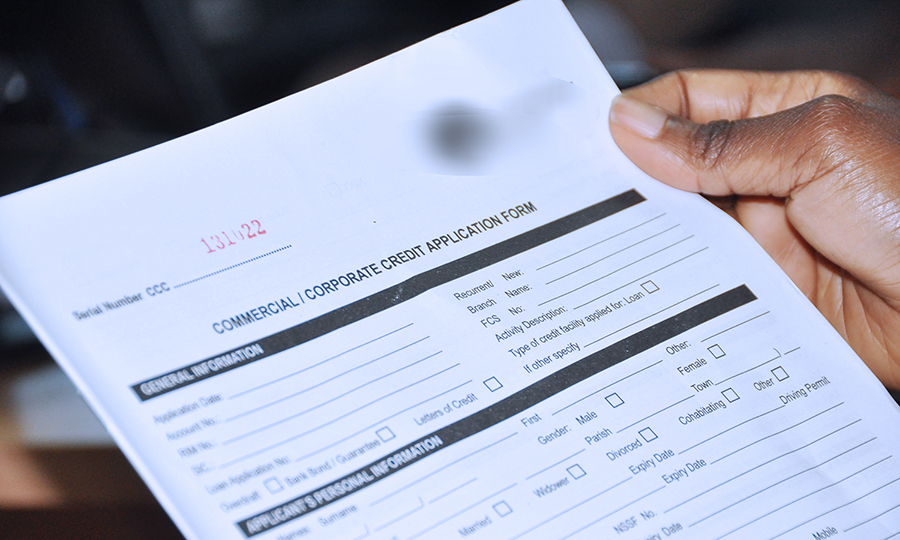
Banks are lending more freely for now, but are preparing to tighten the taps as election uncertainty builds, and borrowers show signs of strain.
Lending conditions in the quarter ending December 2025 were broadly unchanged, though with a gentle bias toward easing.
Credit standards eased by 9.2% for enterprises and 18.5% for households, supported by stable inflation, seasonal demand, and targeted support for small businesses and consumers.
That supportive stance is expected to shift. Banks anticipate a net tightening of 16.1% in enterprise credit standards by March 2026, marking a clear move from cautious optimism toward more active risk management.
The easing recorded at the end of 2025 was driven largely by festive-season spending, school-term borrowing, and the continued expansion of automated and mobile lending.
However, rising political uncertainty and higher funding costs are expected to push lending standards higher in the coming months.
Credit will remain available, but approvals are likely to become more selective.
Across sectors, lending trends remain uneven. Trade experienced the strongest easing in credit standards, followed by personal and household lending.
Manufacturing and agriculture also recorded modest improvements, reflecting working-capital needs and seasonal activity.
In contrast, lending to building, construction, and real estate tightened sharply, as banks moved to reduce concentration risk and became more cautious about projects linked to government and NGO financing.
Rather than making sweeping changes to lending conditions, banks are fine-tuning their terms.
Strong and well-rated borrowers continue to benefit from more competitive pricing, while riskier clients face shorter maturities and smaller loan limits.
There has also been a selective easing of collateral requirements as lenders increasingly rely on cash-flow-based assessments.
The overarching aim is to protect asset quality without undermining credit growth.
 How Governments Shut Down the Internet — and the Price Economies Pay
A clear divergence is emerging between business and household borrowing.
Demand for enterprise loans is expected to fall sharply, with a projected net decline of 35.2% overall and an even steeper drop of 38.1% among large firms.
Many businesses are postponing investment decisions until after the political cycle stabilizes.
Households, by contrast, are expected to borrow more. More than half of banks anticipate increased consumer credit demand, driven by school fees, refinancing needs, and working capital for small household businesses.
Credit risk is also rising. Banks expect enterprise defaults to increase by a net 33.9%, reflecting election-related uncertainty, reduced NGO funding, and drought pressures affecting agriculture.
Household risk is rising more sharply, with default expectations jumping 73.9%, driven by festive-season overspending, higher living costs, and delayed government salary payments.
It is one of the clearest indications, yet, that household finances are under growing pressure.
Despite these risks, most banks expect lending rates to remain stable, supported by contained inflation and a steady policy environment.
A smaller number foresee higher rates, warning that political-season liquidity pressures could push up funding costs.
At the policy level, the prevailing expectation is that the Central Bank will hold its stance unless election-related spending reignites inflation.
Overall, the picture that emerges is of a banking sector that continues to support economic activity but is becoming increasingly alert to mounting risks.
Businesses are likely to face tighter scrutiny, households will rely more on borrowing even as repayment stress grows, and banks will focus on strengthening balance sheets.
Uganda enters the election period with credit still flowing, but caution now sits firmly at the centre of lending decisions.