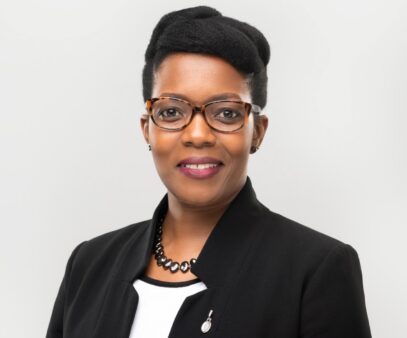
By Laura Bahemuka
In Uganda’s economic landscape, Micro, Small, and Medium Enterprises (MSMEs) are the engine that drives productivity, jobs, and innovation.
But ask any Ugandan SME entrepreneur, and they’ll tell you surviving past year one is no small feat. We call them “miracle businesses.” But behind that miracle is often a lack of early support.
As bankers, we often wait for SMEs to mature before we extend support; when the books are audited, the cash flows are consistent, and the risks diminished.
But what if our greatest opportunity lies in doing the exact opposite?
At PostBank, we’ve made a deliberate shift: to walk the journey with entrepreneurs from day one, not year three. And the results have been powerful.
Today, the call to action for financial institutions is not about ticking boxes of inclusion.
It is about aligning with the communities we serve through innovating and customizing solutions that reflect the true character of the Ugandan entrepreneur.
There was a time when banking models expected MSMEs to fit into pre-designed boxes; “working capital loans,” “asset financing,” “personal banking” with little regard to their lived realities. That era is over.
At PostBank, we have dismantled this top-down, boardroom-based approach.
Instead, we’ve embraced a deeply contextual and human-centred model. We listen before we lend. We segment not just by turnover but by demographic, sector, business maturity, and even behavioural traits.
A Boda Boda rider and a vegetable vendor may both earn UGX 10 million annually, but their business models, risk appetites, and capital needs are entirely different. Knowing that difference is the difference.
We are designing products that begin with need, not assumption. The woman tailoring clothes in downtown Kampala doesn’t want just working capital.
She wants a sewing machine that improves her turnaround time. That is a productive asset, and financing it triggers an upward spiral with faster delivery, better referrals, and more income.
Gone are the days when financing was the preserve of a few banks. T
Today, debt democratisation is evident in the proliferation of loan sharks, telcos, fintechs, and development partners shifting from grants to equity and blended finance.
While access has widened, so too has the burden of indebtedness. Our role, therefore, extends beyond capital provision to financial literacy, guiding entrepreneurs in disciplined savings, re-investment, and responsible borrowing.
We also need to acknowledge that the brick-and-mortar branch is no longer the sole gateway to finance.
Related
 I&M Bank Katogo Golf Series Returns to Entebbe with Innovative Format and High-Stakes Rewards
From USSD codes to mobile apps to internet banking, our customers demand and deserve the convenience of digital channels.
For PostBank Uganda, that has meant investing in our Wendi mobile wallet and agents, ensuring that either a trader in Insingiro or a craft maker in Kampala’s suburbs finds onboarding and transactions as frictionless as sending a text.
That’s where financial literacy comes in handy. Our SME clinics demystify balance sheets, introduce accounting basics, and prepare business owners to think beyond daily survival.
Since its launch, Wendi mobile wallet has evolved into a powerful digital platform that enables customers to perform day-to-day transactions, enables group savings, and credit management.
Village savings groups, SACCOs, and micro-entrepreneurs can now see real-time updates on savings, contributions, and loan repayments, which restores trust and transparency.
We’ve gone further with piloting cross-border payment capabilities for SMEs importing goods from China and integrating telco services to enhance mobile money interoperability.
Uganda’s entrepreneurs aren’t uniform. Some thrive digitally. Others still require physical interaction, coaching, and accountability.
We respect the pace of transformation. Where possible, we migrate customers into digital channels. But we never abandon the importance of the human touch.
This approach is more demanding, but it yields results with stronger loyalty, better repayment rates, and more sustainable business growth.
The SME ecosystem has led us into strategic alliances with other banks, government programs such as the Parish Development Model, and like-minded partners such as KFW and the Uganda Development Corporation.
Through these collaborations, we can underwrite risk for women-led enterprises and offer last-mile credit in refugee and host communities, where traditional models falter under high costs or regulatory constraints.
To cap it all, the future of SME banking lies not just in new products, but in rethinking the fundamentals.
We must be ready to collaborate across sectors with telcos, regulators, and development partners.
Adapt quickly to market shifts, knowing that what worked in 2023 may not work in 2025.
Let’s serve with empathy, understanding that the smallest businesses often have the biggest visions.
The author is the Head of SME, PostBank Uganda