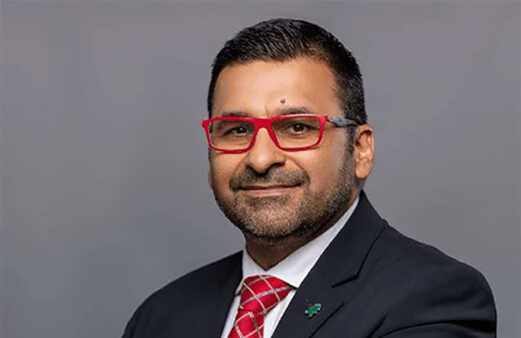
By Edigar Ayebazibwe
Corporate and Commercial lawyer
The Daily Monitor on 30th June, 2021 reported that Government of Uganda, following a directive of the President, contracted Global systems LLC, an Information Technology Company, to install vehicle tracking devices in all public and private vehicles under a build-operate-transfer contractual basis. The contractor, according to the contract, will work with a technical management committee comprised of staff from ministries responsible for security, works and transport and Kampala Capital City Authority.
The digital tracking devices once installed will enable government to monitor movement of all vehicles, locate them in real time through a centralized digital monitoring system using the vehicle’s electronic number plates.
Integration of usage of technologies by security agencies is a novel and emerging area in Uganda and Africa at large, this could be informed by the high rate of internet penetration in the country. The most recent survey by Internet World Stats reveals that in 2000, the penetration was 0.1 % and now, 31.1 % with Kenya leading with 77.8 % penetration. The adoption of these technologies come along with challenges of privacy in specific regard to data protection and general privacy, a right enshrined in the Constitution.
The right to privacy is provided for under Article 27(1) of the constitution of Uganda which provides that no person shall be subjected to unlawful search of the person, home or other property of that person.
Although Uganda enjoys legal regime that enforces the right to privacy, this right is not absolute and can be limited under Article 43 of the Constitution of Uganda which provides that in the enjoyment of the rights and freedoms, no person shall prejudice the fundamental or other human rights and freedoms of others or the public interest.
Furthermore, according to the United Nations Declaration of Human Rights, Article 12 provides that no one shall be subjected to arbitrary interference with his privacy, family, home or correspondence, nor to attacks upon his honour and reputation.
The International Covenant on Civil and Political Rights, Article 17 (1) provides that no one shall be subjected to arbitrary or unlawful interference with his privacy, family, home or correspondence, nor to unlawful attacks on his honour or reputation. Uganda is a signatory to the United Nations Declaration of Human Rights and International Covenant on civil and political Rights which obligates Uganda to respect citizen’s privacy.
In the United Kingdom, similar issues arose in regard to balancing usage of surveillance technology by South Wales Police Force and citizens’ right to privacy as encapsulated in the case of Edward Bridges versus Chief Constable of South Wales Police Force and others [2019] EWHC 2341 where the Applicant was contesting lawfulness of the use of live automated facial recognition by the Police.
The technology involved deployment of surveillance cameras to capture digital images of members of the public which were then processed and compared with digital images of persons on a watch-list compiled by the police for the purpose of the deployment.
 Africa Takes The Stage: From Raw Supply To Brand Ownership
The Court of Appeal held that the existing legal regime in United Kingdom for facial-recognition technology was not robust enough to enable police to use the technology lawfully. The Judgment doesn’t mean that the use of facial recognition technology in England and Wales is illegal, but it must be used in accordance with a very clear, detailed and proportionate legal framework, which was lacking in this case.
The decision reinforces/supplements decisions from other jurisdictions that have underpinned the importance of data and privacy as a human right. In 2017, the Supreme Court of India in Justice K.S. Puttaswamy (Retd.) & Anor. v Union of India & others, WP (Civil) 492 of 2012, declared that privacy is a fundamental right protected under the country’s constitution for each of its over 1.3 billion citizens.
Court of Appeal in Kenya in the case of Communications Authority of Kenya versus Okiya Omtata and others CACA 166 of 2018 lead Judgment by Ouko JA recently held that the state could install surveillance technology to its citizens. The Kenyan Court of Appeal on balancing privacy and National security held;
“……the right to privacy is important but the issues of abuse by unscrupulous mobile operators also needed to be tackled so as to strike a balance between securing the right to privacy and dealing with the problem without infringing the right to privacy”.
The Supreme Court of Uganda has guided on the principles that should be followed while balancing individual rights and public interest, Justice Mulenga in the Ugandan Supreme Court case of Charles Onyango Obbo and Andrew Mujuni Mwenda versus Attorney GeneralConstitutional Appeal number 2 of 2002, held that in balancing public interest and state interests, courts must adopt a proportional test which is to the effect that “whether the limitation of the right is proportional to the enjoyment”.
In balancing National Security interests and Individual right to privacy, the proportional test ought to be employed, so that in protection of individual right to privacy, national security is not compromised.
In light of the foregoing, courts in all cases regarding balancing a right to privacy and national security have adopted a proportional test acknowledging that the right cannot stand alone, the state’s duty to protect people and their property cannot be stalled in such circumstances.
The system is a further technology that potentially has great utility for the prevention of crime, the apprehension of offenders and the protection of the public.
However, without prejudice, government should make sure that the contract adheres to the principles of data protection as encapsulated in the Data Protection and Privacy Act of 2019 in regard to data retention, cross border transfer of data and security measures. Government should also provide detailed guidelines on the usage of this technology in order to build trust and confidence that the system will not be used for spying or other human rights abuses.
The writer is a lawyer with specific interest in Technology and Intellectual Property.