By Taddewo Senyonyi
Savings and Credit Cooperative Societies (SACCOs), if properly managed and run according to the principles, there’s no doubt they can increase financial inclusion in Uganda and ultimately transform Uganda’s economy.

A 2009 Finscope report shows 71% Ugandans were saving at the time, with unfortunately 90% saving in a secret hiding place or with friends, neighbours or relatives; 27% saved in informal groups; 22% saved with formal financial institutions while 4% each saved with SACCOs and MFIs.
Rebirth of SACCOs
In an effort to implement the Rural Financial Services Programme (RFSP), one of the pillars of the Prosperity for All (PFA), the government of Uganda set out to establish a SACCO in each sub county.
 Standard Chartered Kenya Targets Nakumatt Properties in $14.3 Million Debt Recovery Battle
Subsequently, in May 2008, the government entered into a two year Memorandum Of Understanding (MOU) with Uganda Cooperative Savings and Credit Union (UCSCU), the National Union of SACCOs, designating it as the lead implementing agency for the SACCO Development Programme countrywide. This MOU was later renewed for another period of 2 years.
Notably, the RFSP aims at ensuring every economically active Ugandan earns some basic income, through production, marketing and agro processing of products, and targets to provide support to a total of 735 SACCOs by December 2013.
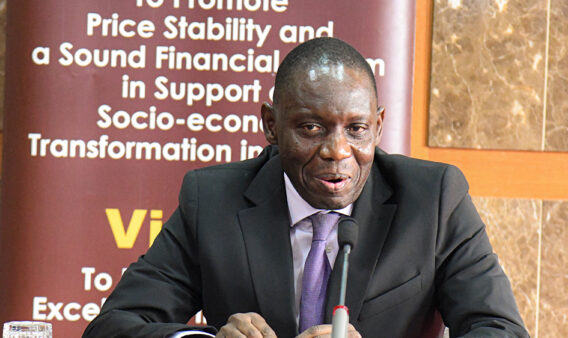
Geoffrey Ssempala, UCSCU Chief Executive Officer says there are over 4000 SACCOs countrywide, with over 1200 as UCSCU members as at December 2012. The savings portfolio for SACCOs under UCSCU stands at over Ushs97bn while the loan portfolio is over Ushs182bn. Ssempala says SACCOs give different interest rates on different products.
“Generally, the average interest rate (Money from government through Microfinance Support Centre) on agricultural loans is 6%, the average on commercial loans is 10% and the average on SACCOs own money is 4%,