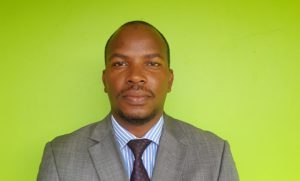
By Pheona Wall, Vice President Uganda Law Society and Chairperson of the Legal Aid Project of the ULS
The National Social Security Fund is a National Saving scheme mandated by Government through the National Social Security Fund Act Cap 222 (Laws of Uganda) to provide security services to employees. Recently, members of the public have petitioned that NSSF allows its fund members early access to part of their savings as a form of COVID-19 relief payment (midterm access). NSSF responded to these demands through a media statement dated 24th March 2020 where they stressed that the organization has no legal basis to provide these partial payments. Since then, the Parliament of Uganda has embarked on the process of amending the NSSF Act to allow members to access part of their savings during the COVID-19 pandemic.
An amendment to the National Social Security Fund Act allowing fund members midterm access during this COVID-19 pandemic is necessary.
The purpose and cause to which NSSF was formed is to offer economic and social security to its fund members. NSSF is meant to provide a social security safety net for its members whenever their social security is under threat. The International Labour Organization defines Social Security as the protection that society provides to individuals to ensure access to healthcare and to guarantee income security, particularly in cases of old age, unemployment, sickness, invalidity, work injury, maternity or loss of a bread winner. For one to be socially secure means that one must have a roof over their head, have a daily meal, care for medical, have some gainful employment, and an income of sorts.
The recent outbreak of the COVID-19 pandemic has left many Ugandans socially insecure. Many NSSF company members have laid off their employees due to the economic stress they are facing, others have sent their employees on leave without pay as they wait out the lockdown.
The amendment of the National Social Security Fund Act cap 222 was in motion long before the COVID-19 pandemic. The National Amendment Bill 2019 was first read before the August house on 3rd August 2019. The Bill contains Amendments to the current law which was enacted in 1985.
One of the amendments in the proposed Bill is to Section 10 where a new clause providing for voluntary benefits is inserted in Section 24A. the clause states; “ A member who has made voluntary contributions to the fund shall be allowed midterm access to his or her benefits on such terms and conditions and in a manner prescribed by the regulations”. This clause, if approved, will allow fund members to access part of their funds earlier.
This amendment provides for only a select few who meet the criteria to be the ones allowed midterm access. This means that not all members will be paid. Parliament is still left to further discuss the criteria that will be used to consider who gets the payment.
It has been suggested by proponents of the amendment that one of the criteria Government can use in choosing who gets midterm access is considering workers aged 45 and above who have saved with the fund for a minimum of 10 years. Such criteria will limit the number of people that can have early/premature access to their funds.
 She Walks: Purposeful Strides, Scaling Hills in Heels—and Why Women’s Progress Matters for Africa’s Future
In response to why this would not work, the Managing Director NSSF stated that 80% of the fund’s assets are invested in Government Treasury bonds. If the fund was to pay all its members a portion of their savings, it would amount to Government buying back its bonds for the Fund to be able to raise liquidity and this would leave the Government short of locally mobilised funds for its social and economic interventions which would have a devastating effect on the economy long term.
For the Fund to be able to pay its members 20% of their money, it shall require about UGX 2.5 trillion. Basing on NSSF’s published financial statements of the financial year 2018/2019; NSSF has over UGX 125 billion kept away for times of economic stagnation. This would be the perfect time for that money to be utilized as the economy is in crisis. Money from the reserve account can be used; section 36 of the National Social Security Fund gives powers to the Minister to approve drawing money out of the reserve account.
Other proponents like Ms Geraldine Ssali have proposed that the fund can also choose to systematically liquidate the treasury bills, bonds and fixed deposits within the Ugandan market in timely phases, to be able to cushion any blows that may affect economy because of the liquidation. The Fund collects UGX 100 billion cash from savers every month and only approximately 3% of this goes to paying monthly benefit claims to members. The rest of the cash can also be added on the 20% settlement.
Looking at the economy, we need to realise that due to the pandemic, most economic activity is at a standstill and there is very little money circulating in the country. The only people that seem to be liquid as we speak are the parliamentarians with their endless allocations of tax payers’ money. This presents a real risk of the country descending into an economic crisis. I see the release of this 20% during this time as one of the possible solutions to this conundrum. This will mean that there will be an increased purchasing capacity and commerce will increase. Given the lock down, there are very few chances of this money being spent elsewhere but within the country. With this set of circumstances, it will have the domino effect of increasing employment and the availability of markets.
In other jurisdictions, the US has what they call an Economic Impact Payment that is given off the social security savings. China has created 5 months exemptions of employer contributions and some other countries have exempted social security contributions from employees. Most countries that have done well in cushioning their people have made a cocktail of financial solutions with tax breaks, loan reliefs and other such incentives. Some have provided bottom tier SMEs with cash subsidies, while others like China have given 3 months VAT holidays repayable in 12 monthly instalments interest free. Germany has lifted all late tax penalties.
Borrowing from these countries, it then follows that this NSSF issue should be eyed from a macro-economic perspective and implemented along with other measures that will keep the ordinary man afloat.
As Uganda, the loan relief guided by Bank of Uganda has been helpful, I am sure, but more can be done. While the service sector has been brought to its knees, they still have to meet compulsory costs like rent, taxes and in some cases salaries.
The request to contribute 10,000/= has not been welcomed because the private sector feels disenfranchised in all this. We need to see re allocations from the ordinary revenue collections towards the task force but there should also be transparency, clarity and predictability in how this money is spent. What occurred in Parliament very recently with the Speaker and Executive counter accusing each other was regrettable and very telling. As private sector is asked for 10,000/= per employee, we see parliamentarians bagging millions and ministry officials and district authorities being prosecuted for misusing these resources. It is therefore not surprising that there is a trust deficit.