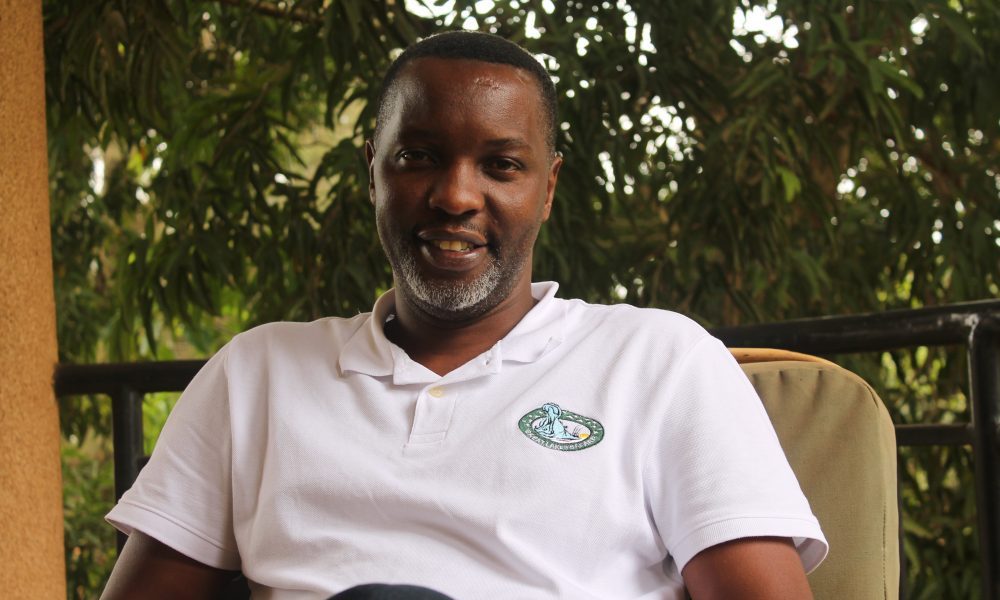
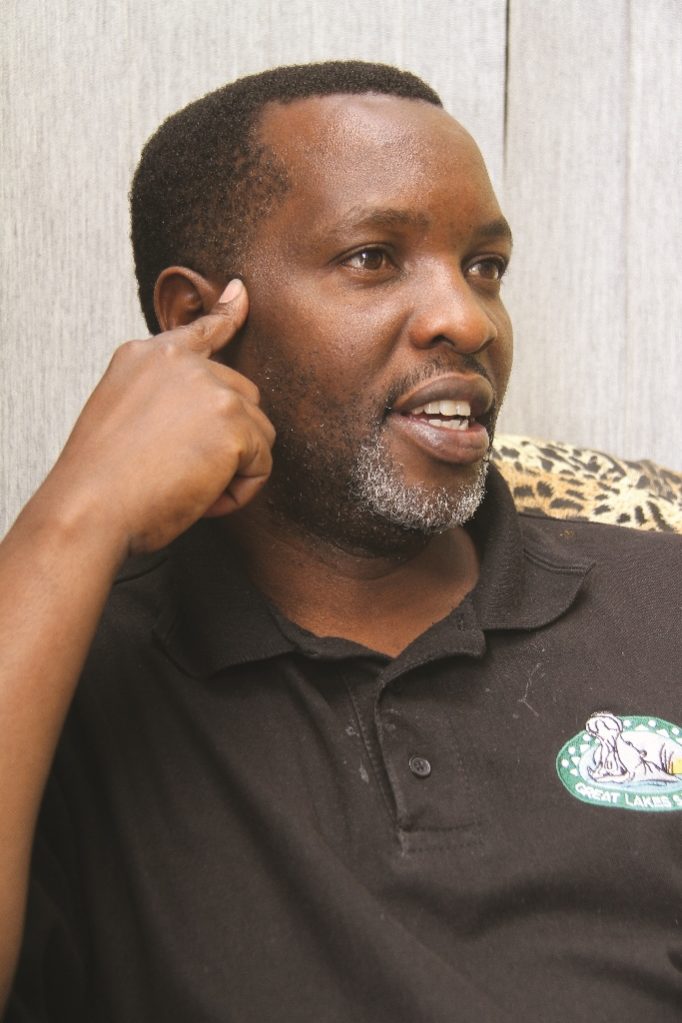
Amos Wekesa’s 22-year tourism story is a typical ‘started from the bottom, now we are here’ story.
He proudly indicates on his CV that he started out as a sweeper with Belex Tours and Travel (1997-1998) from whence he became an office messenger with Nile Safaris (1998-1999) and then scaled the ladders up to a Tour Guide with Habari Tours (1999-2000).
Between 2000-2001 he got a job as a Sales and Reservations Officer with Afrique Voyage (2000 -2001) before throwing in the towel and founding his own Great Lakes Safaris Ltd in April 2001. Business thrived and in December 2006, he founded Uganda Lodges Ltd.
Today he turns over an estimated USD8 million and is a proud owner of four tourist Lodges- Elephant Plains, a luxury African safari lodge on the edges of Queen Elizabeth National Park, Primate Lodge Kibaale, Budongo EcoLodge and Simba Safari Camp.
Today, he shared on his Facebook timeline 12 tips on what it takes to hack it in the tourism business.
- Explore what you want others to explore. Exploring gives you first-hand knowledge which is key in selling any tourist product. Exploring Uganda gave me an opportunity to love my country and that will never change and that has made it easy for me to sell.
- Tourism requires trust and trust can never be bought. Trust is simply earned over time and can be your unique selling point. Don’t be in a hurry to make money and look good through the wrong means. Tourists pay their money in advance and they trust that you will provide what you promised and remember the money paid to you is very hard earned money. Lots of Ugandans think people in the western world pick money from trees. Far from it, most people have more than 2 jobs and do more than 12 hrs of hard work to be able to afford such trips.
- Never assume that your preferences are your customers’ preferences. Take time to understand preferences of your customers. Different nationalities have different preferences and understanding them will help you go very far.
- Tourism is all about people; be it clients or your human resource. Over 80% of our success depends entirely on how you deal with those around you and one thing I have learnt over the years, is that it takes a lot of trying and failing while creating a formidable team. A good company is good because of its human resource and your human resource must be respected, paid on time and the pay must be fair. Never try to be very important for the people that you employ.
- Do everything possible to associate with people that have done better than you for mentorship purposes and make sure those people are able to trust you and they should feel that you mean well for them as well- something they will be able to tell even without speaking. Show gratitude to them because when people feel appreciated, they do more for you naturally.
- Don’t hate or negatively envy those that have outperformed you because that will simply make you not pay attention to the things that make them tick.
- Innovate; do some new things that are exciting rather than copying what you see others do. Mindless copying for short term gain only serves to confuse the potential clients anyway hence failure could be the result.
- Be passionate about your country and culture because passion is infectious and draws the right people around you. Don’t fake it because people are not stupid;
- As others build you, do the same to those that need your mentorship. Great Lakes Safaris has and continues to train young people and the results have instead been good to us;
- Make deliberate efforts in investing in the people you work with and in the assets that support your enterprise continuously;
- Your pricing and information must be as accurate as possible and delight in seeing happy clients at every end of the safari and where you have gone wrong don’t defend your wrong doing. Instead acknowledge and do something about it that will not leave a bad taste in the mind of the client. You never get a chance of making the first impression, the second time in tourism;
- Tourism isn’t a get rich quick arena because you have to provide value exchange for your customers’ money. Tourists are people who have made some excess money for spending on leisure and therefore understand the value of money more than an average person.