There is a saying that when you are entrusted with the responsibility of representing your country, you must give your very best, because you are carrying the weight and expectations of an entire nation.
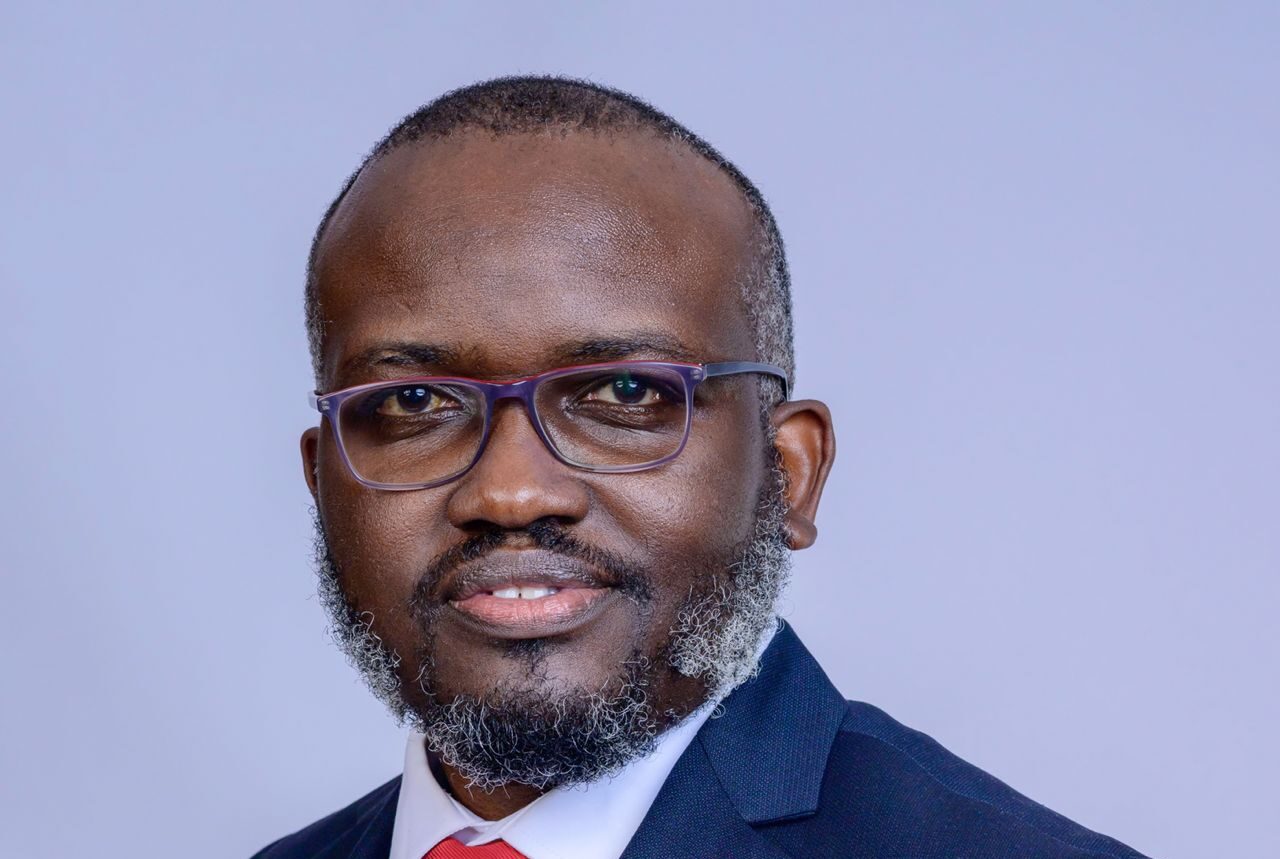
Few corporate leaders in Uganda embody that reality more clearly in 2026 than David Wandera, the Managing Director of Absa Uganda, and the first Ugandan to lead the bank in its 90-plus years history in Uganda.
Wandera is now sitting in one of the most consequential seats in the country’s financial system. As head of a systemically important bank embedded within a global banking group, his decisions reverberate far beyond Absa’s balance sheet.
They speak to Uganda’s credibility as a banking market, its regulatory maturity, and the depth of its executive talent at the highest level.
That is why, as Absa enters a critical consolidation phase, all eyes are on Wandera.
From architect to custodian of a turnaround
Wandera’s appointment in May 2025, after serving as Acting Managing Director from December 2024, was not a leap into the unknown.
He is an Absa insider who has spent a significant part of his career within the institution and was a central figure in the team that helped Mumba Kalifungwa engineer one of the most impressive banking turnarounds in Uganda’s recent history.
Between 2020 and 2024, Absa Uganda delivered cumulative profits of more than UGX 615 billion, with annual earnings rising from UGX 40.7 billion to UGX 177.9 billion, a more than four-fold increase.
Over the same period, total assets expanded from UGX 3.54 trillion to UGX 5.43 trillion, while the bank increased its share of Uganda’s loan market from about 8% to nearly 10%, cementing its position as the country’s third-largest bank, behind Stanbic and Centenary.
Throughout that growth phase, Wandera was Kalifungwa’s No.2 as Executive Director, head of financial markets, close enough to understand not just the results, but the mechanics behind them: balance-sheet scaling, corporate banking penetration, treasury optimisation, and the expansion of non-interest income.
Few executives inherit a bank with such deep institutional memory of how success was built.
Beyond being an Absa insider, Wandera brought a depth and breadth of experience that strengthened the institutional memory he now draws upon.
His career spans multiple banking roles and disciplines, from Bank of Uganda, where he worked on credit risk, financial accounting, and market surveillance, to global and regional commercial banking roles at Stanbic Bank Uganda and Citibank, where he worked in treasury, derivatives, corporate sales, and sophisticated risk-taking environments.
He also cut his professional teeth at Deloitte, grounding his leadership in audit discipline, financial controls, and governance rigour.
This blend of regulatory insight, multinational banking exposure, treasury expertise, and audit training complements his long Absa tenure and gives him a wider field of vision than institutional familiarity alone could offer.
In a period that demands both continuity and calibrated change, Wandera’s cross-sector and cross-market experience adds a critical layer of judgment and perspective to the leadership task now before him.
 The Smartphone Tax Trap: Is Uganda Pricing Millions Out of the Digital Economy?
A different test begins
But 2026 marks a decisive shift. For the first time, Wandera is fully in charge, not acting, not second-in-command, but chief executive in his own right.
The market will no longer judge Absa against its own momentum; it will judge Wandera against the legacy of his predecessor, who now runs Stanbic Bank, the country’s undisputed market leader.
The pressure is amplified by timing. Wandera’s acting tenure ran from December 2024 through May 2025, meaning the 2025 financial results, yet to be released, will provide the first meaningful data point on how well he is rising to the challenge.
Investors, regulators, and competitors will be watching closely to see whether Absa’s earnings trajectory held steady, slowed, or shifted under his leadership.
Those numbers will matter not just for performance assessment, but for narrative control. Sustaining momentum is harder than building it, especially when expectations have been reset so high.
Standard Chartered integration risk and reputational stakes
At the same time, Wandera is overseeing one of the most delicate transactions in Uganda’s banking landscape: the acquisition of Standard Chartered’s retail and wealth business, announced in 2025 and expected to receive full regulatory approval this year.
Retail bank integrations are unforgiving. Customer migrations, system harmonisation, staff transitions, deposits, loans, and wealth products must be absorbed without disruption, reputational damage, or balance-sheet instability. In banking, this is where reputations are made, or undone.
For Wandera, the stakes are therefore layered. He must protect a high-performing franchise, integrate a major retail book, and reassure markets that Absa’s governance, risk discipline, and execution capacity remain intact, all while operating under the gaze of a global parent and a domestic regulator that tolerates little error.
Why all eyes are on him
This is why the saying about representing one’s country resonates so strongly in Wandera’s case. As Managing Director of Absa Uganda, he is not only leading a bank; he is, in effect, representing Uganda’s financial competence in regional and international arenas where trust, prudence, and performance are constantly assessed.
In 2026, Absa is no longer in recovery mode. It is in consolidation mode. The task now is to protect what was built, extend it carefully, and prove that Uganda’s banking success stories can endure leadership transitions without losing discipline or direction.
Whether Wandera can meet that test, sustaining performance, executing integration, and maintaining confidence, will define not only his own leadership chapter, but Absa Uganda’s place in the country’s financial hierarchy.
That is why, as the year unfolds, all eyes are on Wandera.