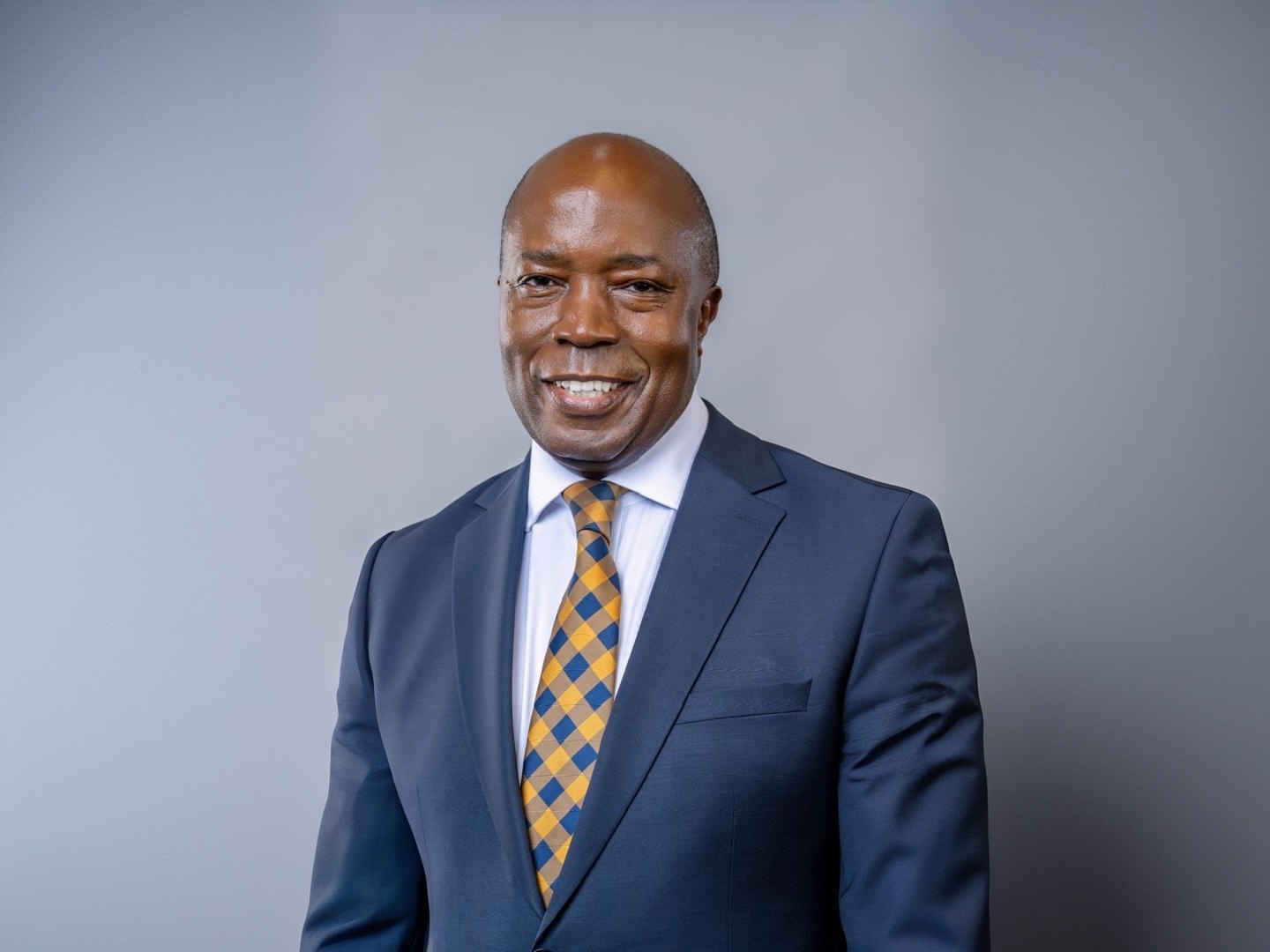
Since stepping away from corporate leadership, Kamulegeya has devoted his time to writing, mentoring young professionals, supporting social impact initiatives, and contributing to conversations on leadership and life transitions. These reflections form the foundation of his new book, And Then What?, in which he examines the deeper questions that arise after career success and invites leaders to think more intentionally about purpose, identity, and life beyond corporate titles.
The book explores the decisions, disruptions, and defining moments that shaped his journey, while challenging readers to rethink success and the meaning of life beyond the offices they occupy.
In this interview with CEO East Africa Magazine Executive Editor Muhereza Kyamutetera, Kamulegeya reflects on the lessons behind that journey, the philosophy that guided his transitions, and why every leader must eventually confront a simple but profound question: And Then What?
Let’s begin with the title itself. And Then What? is such a simple question, yet it seems to carry the entire philosophy of the book. What inspired that question, and why did you feel it was the right lens through which to tell your story?
To be honest, I actually began writing the book before I had settled on the title. I think I was around chapter five when I began to notice a recurring theme emerging in my story.
From the beginning, I knew I didn’t want to write a conventional autobiography or a typical memoir. The idea came partly from the many young people around me — mentees, colleagues, and friends — who kept telling me, “You have a story to tell. You should write it.” So I simply started writing.
As I reflected on the different stages of my life, I began to notice a pattern. My journey has involved many transitions that might appear unconventional: finishing university with a degree in agriculture in 1990 and going straight into trading maize in Masaka, when my colleagues were interviewing for public service jobs. Moving to the UK at a very young age, at 23 years, starting at the very bottom doing cleaning jobs and relief driving, so as to earn money to pay for my studies. Decisions such as leaving my wife and daughters in London for eight years and living on my own as a married bachelor working in Uganda and Kenya, building my career.
But whenever I looked back at those moments, I realised that my decisions were never really about what it was I was doing at the time. They were always about what that would lead to next in my career and life.
In other words, I was constantly asking myself: If I start here, do this and that, then what?
That question became a kind of guiding philosophy. I have always tried to envision the end before I get there. I avoid getting too comfortable in the present moment, no matter how fulfilling it may feel. Instead, I deliberately disrupt myself so that I can move into the next phase of growth.
Once I recognised that pattern, the question “And Then What?” naturally became the title of the book because it gives the story its structure and meaning.
Now, I want to be clear that titles and positions are important — they matter. I have valued them and worked hard for them. But I have also been fortunate to have another side of my life through my social enterprises and community work — things that do not require a title.
For example, you have been to the Masaka School for the Deaf. I have been working with deaf children for over 20 years. That experience is incredibly humbling. We communicate through sign language. In sign language, there is essentially one sign for roles like chairman, CEO, executive director, or MP. To them, those distinctions are not nearly as important as we think they are.
You can arrive with all your titles, but to them the real question is simple: how do you behave, and how do you make people feel?
That experience constantly reminds me that identity must go beyond titles. And in many ways, that is also what the question “And Then What?” is really about.
That’s a very humbling perspective. Are you saying that in the world of the deaf, distinctions like Executive Director, CEO, or Chairman don’t really carry the same weight — that, in many ways, we are simply seen as people?
Yes, in a way that’s exactly what happens.
In sign language, communication relies on gestures, facial expressions and hand movements. There is an alphabet — you can spell A to Z using your fingers — so technically you can spell out words like Chairman, Executive Director, or CEO. A deaf person can read that and write it just like anyone else.
But when it comes to everyday communication, sign language tries to keep things simple. Instead of spelling long titles all the time, you use signs that describe the role someone plays.
So for most corporate leadership positions — Chairman, CEO, Executive Director, Vice President — there is essentially the same sign. It simply conveys that this person leads or heads the organisation.
In other words, in sign language, we don’t waste our time and effort distinguishing between all these different corporate titles the way speaking people do. If you think you are important because you are the CEO, and you want to be recognised, we look forward to seeing how you behave, act and carry yourself around people who cannot hear or speak, so that we can appreciate whether you are really important. There are very few people who can do that through their actions.
It becomes quite humbling when you realise that.
Now, for certain roles like a Bishop or a Sheikh, there are distinct signs because those relate to faith and religious leadership. But when it comes to corporate titles, the language simplifies them into one basic idea: someone who leads.
And that’s when you begin to realise how much importance we attach to titles — sometimes far more than the people we are serving actually do.
From the many conversations we’ve had, it seems that your involvement with the Masaka School for the Deaf has profoundly shaped how you see leadership, purpose and service. Would it be fair to say that this experience has been one of the most transformative influences on your perspective about life? Has that experience become something of a lifelong teacher for you?
You are absolutely right. That experience has shaped me deeply, and in many ways it has become a kind of compass — almost like a true north for how I approach life.
There are many phrases we casually use in life. One of them is “talk is cheap.” We say it all the time — someone promises something, someone says they will come back, someone says they will help — and we say, “Talk is cheap.” What we really mean is that words only matter when they are followed by action.
But when you work with deaf children, the lesson becomes even more powerful. With them, talk is not just cheap — it is meaningless. They cannot hear your words. The only thing they truly understand is action.
You cannot simply tell a deaf child that you care about them. Yes, you can spell the words using finger spelling or write them on a board. But the real meaning comes from what you do.
Sometimes it is something very simple. I might go to Carrefour or Capital Shoppers, buy ten kilograms of maize for popcorn and some cooking oil, go home, pop the corn, and then spend an afternoon sitting with the children in the compound, sharing it together. That small gesture — which may cost less than UGX 100,000 — becomes a real expression of care and connection.
Many generous people support the school financially, and we are grateful for that. They send UGX 350,000 every term for the children’s school fees. But I always encourage them to go and visit the children as well because it is only when you spend time with them, when you interact with them, that you truly understand what the relationship means.
Another phrase we often use is “actions speak louder than words.” With deaf children, that is not just a metaphor — it is literally the language they understand.
That experience teaches you humility. It reminds you not to get lost in titles or status, but simply to do the right thing whenever you can.
It has also shaped how I think about knowledge. At one point, some professionals told me, “You share too much knowledge freely in newspapers.” But my response was simple: knowledge is meant to be shared. What is the point of knowing something if you keep it to yourself?
Real credibility does not come from the degrees on your business card. It comes from how you show up, how you share what you know, and the difference your actions make.
Looking back at your career, was there a particular moment when you first consciously asked yourself the question “And then what?” Was there a turning point when that question began to shape how you approached the next phase of your life?
Let me go back quite a few years, because I think the seeds of that question started much earlier than people might imagine.
When I went to Makerere University in 1987, I had studied sciences — Physics, Chemistry and Biology — and at the time, the assumption was simple: if you did PCB, you were expected to become a doctor. Ironically, I never had any interest in medicine. I was simply good at sciences, and that path seemed predetermined.
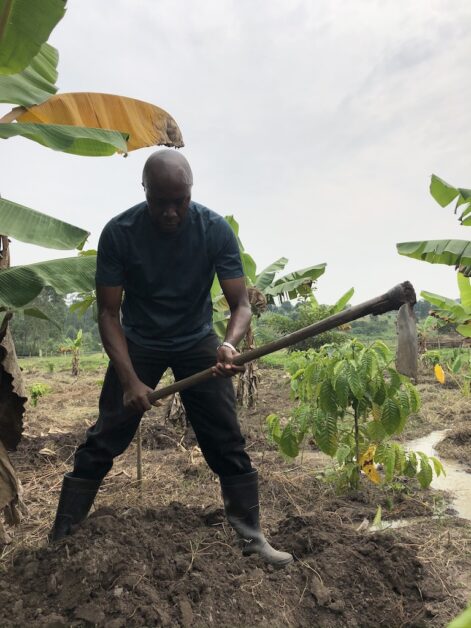
In the end, I didn’t get the grades required for medicine, so I was admitted to the Faculty of Agriculture. To be honest, I had never even heard of that course before. But the most important thing for me then was simply being at Makerere University, so I embraced it and gave it my best.
The interesting thing is that even while studying agriculture, I had no clear picture of what agriculture graduates actually did until my third year, when we began interacting with extension workers and agricultural officers.
After our final exams in 1990, the next step for many graduates was to attend public service interviews for government positions — agriculture officer roles in districts such as Mubende or research assistant positions at institutes like Serere or Namulonge. I remember going to the Ministry of Public Service and studying the job notices pinned on the board. Those were important and meaningful roles that many of my classmates pursued with dedication.
Yet, as I looked at them, I realised that the path did not quite align with the direction I felt drawn toward at that stage of my life. I had developed a growing curiosity about business and enterprise, and I found myself increasingly interested in exploring opportunities beyond the traditional route that my degree suggested.
So, at the age of about 23, I made what felt like a bold decision: I chose not to attend the interviews and instead returned to Masaka to begin trading maize — the first small step on a very different journey.
Around that time, several of my siblings were living in London, having left Uganda during the difficult political years of the 1980’s. I contacted them and said I wanted to come to the UK to pursue further studies. They welcomed the idea but made one thing very clear: they would not pay my tuition. I would have to raise my own money and be prepared to start from the bottom.
So from July to December 1990, I traded maize. I bought maize from places like Mbirizi, Lyantonde and Kinoni, and sold it to traders in Kampala and sometimes to the Produce Marketing Board. Eventually, I raised enough money to buy an air ticket and travel to London.
When I arrived there, I discovered what many Ugandans were doing to survive — lots of odd jobs, what we used to call kyeeyo. But at the time, I had a degree, ambition, and a certain pride. So for the first two months, I turned down several jobs that were being recommended for me, such as cleaning schools, working in retirement homes, mini cab driver jobs, and so on. At the time, I felt that those jobs were beneath me. I had just graduated from Makerere University, one of the world’s leading universities. It did not feel right to clean classrooms of a primary school as a University graduate.
That illusion didn’t last long.
By the second month, I was struggling to pay rent. My weekly rent was £40, and I owed the landlord £120. Then one winter day in February 1991, the landlord switched off the central heating because I had fallen three weeks behind on rent.
That moment humbled me completely.
I realised that if I wanted to survive, I had to start from the very bottom. So I bought a bicycle and accepted three cleaning jobs within two weeks — one from 6 to 8 in the morning, another from 1:15 to 3 in the afternoon, and the third from 6 to 8 in the evening.
To move between them, I used a combination of bicycle, bus and train. Suddenly, someone who had spent two months with zero income was earning about £120 a week. My rent was £40 a week, so things quickly stabilised.
After about nine months, I had saved enough money to put down a deposit and enrol in college. Once I enrolled, I could transition from a visitor’s visa to a student visa. From there, my professional journey truly began.
Looking back, that moment with the bicycle was probably one of the earliest real expressions of the question “And then what?”
I asked myself: if I buy this bicycle, then what?
Then I can do three jobs. Then I can save money. Then I can go back to school.
From there, that mindset kept guiding my decisions.
For example, in 1996, I joined Coopers & Lybrand (now PwC) as a qualified accountant. Just a few years earlier, I had been cleaning classrooms and offices, and now I was wearing a suit and tie, working in a professional services firm.
Then in the year 2000, when many people were lining up at the British High Commission in Uganda trying to get visas to go to England, I was doing the opposite — I was packing my bags to return to Uganda.
People thought I was crazy. But for me, the question was simple: if I stayed in the UK, how long would it take to become a partner in PwC? The path would have been much longer. So I came back to Uganda, and within five years, I had made partner in PwC Kenya.
So that question — “And then what?” — has really been about thinking beyond the immediate moment and deliberately positioning myself for the next phase.
Listening to your story, one gets the sense that many of the decisions you later made — whether it was trading maize, moving to the UK, or taking on multiple jobs — were shaped by experiences much earlier in life.
There is a conversation many parents are having today about how children are being raised, especially in urban settings like Kampala. Some people say that today’s children are growing up more as consumers in the household rather than contributors, whereas in our generation, many children were involved in family work and responsibilities from an early age.
Looking back at your own childhood and early experiences, how important were those early responsibilities in shaping your resilience, your work ethic, and ultimately the leader you became? And what lessons do you think today’s parents might draw from that?
Our childhood was very different from what many children experience today. I grew up with my mother, and we were many at home, but everyone had a role to play in the household.
Our day often started around six in the morning. One person would wash dishes, another would sweep the compound, and someone else would prepare breakfast by lighting the charcoal stove and cooking porridge. Sometimes we even worked in the garden before doing these chores. Everything had to be completed quickly so that we could begin the five-to-seven-kilometre walk to school, rain or shine.
My mother had a very simple philosophy. She used to say, “Ataakole tajja kulya” — he who does not work will not eat. She didn’t necessarily mean it literally, but the point was clear: everything on the plate came from the garden, so how could you refuse to participate in the work that produced that food?
There were no televisions, no smartphones, no distractions of that sort. Work came first, and once your responsibilities were done, then you could go and play. And we did play a lot.
From a very early age, I was also fascinated by business. When I was about eight to ten years old, I started making toy cars using wire frames and wheels cut from old rubber slippers. Over time, I improved the design — adding mud flaps, and even small light bulbs powered by batteries for headlights and indicators. I would customise them and sell them to other children.

My mother was also involved in trading. She brewed tonto and then distilled it into waragi, which she sold to Uganda Distillers. I became actively involved in that process as well. Using the money I earned from selling my toy cars, I began co-investing with her in buying the bananas used to make the brew. She encouraged this and kept the savings for me.
By the time I was about twelve years old, I had opened a Post Office Savings account. When I joined Senior One, I already had some money of my own.
Because of that upbringing, I have never really waited for someone else to solve problems for me. My instinct has always been to look for solutions rather than dwell on difficulties.
You can see this mindset in many of the initiatives I have been involved in. For example, when we discovered that many deaf children in Masaka were not attending school simply because there was no school for them, I asked myself: What can we do about this? Instead of waiting for the government, we started the Masaka School for the Deaf. When I realised that many children of our middle-class families who lived in apartments had no safe place to go and play, we set up Time2Play children’s recreation centre in Najeera, Kampala.
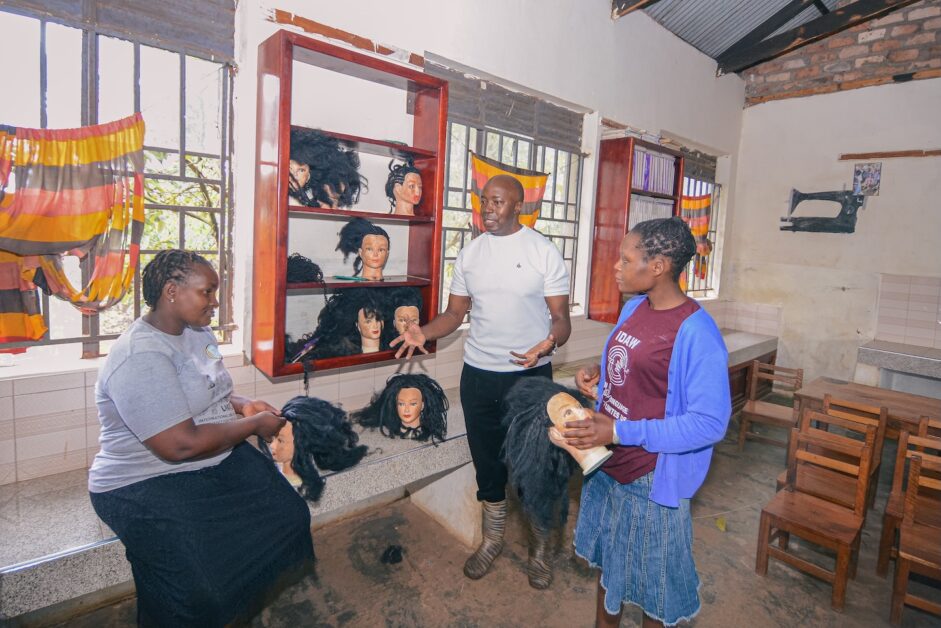
Later, when I realised that Uganda had so many universities, most of which had been very good technical and vocational institutes that had since been converted into universities, I decided to set up Masaka Vocational Training Institute. The idea was simple: skills like carpentry, mechanics, catering, hairdressing or plumbing allow someone to earn a living almost immediately.
In contrast, you can have someone with a degree who is still walking around with a CV looking for a job.
Another example was in 2014, when the police post serving our area in Kiwatule was about to close because the landlord wanted his property back. Security is critical for any community, so I, together with our community leader, Mr Paulo Kyama, mobilised our fellow residents and friends to build our own Police Station. In a period of less than one year, our community raised over UGX 50 million, and we built a permanent police station, which today serves Kiwatule, Naalya and parts of Najjera.
One reflection I often share is how much potential we have, especially those of us with access to education, networks, and resources, to make a difference in our communities. From time to time, I notice that many of us instinctively stay within the boundaries of our professional roles. A lawyer may feel their contribution is limited to legal matters, or a doctor may see their work as confined to healthcare. That is understandable, given how we are trained.
Yet, I have come to believe that community challenges rarely fit neatly into professional categories. When something affects the place we call home, perhaps the more helpful question is not, “Is this within my field?” but rather, “What can I contribute here?”
That simple shift in perspective has guided many of the choices I have made over the years, and it continues to shape how I think about responsibility, service, and leadership.
Throughout your career, especially at PwC, you have not only led organisations but also participated in hiring senior executives and, at times, overseeing leadership transitions where some leaders had to step aside. From those experiences, you must have observed how different leaders approach the question of what comes next in their careers and lives.
Did those moments influence your decision to write this book? And ultimately, what did you hope to achieve by putting these reflections into And Then What?
There were several things that inspired me to write this book.
First, I felt I had a story worth sharing — particularly for my children and, hopefully, for their children as well. When I occasionally tell them pieces of my story, they are often surprised. They know me as their father — someone they see on television, someone who writes in newspapers, someone who takes them on holidays — but they do not always know the journey that came before that.
For example, when I tell them about growing up in Masaka, about experiences during the 1979 war when I was nearly killed by a Sab-Saba rocket that fell in our banana garden at home, or about emigrating to the UK and starting from very humble beginnings together with their mum, they are amazed. It made me realise that if I don’t document these experiences, many of those stories will simply disappear.
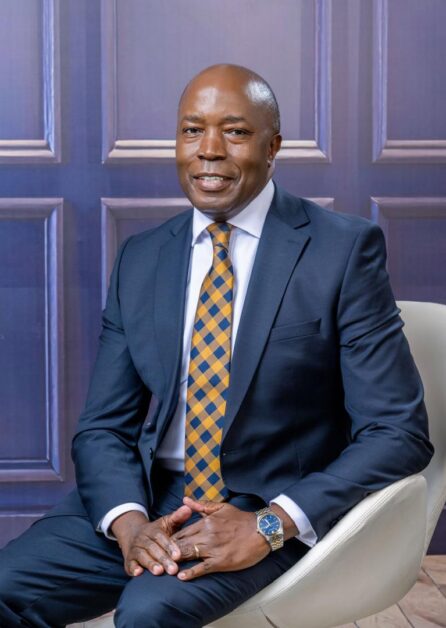
In fact, when I look at my own family history, there are many gaps. There are things about my parents and grandparents that I wish had been written down, but were not. So in part, I wrote this book as a record — something that future generations in my family can look back on.
One of the most meaningful sources of inspiration for And Then What? has been my interaction with young professionals over the years. Since I stepped away from PwC, I have been fortunate to host over 300 young corporate executives at our home and our School for the Deaf in Masaka. They have come from a wide range of organisations — including MTN, PwC, Stanbic Bank, ATC, I&M Bank, ICEA Lion, and the Toastmasters Club of Lubowa — each group bringing energy, curiosity, and a willingness to engage.
Some visits have been small and intimate; others, like the memorable day when a large Stanbic team spent time with us at the school, have been lively and full of shared experiences. What stands out for me is not the numbers, but the conversations. As we walk through the farm or sit together at home, the questions are always thoughtful — about career choices, leadership, purpose, and life beyond the obvious path.
It was in those conversations that the idea for this book kept coming up. Many of them would say, “Francis, you should write a book.”
This book is, in many ways, a continuation of those conversations.
And perhaps, for those who feel drawn, Masaka remains an open space — to visit, to reflect, and to continue the dialogue in person.
Their point was that many leadership books available today are written from foreign contexts and often describe experiences that African professionals struggle to relate to. They felt that my journey — starting from humble beginnings, navigating different careers, and redeploying myself at different stages of life — was a story people here could connect with.
So eventually, I took that encouragement seriously. It took me about four years to complete the book, because writing about your own life is not easy. You have to decide what to include, what to leave out, and how to bring other people’s stories into your own narrative.
Related
 Serigne Dioum: Powering a $500 Billion Fintech Engine at the Heart of Africa’s Digital Economy
But beyond telling the story, the most important question for me was always: so what?
What does someone reading this story actually take away from it?
I wanted a young professional in their late twenties to read it and realise that starting from the bottom is perfectly okay. I wanted someone in mid-career — perhaps between 35 and 45 — to recognise the risk of becoming too comfortable in a role and losing the ability to reinvent themselves.
And I wanted senior executives approaching transition, perhaps in their fifties or sixties, to reflect on what the next chapter of life might look like.
Many of us spend a lot of time planning to live long, healthy lives — we exercise, eat well, and monitor our health. But very few people plan what their long life will actually look like.
It can be very sad to reach the age of seventy-five healthy but financially unprepared. It can also be very sad to have accumulated wealth but discover that you have neglected relationships with your spouse or children along the way.
So the book tries to explore those questions honestly. I share many positive experiences, but I also talk about the mistakes I have made, because mistakes are part of being human. The important thing is not to dwell on them, but to learn from them and keep moving forward.
In the book, you introduce two powerful ideas — what you call the shift from success to significance, and the risk of what you describe as the competency trap.
Let us imagine a CEO or board chair reading your book today — someone who may still have five or ten years left in their executive career but has not yet seriously thought about what comes next. From your perspective, what questions should that leader begin asking themselves now?
I try to avoid being overly prescriptive because this is not a motivational manual about “how to do this” or “how to do that.” But there are a few realities that leaders need to confront honestly.
The first is that many of us today are living healthier and longer lives than previous generations. We exercise, we go to the gym, we watch what we eat, and we are generally far more health-conscious than our parents and grandparents were. That means a professional who is 45, 50 or even 55 today may realistically have another 25 or 30 years of life ahead of them.
The question then becomes: what will those years look like?
Because the truth is that you are unlikely to spend those decades doing exactly what you are doing today, whether you are a lawyer, an auditor, an engineer, or even a doctor, there comes a point where the market begins to move toward the next generation. In a knowledge economy, relevance is constantly shifting.
For example, many young parents today prefer going to younger paediatricians or gynaecologists because they feel those doctors relate more closely to their stage of life. It’s not necessarily about competence — it’s about connection and generational alignment.
So if you accept that you are likely to live longer than the generation before you, then you must also accept that you need a plan for that longer life.
That is why I do not really believe in the traditional idea of retirement. Retirement used to mean finishing work, leaving the city, and simply waiting out the rest of life. That model may have made sense when people retired at 60 and lived to 65. But if someone retires at 60 today and lives to 90, what are they going to do for those thirty years?
What I believe in instead is redeployment — transitioning from one phase of life into another meaningful phase.
And if you think about it, transition is something we have been doing all our lives. A child learns to crawl, then to stand, then to walk. When a toddler first starts walking, they are actually slower than when they were crawling. But no one chooses to remain crawling simply because they have become very good at it.
That is how life works. We move forward through transitions.
But something happens when people reach their forties or fifties. They become comfortable. They have titles, respect, influence, and a good income. They become the “go-to person” in the organisation. And slowly, their identity becomes tied to the role they occupy.
They forget a very simple truth: every day you stay in a job is one day less that you will remain in that job.
Sometimes the contract already tells you the end date. Sometimes the retirement policy says 60 or 55. But many people still live in quiet denial, as if the transition will never come.
And when it finally does, it hits them like a shock.
Suddenly, the phone stops ringing. The invitations slow down. The recognition disappears. And that is when people realise something very uncomfortable: it was never really about them — it was about the office they occupied.
You see it in politics. When someone loses a parliamentary seat, people stop calling. When someone is no longer the CEO, people move on to the new CEO. The attention was attached to the role, not the individual.
That is why the transition from success to significance becomes so important.
Because beyond success — beyond titles and positions — what most human beings really want is not just achievement, but meaning and legacy.
Think about why people name buildings after themselves, or why communities name streets after people who have made a difference. It is not just about recognition; it is about leaving something behind that outlives the office you once held.
That is the deeper question leaders must confront while they still have time: not just how to succeed in their current role, but how to transition into a life of lasting significance beyond it. This is something I talk about at length in my book.
Let’s talk about the practical details. When will the book be available, where can people find it, and when can readers begin purchasing their copies?
The timeline is now very clear.
We have completed the editorial work, and printing is currently underway. The official launch of the book will take place on 30 April 2026, which we are planning as a high-profile event.
Ahead of the launch, I invited a group of close friends and respected leaders in society to read the manuscript and share their reflections. More than twelve of them have contributed reviews, and their comments will appear as blurbs in the book.
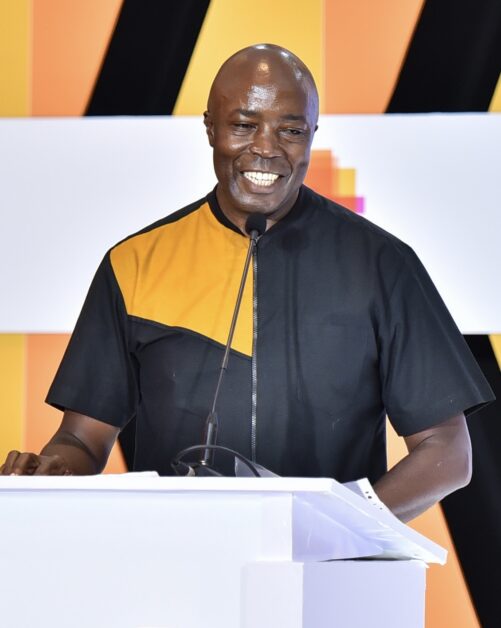
On the evening of 30 April, we will host a launch event where several friends who have read the book will participate in a panel discussion about its themes and the ideas behind it. It will be an evening of reflection, conversation, networking and celebration.
The evening will be anchored around a series of thoughtful and engaging conversations on leadership, purpose, and life transitions. It will begin with a moderated panel discussion guided by Robert Kabushenga featuring distinguished leaders who have read advance copies of And Then What?.
These panellists will be Crystal Kabajwara, Apollo Makubuya, Jacqueline Asiimwe, and Gloria Byamugisha. They will share personal reflections and insights drawn from their own leadership journeys, offering diverse perspectives on growth, reinvention, meaning and purpose beyond professional success.

The highlight of the evening will be a live conversation between me, the author, and Owek. Charles Peter Mayiga explores leadership across different seasons of life, the building of enduring institutions, and the responsibility of leaders to create impact beyond themselves.
Throughout the evening, the discussions will be grounded in real experiences and honest reflection, inviting the audience to engage with the central question at the heart of the book: And then what?
From 1 May 2026, the book will be available to the public. Readers will be able to purchase it from leading bookstores such as Uganda Bookshop, Aristoc, and online platforms, including Amazon.
For those who pre-order the book, we will begin delivering copies over the weekend. Since 1 May is a public holiday, we have that long weekend to ensure early readers receive their copies before the following work week.
What I hope is that when people begin reading the book, they will find it engaging and relatable. It is written as a story — a journey through different seasons of life — from growing up in the 1970s and 1980s, through university life, the early years of hustling and survival, the experience of working abroad, and eventually building a professional career, and transitioning into the second half.
Many readers will recognise parts of their own lives in these stories — the struggles, the ambitions, the mistakes, the friendships, and the lessons learned along the way.
Ultimately, the book is about reflecting honestly on where we come from, how we evolve, and how we prepare for the next chapter of life.
My hope is that readers will not only enjoy the story, but also feel encouraged to reflect on their own journey — and perhaps ask themselves that same question: “And then what?”
If a CEO or organisational leader reads the book and feels that the ideas resonate with their team — particularly around leadership transition, reinvention and preparing for the next phase of life — would you be open to engaging with organisations through speaking engagements or leadership conversations after the launch?
And if so, what are some of the themes or conversations you would most want to have with leaders and teams based on the ideas in the book?
Absolutely. The very fact that I have written this book means that I am ready to share my experiences openly. In many ways, I have already done that by putting my story out into the world.
So when organisations invite me to speak, I see it as both an honour and a privilege. It means someone believes there is something useful in my journey that their teams can reflect on and learn from.
Knowledge sharing has always been important to me. For example, I wrote regularly in newspapers for about six years — two years in Kenya and four years in Uganda — and I did that without being paid. My motivation was not financial; it was about thought leadership, sharing knowledge, and contributing to conversations that help people think differently about their careers and their lives.
Since we began talking publicly about the book, I have already received several invitations to speak. In fact, next week I will be speaking to a group of young couples about planning for life together — thinking about transitions, preparing for the future, and making deliberate choices about the kind of life they want to build.
What I find is that when people hear my story, they begin to reflect on their own journey. The book is written in a way that allows readers to place themselves in the story — to ask what it might mean for them if they were facing similar decisions at different stages of life.
For someone who is thirty-five, for example, the question becomes: how do I plan the next thirty or forty years of my life in a world that is changing so rapidly?
For me personally, learning has never stopped. Last year, I went back to university to study, and I graduated with a diploma in corporate governance. Today I chair three boards and serve as a director on several others. In those roles, I am no longer focused primarily on accounting or tax; instead, I focus on strategy, governance and providing oversight, helping executive teams perform at their best.
So yes, I would be very happy to engage with organisations through speaking opportunities, leadership conversations, or coaching sessions. And interestingly, every time I prepare to speak, I learn something new myself through the preparation process. It forces me to reflect, to study, and sometimes even to unlearn old assumptions.
So those engagements are not just about sharing knowledge — they are also part of my own continuing journey of learning and growth.
Many biographies and memoirs are published every year. In your view, what makes And Then What? different from the typical autobiography or leadership memoir?
In many cases, books simply tell you what someone did — where they studied, the jobs they held, the milestones they achieved. You read them, admire the journey, and then quietly wonder: So what does this mean for me?
That is the question I have tried to answer throughout And Then What?
For example, I studied agriculture at university, but that degree did not define my career. I went on to build a career in finance and taxation — without ever going back for another degree in that field. What mattered was not the label of my qualification, but my willingness to learn, adapt, and become excellent at what I chose to do.
I know many young people today feel trapped by what they studied. You might have done engineering but feel drawn to business, or studied law but feel more excited about technology or entrepreneurship. The question is not, “Is this my field?” but rather, “Am I willing to grow into something new?”
The book also speaks to something many of you experience daily — comparison. You may be perfectly happy with your life until you scroll through social media and see what others are doing, driving, or achieving. Suddenly, you feel behind. You feel the need to catch up.
But here is the truth: if you spend your life measuring yourself against others, you will never feel that you have enough.
So one of the ideas I explore in the book is simple but powerful: define what “enough” means for you. Run your own race. It is good to be ambitious, but ambition without clarity can lead to constant dissatisfaction.
Ultimately, this book is not about my achievements. It is about helping you think more clearly about your own life — your choices, your definition of success, and what you will do with the opportunities you have.
Because the most important question is not what I have done, it is: What will you do? After doing it, then what?
In fact, when you look at corruption and greed in society, much of it comes from this same mentality. Many people who steal public resources already have more than they could ever use. Yet they continue accumulating because they are chasing something they cannot even define.

So the real question becomes: what does success mean to you?
And perhaps even more importantly: what have you done with that success?
When people gather in places like Rubaga Cathedral, Kibuli Mosque, or All Saints Cathedral to honour someone who has passed away, no one talks about the size of that person’s bank account. What people remember is how that person lived, how they treated others, and what contribution they made to society.
That is what truly endures.
The book, therefore, invites readers to reflect on a few simple but important ideas: know what is enough for you, prepare for transition, and build an identity that goes beyond your job title.
And if you ever find yourself unsure of who you really are, go back to the people who love you most — your family and those closest to you. Ask them who you are. They will not describe you as “CEO” or “chairman.” They will simply tell you who you are as a person.
And perhaps society also needs to change the way it thinks about titles. We glorify titles so much that we even introduce people as “former this” or “former that.”
But why should anyone want their identity to be defined by a role they no longer hold?
That, in many ways, is the deeper conversation the book is trying to start.
That’s very true. Many people continue holding on to titles long after they have left the role. You often hear someone describe themselves as a “former CEO” or “former MP” even ten years later, as if their identity is still tied to that position.
Why do you think so many leaders struggle to detach their identity from the titles they once held?
One thing I find interesting is how different societies handle titles after people leave office. In the United States, for example, former presidents are still addressed simply as “President.” You hear people say President Obama or President Clinton. They don’t emphasise the word former because the title becomes part of their historical contribution.
But the deeper point I try to make in the book is not really about the title itself. It is about how you prepare for life beyond the title.
If you want to transition well, you must build relationships that go deeper than the transactional relationships attached to your office. Many people are friendly to you because of the role you occupy. If you are the CEO, people come to you because you approve things. They want to play golf with you. They want to sit next to you at events. But very often those relationships are tied to the office rather than to the individual.
Once the title is gone, you begin to see the difference.
In fact, politicians experience this most clearly because their cycles are very short — sometimes just five years. If they lose an election, the shift can be immediate. The invitations stop. The calls become fewer. Even in social settings, people begin to treat them differently.
That experience teaches an important lesson: you cannot build your entire identity around a title or a position. You have to build a life that has meaning and relationships beyond the office you occupy.
That is why I emphasise planning for transition early — while you still hold the position — so that when the title eventually changes, your life and relationships remain intact.
Any final reflections as we bring this long interview to an end?
I do not claim to have lived a perfect or complete life. What I have tried to do is reflect honestly on my journey and share the lessons along the way. If this book helps you make even one better decision, ask one deeper question, or take one step toward a more meaningful life, then it will have been worthwhile. Because in the end, each of us must answer that question for ourselves: And then what?
This book is simply an invitation to pause — to step back from the noise, the expectations, and the constant comparisons, and ask yourself a more personal question: What does success truly mean to me? Not what society says, not what others are chasing, but what matters in the life you are building. Because careers will evolve, opportunities will come and go, and seasons will change.
But the one question that will remain — quietly, persistently — is this: And then what?