Kampala, Uganda, July 01, 2020: The Africa Natural Capital Accounting Community of Practice was launched today at the ‘African Forum on Green Economy: Investing in Natural Capital for a Resilient Africa’ conference. The community of practice is a regional learning and knowledge platform that brings together professionals from government institutions, non-governmental organizations, and academia that are interested in or working on natural capital accounting (NCA) in Africa.
The Africa Natural Capital Accounting Community of Practice, according to a media statement, released by the forum’s conveners, “will build momentum and mainstream natural capital accounting in statistical production and policy across Africa through capacity building and knowledge sharing between government institutions, non-governmental organizations, and academia.”
“This is an essential next step in unifying stakeholders around a shared ambition and in driving tangible commitments and actions to accelerate the uptake of the natural capital approach,” said the statement.
Natural capital includes all of the resources of a country- both those that easy to recognize and measure, like minerals, energy, timber, agricultural land, fisheries, and water as well as those that are often “invisible” to most people, such as air and water filtration, flood protection, carbon storage, pollination of crops, and habitats for wildlife. Natural capital accounting is a tool that can help measure the full extent of a country’s natural assets and give perspective on the link between the economy, ecology and our environment.
The launch of the Natural Natural Capital Accounting Community of Practice for Africa, follows the first African Forum on Natural Capital Accounting held in Kampala, Uganda on November 21, 2019, at which participants from 18 African countries expressed unanimous support for the creation of a Community of Practice on Natural Capital Accounting in Africa. Responding to this demand, the World Bank’s Global Program on Sustainability, the Gaborone Declaration for Sustainability in Africa, the United Nations Statistics Division, the United Nations Economic Commission for Africa, and the United Nations Environment Programme and together with the support of the European Commission committed to providing support to start this community.
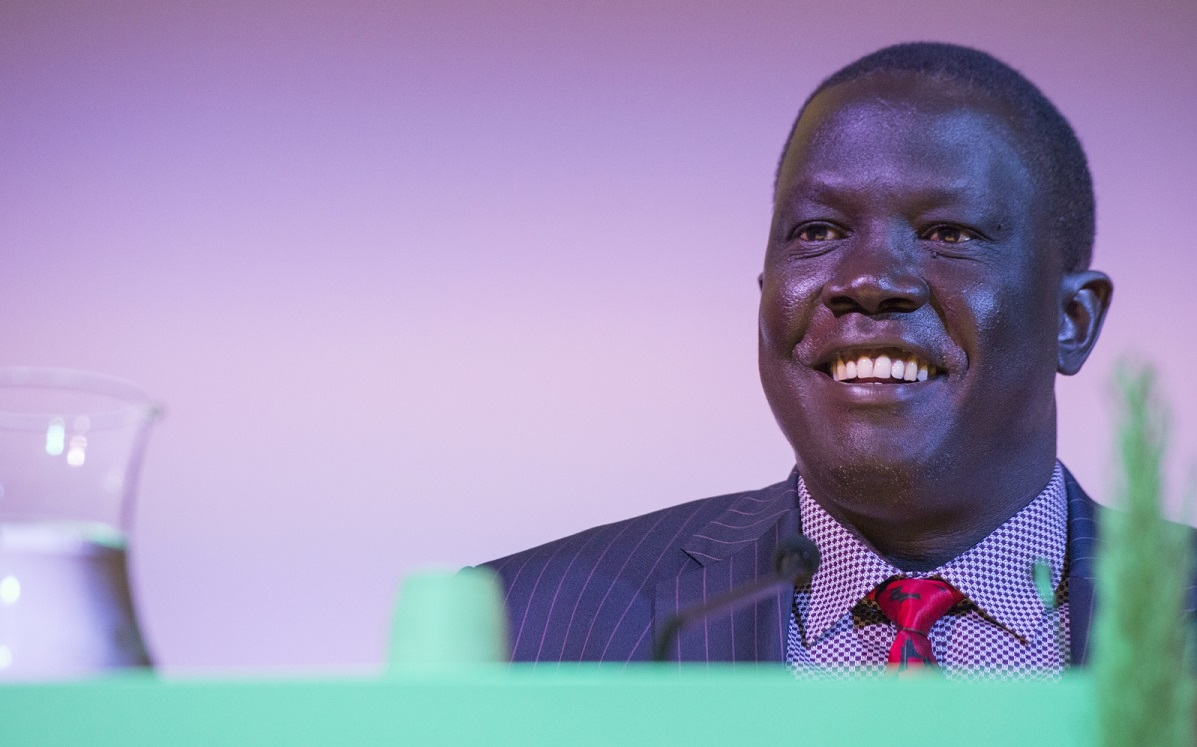
“This is a very timely initiative as it comes at the onset of the continent embracing the concept of natural capital accounting and its application to policy. This community would deliver a number of valuable outcomes including identifying and spreading best practices, laying a strong foundation for the future generation of policymakers, and strengthening the capability of institutions across the continent on natural capital accounting,” said Dr. Tom Okurut, Executive Director of the Uganda National Environment Management Authority, at the inception event in Kampala, Uganda.
According to the statement, the community of practice intends to hold regular meetings at regional and international fora; promote best practice; produce joint communications including case studies; share experiences through south-south exchanges and joint trainings; and build technical expertise through themed working groups, among other activities like a moderated WhatsApp group and monthly webinar series.
“Anyone with an interest in natural capital accounting in Africa can sign up through the community of practice website to join. Over 300 people from 39 different African countries have already signed up,” said the statement.
“The COVID-19 pandemic underscores strong links between human and planetary health, making the valuation of natural capital and ecosystem services more important than ever. As we monitor the evolving impact, the Global Program on Sustainability is looking at ways in which we can contribute to address the challenge,” said Raffaello Cervigni of the World Bank Global Program on Sustainability. “This regional community of practice can be an effective mechanism to scale up efforts to support countries in undertaking a more systematic look at natural resources to inform their national strategies, deal with biodiversity loss and climate change, and to support post-COVID recovery,” added Raffaello.
 Stanbic Accelerates Uganda’s Digital Future with “Kikole Ku Speedii” Campaign
Rosimeiry Portela, Senior Director at Conservation International said that the community of practice “provides the space for African countries to learn about advances in Natural Capital Accounting, to share experiences in implementation, and increase momentum for continental adoption.”
“Conservation International is committed to supporting such an effort, and to work with participants on how accounting for nature’s benefits can inform a range of development policies and frameworks including the post-2020 biodiversity framework and the Sustainable Development Goals,” she said.
Ruud Jansen, the Executive Secretary of the Gaborone Declaration for Sustainability in Africa (GDSA) Secretariat, said that his organisation was delighted at the establishment of the NCA Community of Practice, as it represented a robust commitment by all partners and NCA practitioners, policymakers, NGOs, and government institutions.
“The GDSA Secretariat is committed to supporting the activities of the COP in an effort to further sustain the coming of age of NCA in Africa,” he said.
About the African Forum on Green Economy conference
The African Forum on Green Economy conference, organized with support from the Ugandan Ministry of Water and Environment, profiled African leadership in the drive for greener, fairer economies centered on an understanding of the value of nature.
This conference is part of the Economics for Nature programme, a six-year programme led by the Green Economy Coalition and its partners; the Natural Capital Coalition, the Green Growth Knowledge Platform, and WWF France. The Forum is funded by MAVA Foundation and is supported by IUCN Uganda country office.