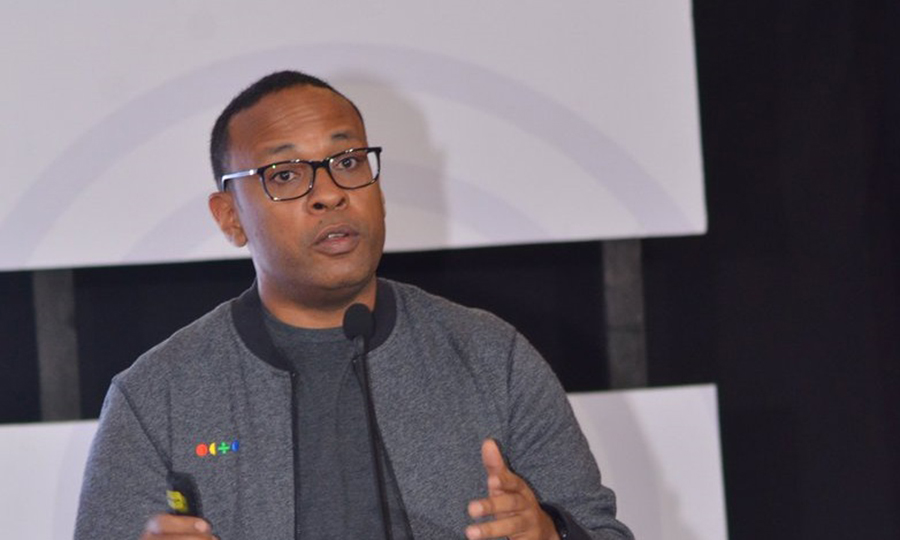
Jack Ngare, Technical Director in Google Cloud’s Office of the CTO in Nairobi, believes Africa’s innovations are not side projects for global companies but lessons that shape how the world builds technology.
The continent’s greatest strength, he argues, lies in second-order inventions; clever, home-grown fixes that teach the world how to solve larger problems.
A decade ago, a few giant balloons floated silently above East Africa. They were part of Project Loon, Google’s experiment to beam internet access to remote areas where towers were too costly to build.
Launched from Panama, the balloons drifted across oceans until they reached Laikipia, Kenya, where people went online for the first time.
The project was short-lived, however. “You can only run philanthropic services for so long,” Ngare says. “There has to be a sustainable model of who’s going to pay for it.”
Yet its impact was lasting: the balloons were guided not from Silicon Valley but by reinforcement learning, an early form of artificial intelligence that allowed them to adjust to wind currents and stay in position autonomously.
That same technique now underpins advanced models like ChatGPT and Google Gemini.
“Out of simple experiments in places like Africa,” Ngare reflects, “you discover how to build scalable technologies that impact the world.”
Project Loon may have ended as a business, but it proved a deeper truth: innovation born in Africa can shape global progress.
Tropicalizing technology
“If balloons feel like a parable,” Ngare says, “the next story is a sermon in spare parts.”
In Nairobi’s Kirinyaga Road, imported cars meet Kenya’s potholes, dust, and heat.
Mechanics rebuild them until they can survive the continent’s realities.
“What arrives as a universal product leaves as a local machine,” Ngare notes.
That process of adaptation, what he calls tropicalization, also defines African tech.
His example: a GE-developed portable ultrasound used to monitor pregnancies in rural clinics.
The device sends images via 3G or 4G to doctors miles away. Originally driven by simple software rules, it now runs on AI, allowing faster and more accurate diagnostics.
The system has already helped more than 250,000 mothers. “It’s not about luxury labs,” Ngare says. “It’s wrench-and-socket pragmatism.”
Africa doesn’t reject foreign technology; it improves it.
“Without the car in the first place, there’s nothing to take to Kirinyaga Road,” he jokes.
The refined ultrasound is now used in rural parts of the US, a reminder that tools perfected under constraint often prove most durable.
“This is the quiet genius of African engineering,” Ngare says. “It doesn’t shout. It fixes what must work.”
When research outlives its moment
Not all breakthroughs are immediate. Years before AI became a global obsession, a small team at Google published Attention Is All You Need, a paper describing how machines could understand language by examining sentences as a whole rather than word by word.
The work seemed theoretical, until it became the foundation for every modern AI system.
“Your research may not show value right now,” Ngare tells African scientists, “but someone, somewhere will build on it.”
He urges researchers to publish and share, because visibility, not geography, often determines influence.
“Progress doesn’t move in a straight line,” he says. “It zigs across oceans and re-enters your life as a platform you now use daily.”
Related
 EADB Defends Auction of Nairobi Property in USD 9.1 Million Loan Dispute With Kenyan Borrower
Rules holding back dreams
Ngare’s fourth story shifts from invention to regulation, the unseen barrier that decides whether good ideas can scale.
“Build a product in Nairobi and you can’t simply sell it in Uganda or Tanzania,” he says. “You must reapply to hold users’ data.”
Each country’s data-protection laws force startups to repeat compliance from scratch. “Startups grow up as compliance shops before they become product companies.”
He calls for harmonization, a shared framework for data governance across Africa.
“Harmonization isn’t sexy,” Ngare admits. “But there are few levers as powerful.”
If a product approved in Kenya could operate seamlessly in Kampala or Dar es Salaam, scale would follow naturally.
Investors would see clear rules; innovators could focus on building. “Talent flows to the doable,” he says. “When rules make sense, innovation thrives.”
Protection and progress
Ngare’s final reflection is about balance, protecting citizens while allowing invention.
“There’s a deeper ethical knot here,” he explains. “If laws are too loose, creators don’t benefit from their ideas; if they’re too tight, only the powerful can afford to innovate.”
He proposes innovation sandboxes, reciprocal data-compliance agreements, and auditable pathways showing how data moves across borders.
Governments, he argues, should see trust not as an obstacle but as an accelerant. “Trust is not the enemy of speed,” he says. “It’s its precondition.”
The physics of African innovation
Across his stories, the balloons, the clinics, the overlooked research, the maze of rules, Ngare sketches a pattern.
Progress in Africa is born not from perfect conditions but from constraint and persistence.
“Balloons learn faster when the wind disagrees,” he says.
In places where power cuts out, where networks falter, and where budgets strain, innovation becomes an act of endurance.
What survives here becomes stronger, and often more universal.
A device built for rural Kenya can serve rural America. The AI that once guided a balloon now powers fleets of drones. Every local breakthrough becomes a global lesson.
Ngare urges Africans not to discard what they learn along the way.
“Stop throwing away the by-products of our pilots,” he says. “Those fragments are blueprints for the next success.”
Africa already exports music, culture, and talent; it can also export method, the art of solving hard problems with little.
“Who’s better positioned to author resilient systems,” he asks, “than the builders who started there?”
His playbook is simple: give startups room to experiment; harmonize data laws; ensure that intellectual property from partnerships returns to local ecosystems; and treat open research as infrastructure.
Africa’s future, Ngare concludes, belongs to those who not only build, but build systems that let everyone else build too.