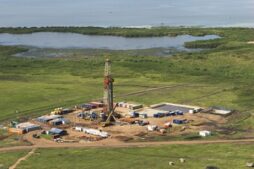
Uganda’s expanding oil and gas industry has the potential to transform the country’s economy and society, creating jobs, fostering the next generation of engineers, and promoting gender diversity.
Overall investment in Uganda’s oil and gas sector today stands at approximately $1.8bn. Combined, capital and operational expenditure and industry revenues are forecast to hit $5bn a year by 2030.
However, these rewards must be balanced against the environmental impact of onshore operations. The impact of climate change is ever present in Uganda. As recently as last year, the residents of western Rwenzori endured flash floods that destroyed their village and the nearby hospital. Indeed, it is the people in the world’s developing economies who feel the effects of climate change the most.
Uganda’s carbon emissions, while small in their global cumulative output (0.006%), continue to rise year-on-year, dominated by the burning of fossil fuels. As the Oil & Gas industry gears up in country, digital innovations have a critical role to play in ensuring this legacy doesn’t become a carbon one.
Data acquisition and analysis
Digital and automation technologies such as AI, the internet of things (IoT) and big data continue to transform oil and gas operations. There are two elements to this; first, data acquisition using low-cost sensors installed in assets and equipment. The second, is managing and analyzing that data in order to give valuable insights that drive production and energy efficiency and add business value.
Take something as basic as a motor, for example. They can be fitted with microprocessors that produce all kinds of data that can then be used to predict when that asset may fail, allowing engineers to carry out predictive rather than reactive maintenance, and reduce costs and downtime.
The ability to monitor and control the condition of key industrial components and equipment such as motors and heat exchangers remotely also improves safety, since personnel no longer have to make trips to high-risk environments in the field to perform physical inspections.
The power behind the energy transition
The energy transition to renewables continues, but the world will still need a baseload of fossil fuels for many years. For the oil and gas industry in countries such as Uganda, that means limiting the emissions created from getting raw fuels out of the ground and processing them for export or consumption.
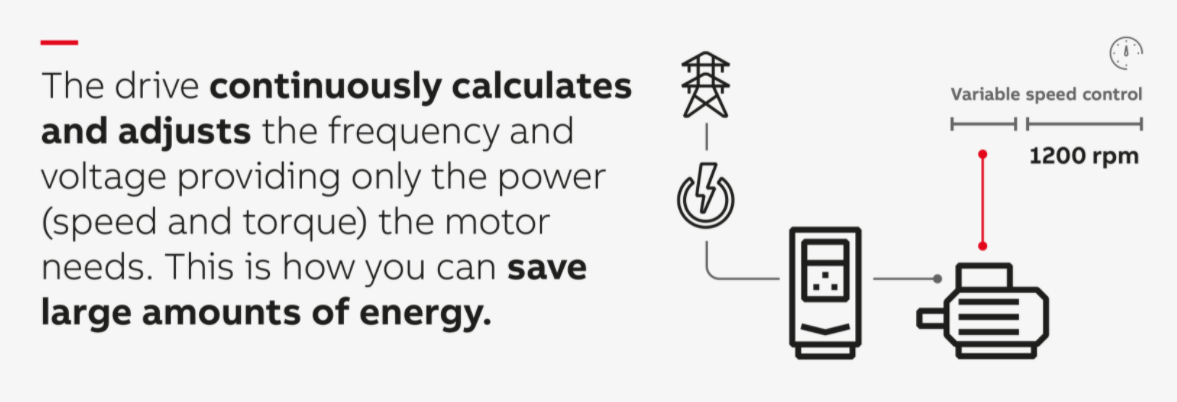
Here again, digital innovations can help make this happen. Around three-quarters of the world’s power is used to drive electrical motors and much of that still comes from non-renewable fuels. ABB produces variable speed drives, which allows users to save energy by controlling the power and frequency provided to the motor so that it only transfers as much energy as required.
 Shashi Dhar Drives Bank of Baroda Uganda Profit to UGX 156.8 Billion After Three Years of Strong Growth
Expand this out to an entire oil and gas production facility, which employs a multitude of motors and similar electrical equipment, and it’s clear to see how using innovations such as variable speed drives, coupled with digital monitoring solutions and visual dashboards that allow oil and gas clients to monitor their carbon emissions in real time, can reduce energy use and carbon footprint.
This is happening now in Nigeria, where ABB is providing the complete electrical control system for a new oil refinery, allowing the customer to understand and manage their electricity consumption, as well as limit their carbon footprint during the conversion of the oil to gasoline and other products.
ABB in Uganda
Digitalization is set to transform the oil and gas sector in the Middle East and Africa, potentially unlocking $1.6trn–$2.6trn by 2025.
In Uganda, where it has an established base, ABB is using its long history of success in the power industry and its portfolio of digital, automation and virtualized engineering solutions. Technology such as ABB’s 800xA distributed control system and ABB Ability Genix industrial analytics and AI suite support the strategic growth of the oil and gas sector by optimizing CAPEX and OPEX, driving operational efficiency and productivity, and improving energy efficiency in greenfield and brownfield projects.
Worldwide, ABB is helping to enable a low-carbon society by supporting its customers in reducing their annual CO2 emissions by at least 100 megatons, equivalent to the annual emissions of 30 million combustion cars, as well as striving to achieve carbon neutrality across its own operations.
Safe, smart, sustainable
Smart technology, AI and other data-enabled digital solutions have a key role to play in helping the oil and gas industry in Uganda improve energy efficiency and safety and meet its sustainability goals.
By localizing the market, facilitating in-country industry, and promoting economic and social growth, all while reducing carbon emissions, the oil and gas sector in partnership with technology specialists such as ABB, can ensure that all Ugandans benefit from their country’s oil and gas boom.
The writer, Barry Grant, is the Vice President IMEA Hub, ABB Energy Industries Division.