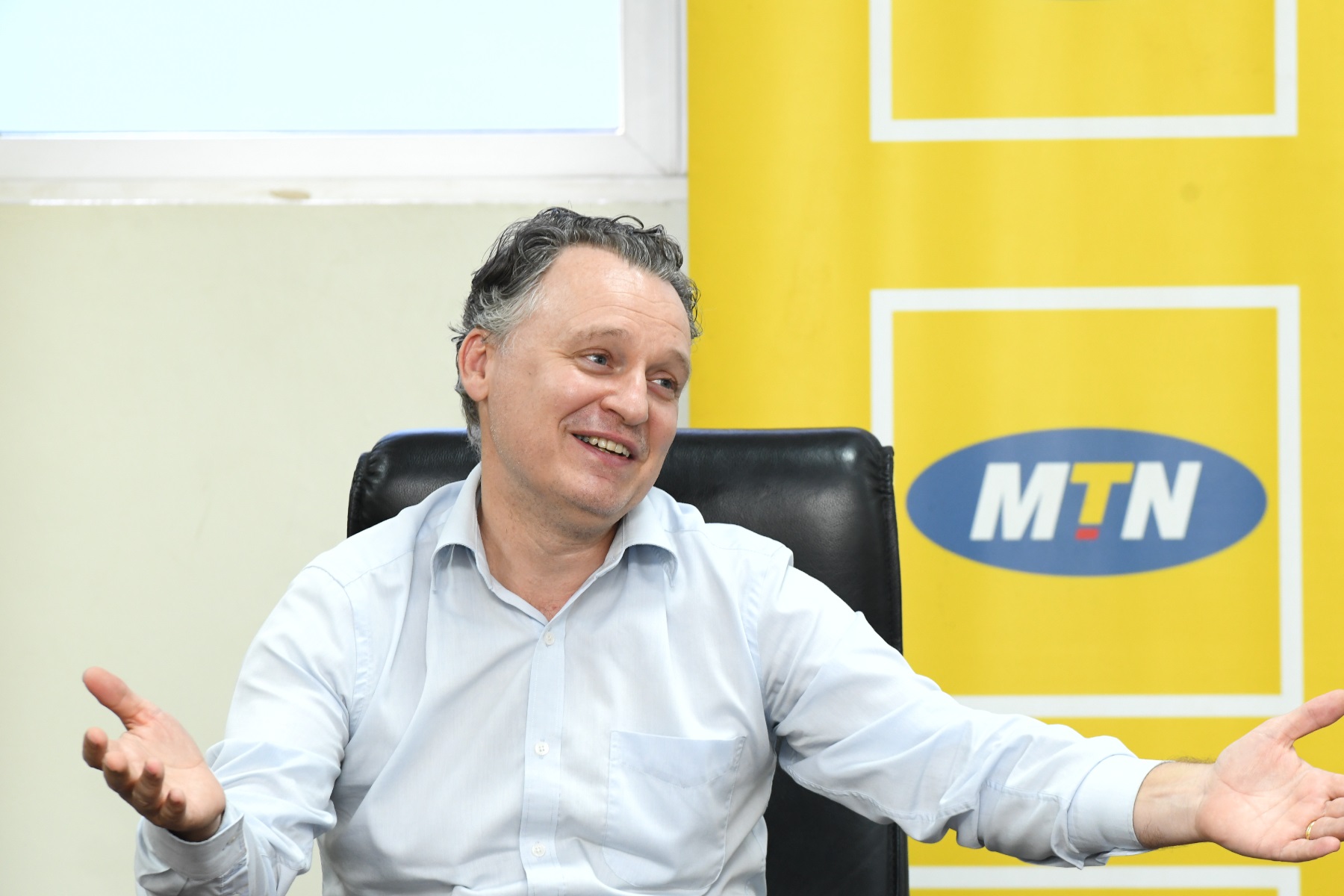
For starters, can you share with us your overall assessment of your performance- where you found the company and where you leave it now?
I officially joined MTN Uganda on the 1st of August 2016 and have done three, two-year terms in the position. In terms of business performance, if you compare the number of subscribers, we are now almost at 16 million customers as of Q1 2022. Six years ago, when I joined, we were about 8.5 million- so we have almost doubled. We have also doubled the network. We had about 1,500 towers six years ago, and we’re going to end the year with about 3,000 towers. That also shows you how much more people are using our services. Although this doesn’t necessarily mean that we have doubled the coverage. A lot of these extra towers were built in towns and urban centres where we already had coverage but what we are trying to do is to densify our network and strengthen our network signal to improve the quality of connection because each tower has a limit on how many people it can serve.
We reckon that we need maybe at least another 400-500 towers to cover the entire Uganda. We are not there yet, but soon we will be as it is both a license obligation but also a business opportunity.
Of course, with increased subscribers, revenue increase follows, albeit slowly, say by about 75% because the Average Revenue per User (ARPU) tends to reduce with every new customer. So, during these 6 years, we have been able to register about 75% growth in our top line but we almost tripled the bottom line- growth was about 200%. This means the company was more efficient and that we are leaving more money at the bottom line, which allows us to invest, and create more returns for shareholders.
The bottom line is very important, not just for shareholders in form of returns and dividends, but it’s also important to have a healthy bottom line so that you can invest, for example, to cover the rest of the country, where there is no network. We also need to invest in fibre and 5G— there’s still a lot of investment that we need to make, to satisfy market demands in terms of data, but also to satisfy our license obligations.
Some people say, we are making too much profit, but I want to believe that we are making healthy profits, and most of the profits go back to investments. If you don’t invest, the customers will complain. Before you can build a quality network, you first need to be profitable. We’ve seen many companies coming and going in the market. They come, launch, sell below cost and then make losses, close shop, and run away. In the larger scheme of things, what value have they added in terms of, the development of the industry?
What do you consider your biggest moment at MTN in these 6 years?
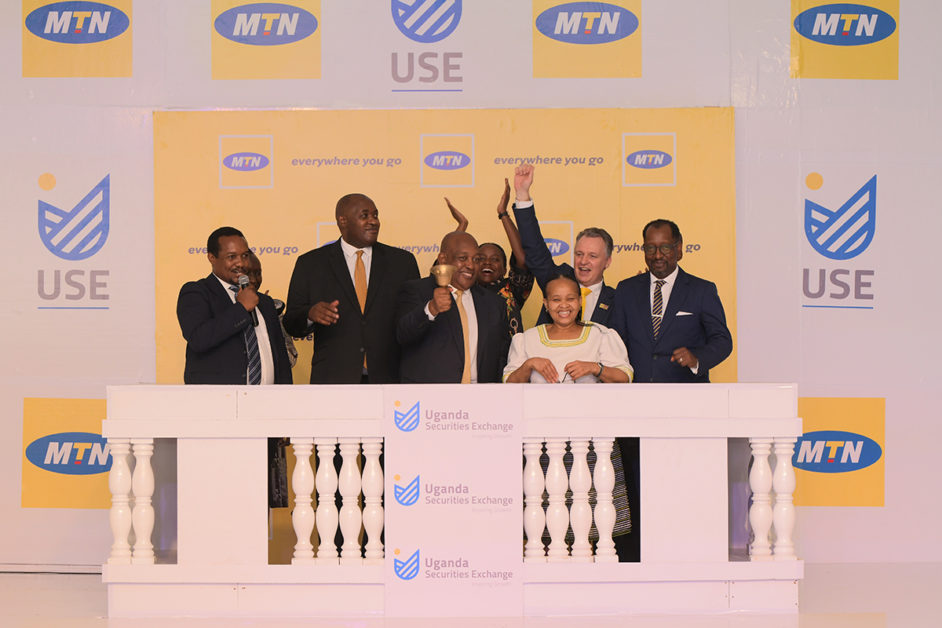
The listing of MTN on the Uganda Securities Exchange (USE) on the 6th of December 2021 was really a moment of joy. The whole process of renewing our license started in March 2018, so the listing was the climax of the process. From March 2018 until December 2021, we were in a transition phase from the old license to a new license. The listing was the fulfilment of one of the key obligations of the new licence i.e., the mandatory listing on the USE. The climax of that journey; the symbolic ringing of the bell on the bourse, I felt like it was the biggest accomplishment for me and my team. A lot of people were involved. For me, that was my highlight of the six years.
Looking ahead, in the medium term, do you think this growth- MTNs and industry is sustainable? Do you see subscriber numbers and revenue continue to grow and maybe doubling in the next 6 years, or do you think the industry has hit a plateau?
As a listed company, we are mandated to give medium-term guidance to the market and what we are expecting; the guidance that we are giving to the market is that we expect double-digit growth- low double-digit growth in the medium term. That is about 10-12 % growth in the top line- we have done about 75% growth in the last 6 years, that is an annual average of 10-12%. We believe that this low double-digit growth is going to continue in the next about 3 years. That’s our expectation.
Where do you see this growth coming from- especially since our population is only growing at 3.3% and the existing adult population is nearly circulated?
One of the key drivers is going to be Mobile Money- it is going to be a big part of our business. But also more important, is going to be data. According to our Q1 2022 figures, there was more growth from data than from mobile money. We announced a 35% growth in data compared to 20% for mobile money. This is largely because Uganda is playing a catch-up game in data- both mobile and fixed data. Compared to markets like Tanzania and Kenya, the data market in Uganda was and is not growing as it should. When you compare MTN Uganda and our competitors, there is a similar dynamic, mobile money revenue outstrips data revenue, yet in most countries, the two are the same.

There’s a lot of growth that is going to happen in the data space- both mobile and also fixed. There are going to be more investments in fibre and with 5G- we are not even started yet. The growth in the data business is definitely going to continue for the next one or two years as we play catch up and unlock more revenues.
As for voice, if we can hold onto what we have now, it will be good, because as it is, most countries are now declining in voice, but data is jumping up. But ultimately, voice is also going to start going down because people use WhatsApp for voice calls now and that supports data revenue. So, voice revenues will start flattening before they decline. That is going to happen. Whatever trends you see in other markets that are a bit ahead of us, are also going to happen here. The revenue mix is definitely going to change in favour of mobile and fixed data and mobile money. But the overall picture is that there will be 10-12% growth for the next 2-3 years.
Away from MTN performance, what is your view on Uganda’s telecom market over the last six years? Are we heading in the right direction?
The telecom sector has, I would say matured a lot compared to where we were 5-6-7 years ago— both from the telco and mobile money business perspective.
The National Payment Systems Policy and the subsequent National Payment Systems Act (2020) created a proper standalone framework to manage and regulate mobile money as a standalone business. Before, mobile money was like a service hidden in the telecom business while now it has been carved out with its own regulator, the Bank of Uganda, and its own Act that clearly defines how mobile money should be run. We have a regulator and a standalone company, with a license to do mobile money. As a result, we also have new competitors entering the market doing mobile money only.
The NPS Act of 2020 created a lot of visibility and transparency as well- we can now for example go to investors, and show them mobile money as a standalone business, and the telco as standalone businesses. This is good, and healthy because those businesses are completely different.
For example, to do mobile money, the new companies, don’t need to invest in towers. They can use the existing telco network, and this has lowered the cost of entry into the game. We are now competing with players, some of whom don’t even have an office here, some have their headquarters in the United States, in China. All this was enabled by the NPS Act of 2020. We have to give it to the legislators and the policymakers for making that move. It is the right thing to do, and we were one of the first countries to implement that.
Similarly, on the telco side, the Broadband Policy of 2018, created visibility, and transparency as well as timely replacement of the 2005 laws and policies which were frankly outdated against a fast-moving telecom industry. The new broadband policy really defined where we want to go as a country. It was very clear on the need to achieve full coverage, a new licencing regime and a new spectrum policy. It really clarified so many things, that as technology moves, policies also need to move accordingly and catch up with the realities of new technologies.
What that 2018 broadband policy did is to bring the new realities of the new technologies in line with the policies. The policy provided for, among others, national coverage, quality of service and listing on the exchange. It also created long-term visibility of where the market is headed. For example, we have a 12-year license- that allows us to know what to expect in this period. If I have a license that changes every year, it will not allow me to make decisions beyond 1 year because I do not have clear visibility of the policies that will guide me. An investor is not going to come and build a tower, where the returns usually take about 10 years if there is no visibility on the policy framework in the medium to long term.

Apart from a good policy and laws, which we thank the policymakers and the legislators, the Uganda Communications Commission (UCC)- our regulator, I must say has done a good job in implementing the policy. They’ve done a great job in implementing that policy because it wasn’t easy. There were certain things in the policy that went against the interest of other companies. To implement that policy required a lot of courage and I think we are all benefiting as operators, consumers and the country.
You earlier spoke of the need to remain profitable to be able to grow, invest and keep up with the needs of both the shareholders and customers. Looking at this market, would you say we are saturated and can’t accommodate more players? Is there enough space for more players to blossom?
I call this a 2 + 2 market— there are two big players and two smaller players. There is always space and there always has to be at least a third player. A market with only two players is an unhealthy market. We need at least a third operator to keep the two other operators honest with each other and with the market. There has to be a healthy level of competition and that you get when you have at least three operators. But when you go to four or five, six, then we begin to question whether it still adds value.
Remember, we are coming from a situation five years ago, where we had seven-eight operators. Most of them have disappeared. What have they added to the market? Uganda needs at least three operators. But do we need more than three? That’s questionable.
Away from the numbers, at a personal level, when you were appointed CEO, 6 years ago, you had your own fears and expectations. You had ideas on how you wanted to be remembered. How do you feel after the 6 years? Do you leave a happy person who has done all that they wanted to do, or do you feel there is unfinished business?
On a personal level, I have been CEO of MTN for 6 years. The average duration of a CEO at MTN Uganda has been three years for all my predecessors, has been about 3 years, so for starters, I feel honoured and very blessed that I have been given that opportunity to remain in the job for six years. You know that I have a personal connection with Uganda (Wim’s wife is a Ugandan), so working, you know, in my own home country and my home base for all this time, I can only thank the board for the trust that they have given me.
In terms of how I leave, again, on a personal level, Uganda was my home before I joined MTN, and it will remain my home even after I leave MTN. I will always come back to see my wife and children regularly. My long-term retirement plans are also here. So, it’s not like a lot of Mzungu (foreigners) who when they leave Uganda, cry, because they say it is a nice country. I’ve met many people who cry, saying they will miss the food, the weather and the great people. They cry because they might never come back. So, I don’t have that problem. I will always come back and my attachment to Uganda doesn’t change.
In the business arena, there are always things that you feel like you could have done better, or you could have done more, or you still wanted to do, but overall, I mean, I’m a happy person.
It’s been a good journey, climaxing with getting a promotion, and having the trust of the MTN Group to do now new things. I leave MTN Uganda, in slightly better shape than I found it. So personally, I feel satisfied, that I’ve been able to make my contribution.

Of course, new people will come and will correct a few of my mistakes, and they will improve a few of the things, just like I did. I also hope that my successor will be able to take the company to the next level; that’s only fair. I have been able to make my contribution, and I leave a happy person looking forward, to new challenges. I’m staying with the MTN Group and my life, at least my personal life also continues in Uganda. So, I don’t have to cry too much.
There’s been an issue of inter-network termination rates which some people say are quite high and responsible for the high cost of communication in Uganda. Secondly, the government and the customers have been complaining about the industry, especially on the matter of expired data. Why should data expire when the customer has paid for it?
When I joined MTN about 6 years ago, the rate was about UGX110 per minute to terminate a call onto another network. That means for every call originating from MTN to another network, MTN would have to pay that other network UGX110. Therefore any charges on that call would have to be UGX110 plus our charges. But today, that rate now stands at UGX45. I know, comparing Uganda and other markets such as Tanzania, there is still room to further reduce the termination rate say to about UGX35 or maybe UGX25,
but there is room to further reduce the termination rates, to reduce the barrier from one network to another. As MTN we are favourable and we will be supportive in further reducing that rate as and when you know, the regulator moves because it’s a regulated rate; it’s imposed by the regulator. We will be supportive to further take down that rate; that’s not an issue.
I must also add that over time the voice rates have significantly reduced. Today, you can call for 30 minutes for a price of 2 minutes, 10 years ago. It keeps getting cheaper every day and those rates will definitely come down more.
Regarding data expiry, it is important to understand that there is a variety of data bundles- for example, MTN launched two years, ago Freedom data bundles, which do not expire. Our strategy is to promote freedom bundles which don’t expire as well as daily bundles- which are heavily discounted but do expire. The customer value proposition here is that I give you a very reduced rate but the downside is that the bundles expire after 24 hours. That is marketing. If you want only Freedom bundles, the average cost will be higher than if you go for discounted daily bundles. For example, the cost of Gaga Night bundles comes at five times less than the price of freedom bundles during the day. These are discounted promotional bundles. We can afford to offer you that data at five times less during the night than during the day because our network is empty at night.
But at 03 am when everyone is sleeping, and because we have fixed costs, that I have to meet whether the network is empty or not, then I can be able to give you a great package. Bundles that expire are discounted bundles and they come at discounted rates as compensation, we have to limit their usage- it is a marketing thing. But you can choose the Freedom bundles that don’t expire but come at a premium- slightly more than the discounted bundles. Thinking that you’re going to get the same great rates- Gaga Nights Unlimited, in terms of expiry and use the same GBs and at the same time when everyone is using the network, it is not going to happen. It can’t.
True the telecom sector in Uganda has matured, but as you said, compared with our peers in the region, there is some catching up to do. There is room for this market to grow and get better. If you were the minister of ICT, what are those things you could do to accelerate the growth of the sector as well as uptake of your services, especially data- which has now become a basic need of sorts?
I would rather you appointed me the Minister of Finance, instead of ICT because unlocking sector growth is a finance thing both on the side of the telecom and mobile money.
Regarding unlocking growth on the telco side, the biggest hurdle today, to further driving down the cost of delivering data on your phone is that there are still not enough data users. We have for example invested heavily in fibre optic cables, but we are only using 5% of the capacity of that cable, yet it costs quite an amount to sink those cables. So, the only way to get the cost of data down is to get more data usage and users.
But why do we have a challenge with data users? It comes down to basically the cost of smartphones. Some countries have taken a deliberate step to remove import duties, VAT and all other smartphone taxes. And I am not talking about the expensive luxury handsets, but rather the low-end smartphones. You can remove all taxes and then also come to us as operators and ask us to subsidize the handsets by maybe UGX50,000 or UGX100,000. We need to put in place proper device financing schemes to increase the penetration of smartphones.
Today, only 35% of our customers use smartphones. If you don’t have a smartphone, you can’t use data. If we could get smartphone penetration to about 60-70%, we would exponentially grow data usage and that would significantly reduce the cost of usage. The more people are using data, the cheaper it becomes, spurring even further increased usage. It is a snowball. We have been engaging the Uganda Revenue Authority (URA) and the Ministry of Finance ICT to unlock this potential.
Regarding unlocking more potential on the mobile money front, first of all, over the last 10 years, we have largely been doing deposits and withdrawals, but the real future of mobile money is mobile payments. From a regulatory perspective, we need to focus on digitizing payments across the board.
There are governments on our continent and elsewhere that have designated cash as an enemy, but somehow in Uganda, we still want to see the cash. Cash is dirty- both from the many fingers that touch it but also because cash can move and or disappear without a trace. But electronic money cannot move without leaving a trail behind, but some people are not comfortable with that. We can as a country take a stand and say that as a nation, we don’t want cash, that we want to go cashless. Most Ugandans have a phone and a mobile money account. If we decide to go cashless, everyone will benefit from it.
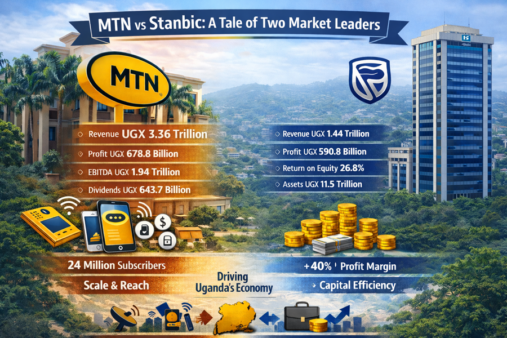
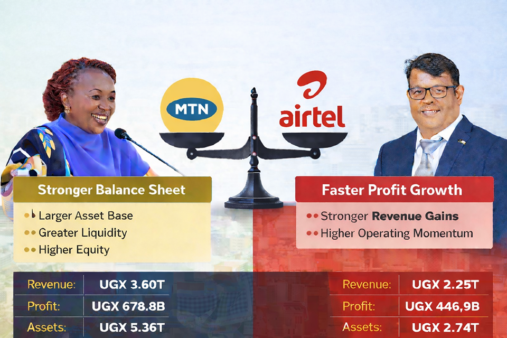
 MTN and Stanbic: A Comparative Look at Two Market Leaders
Let’s look at URA, they are increasing their collections because they are going digital. Let us look at the Electronic Fiscal Receipting and Invoicing System (EFRIS). Ok, some people seem not to like EFRIS, but EFRIS is increasing transparency and visibility because it is digital. If we link EFRIS to Mobile Money that would change a lot of things. If I was in a position as a policy maker, I would definitely drive digital payments, because you would have so much more visibility of the real economy. When I look at our GDP, it doesn’t tell you the full story, there are so many transactions in the informal economy that will never appear in the GDP figure because they use only cash. They never appear on the radar. For example, the government is driving the Parish Development Model and we can start by digitizing that. If you go across the border in Kenya, they are going cashless. They are far ahead of us. Why aren’t we also going the same route? Ultimately, we will get there, but can we accelerate that journey? It is in the interest of everybody. That’s what I would do if I became a policymaker.
Over the last two to three years, we are seeing MTN drive a lot of the MTN Open APIs (Application Programming Interfaces). What is this about and how is it important in the broader MTN strategy and staying on top of the game? What’s the thinking behind this?
In the last five or ten years ago, the thinking at MTN is that we should be doing everything ourselves. All the innovation and execution would have to be us. But the challenge you have with that is, first of all, the number of ideas that you can produce in terms of innovation is very limited because you have about 10 exco members and a staff complement of about 1,000 people, yet there are several other people out there who are much smarter than us. Limiting innovation to in-house denies you access to all those ideas. It also slows down the innovation and implementation process.
But when you open up the platform, such as the MTN Open APIs do, then you have access to 100 times more ideas that come 10 times faster. As an organisation, we have moved away from wanting to innovate everything ourselves to say, if there’s anybody with a great idea out there, let them come out and plug their idea into our mobile money ecosystem of 16 million subscribers and our robust mobile money payment system.

We are inviting the world to come and innovate and plug their innovations into our mobile money system to launch and monetise whatever new products or services that they have developed and we can look at a revenue share. Open APIs provide a platform for innovators who are much smarter than us but do not have a big subscriber base like MTN has and do not have a payments channel like MTN Mobile Money. MTN is offering them access to our 16 million subscribers as potential customers and a robust mobile money payments channel to monetize their inventions.
This is a win-win and makes our mobile money much more relevant not to just us as MTN but also to the global world of innovators as they have access to a potential market of 16 million and growing potential customers.
Throughout the six years, what have been some of the key issues that kept you awake at night?
The number one thing that keeps me awake at night in terms of customer feedback is the concern of mobile money fraud. That is a battle that we are fighting day and night. It is something that we take extremely, very, very serious because mobile money can only live if it’s trusted, just like banking services are trusted. If you cannot trust the bank, if you cannot trust MTN, that your money is safe, then you are undermining the viability of mobile money. Trust is the number one promise and the number one deliverable that we need to give to our customers when it comes to mobile money.
That said, allow me to say that 99% of all mobile money frauds have nothing to do with MTN or MTN staff or our systems. I am not saying 100% because there is always a risk. Yes, there are some internal cases of collusion, and we are fighting and acting against them very hard. But 99% of the mobile money fraud is what we call social engineering, e.g. someone calls on behalf of UCC or BOU or MTN and tries to play will people’s minds and trick them into sharing their PINs. That is how they rob you of your money. It is not about our system. It is social engineering.
They have called me too; the way they can try to convince you- is amazing. They speak with so much conviction, especially to certain sections of the public that are not well versed with how things work. But sometimes even enlightened people have fallen victim to these socially engineered traps. That is why as an industry and working with the regulators have embarked on a campaign to educate the public not to share their PINs with anyone, ever. The number one rule on mobile money safety is to not share your PIN on any occasion. Nobody from MTN will ever call you to share your PIN. The PIN is a Personal Identification Number- it is yours. Don’t share your pin with anybody.
The second biggest issue is, of course, the quality of service- customer complaints about dropped calls, lost signal and other related complaints. We try and track all those complaints and try to understand what exactly the issue is. This helps us constantly improve on the quality.
I have always had debates with my customer care team, and I always insist that the best network is the one that nobody complains about. The fewer, complaint calls that you get, is a signal of the better, the quality you’re delivering. It is not about the number of calls handled. The key KPI should be about reducing the number of complaints and not necessarily resolving them faster.
Given the evolution of the telco industry especially the fintech component, where in some markets telcos are getting banking licenses, where do you see our industry in five years? Do you see for example telcos merging with banks? Do you see a good reason and a good business case and an opportunity for enhanced customer value proposition from such mergers?
Absolutely.
We have now split our telecom and mobile money services. We now have a banking regulator. The regulator for banks and mobile money is now the same. With the NPS Act 2020 in place, the next step for MTN mobile money as a standalone company is to venture and apply maybe not for a full banking license but may for a license for one of the tiers in the supervised financial institutions. It is an obvious step that we should be considering venturing into.
For example, instead of working with NCBA Bank to offer MoKash— a service that provides customers with the ability to save and borrow using their phones, we can get a banking license or some kind of a banking license that would allow us to do the lending ourselves, or deposits ourselves instead of sharing it and or collaborating with the banks. Is that going to happen next month? No. Is that going to happen next year? Maybe. But, I mean, it’s something that you definitely, as a businessperson have to consider now that you’ve been split. But are we going to offer $10 million loans may be to finance infrastructure projects? Never! That is not our core. If we decided to venture more into digital banking, it will be about payments, it will be about small savings, lending, insurance etc… we will stick to our core business, which is the mass market. We are not going to go to corporate kind of banking, nor investment banking. That is not our core. We will never do that. But maybe we will move into digital banking, consumer retail etc.
What are those challenges that you would have wanted to be tackled or one that you left untacked that you would want to flag to the incoming person, that look here, this is the burden that I was carrying and this is how I was going to deal with it?
There are three things and I’ve already mentioned them. No.1 is to get more spectrum, it’s absolutely essential to drive down the cost of delivering data. We have been on a journey, and we have been assigned a lot of additional spectrum, but we still need more. It’s a game changer for us and the industry.
No. 2 is about mobile payments. We have done something, but we are not where we should be. We need to accelerate regulatory and policy input and support to increase uptake and usage of digital payments.

No.3 is smartphone penetration and device financing. We have launched our device financing for smartphones- MTN Kabodde but I mean, but we need more policy support, especially amidst the ongoing global challenges that are likely to increase the cost of smartphones- China is having challenges, the chips are becoming scarce as the Teslas of this world increase demand etc. We are fighting an uphill battle so we could use a little more regulatory and policy support from the government to help us keep the cost of devices down. These are the three most important things that Sylvia, the incoming CEO and the team will and should continue to focus on.
It is said that being a CEO, especially for such a large company, sometimes the seat gets hot. Is there a time in these 6 years, that you felt that the seat got perhaps a little bit hotter?
I mean, it’s no secret that I had a very challenging time in 2019, when I was facing, the deportation of my colleagues and then my deportation, which, of course, was a challenging moment. I will not play it down, you know, that touched my life, not just professional, but also personal. I mean, to leave my wife and children behind in my own country, and not being sure whether I will be able to come back, of course, was a challenging moment.
I will always be extremely grateful to His Excellency, the President because he personally, allowed me to come back not just to be reunited with my family members, but also, you know, to take up my position as CEO of MTN again. That act of me being allowed back also cleared all the allegations and suspicions around all the things that were said, about the incident. All that was cleared. That is why I was allowed back. From a professional and personal point of view, that was my hot seat, as you called it. But you know, what doesn’t kill you makes you stronger.
So now when I look back on it, that is part of the realities that come with the job. If you’re not willing or you’re not ready to face those kinds of challenges, then you know, you can’t stand the heat, so don’t come to the kitchen. Those are the realities that CEOs go through and that’s fine. It’s part of the job.
What are some of the valuable leadership lessons that you have learned over time and on this job that you would like to share with the world?
This is not specific to my job but rather about leadership, generically. I say, once you’ve made up your mind, on a particular decision, every day you wait to implement that decision, you will regret it afterwards. Once you know what the right decision is, implement it the same day because if you wait, it only becomes more difficult. Waiting will not make it any easier. It could be a price change, contract agreement, terminating someone or hiring someone-whatever decision. Nine out of 10 times, waiting to implement your decision actually makes it worse and more difficult to do, especially if they are difficult decisions to make.
The other advice I can give is constant and frequent engagement and or communication with your stakeholders- staff, customers etc. In life, no one ever knows everything. You always will learn something when you keep communicating, talking, and listening because there’s always something that you didn’t know. Thinking that because you are a CEO, you know everything, is wrong. You always have to keep an open mind. The day, you start thinking that you know everything, that’s the day you will start making big mistakes. Always keep an open mind, learn new things and always challenge the status quo. When you become complacent, soon or later you will become a problem. Challenge others and accept to be challenged. Accept positive criticism, otherwise, you become the problem.
As Wim, what would you say was and is your leadership style? Are you a democratic leader or dictator for example?
Maybe you should ask my staff. But I do believe in leading by example. I find it very difficult to ask your staff to do or not to do something that you as a leader are not willing and or able to do. When you lead by example, you are taking away the excuses of the others not to do certain things.
The other thing is, I have a soft spot, for people at the bottom of the chain; the people that get their hands dirty to ensure that we keep the business running. These are often seen as small jobs because they don’t have big titles or big offices but it is the technicians, the call centre staff, the people who make sure our generators have fuel all the time to keep the towers running that are the real heroes. On many occasions, they do not get the appreciation that they deserve. It is always the big guys in the boardroom who speak good English and speak strategy and PowerPoint presentations and get the biggest salaries that also get all the praises and appreciation. But if there is no fuel in the generator, your site will be off and customers will not be able to make calls. It is those customer care people who sit in front of the screen all day, taking those calls and the insults from the customers sometimes, but they don’t give up.
During my time and the epidemic, I tried to ensure that we implement policies that show we care e.g. trying to facilitate them to work from home, transport allowances etc. And we are not talking about policies but showing them that we care and giving that care to those who needed it the most.
I will feel very happy if these people felt appreciated; if they said Wim was a CEO who cared about us. If they feel that I cared for them, that will be my biggest joy and my biggest gift and appreciation from my staff. If they, on the other hand, felt that I was only caring for the big guys and I didn’t care about them, I will be disappointed and mark it as a failure for me. I will be sad. I would be really sad because I would have failed them.
On a personal note- what are you going to miss most about Uganda, for example, the food?
For sure I love matooke and I loved matooke before. Ugandan food is great. The one thing that I will definitely miss, and I think we don’t appreciate enough is the Ugandan fruits. No country in the world has pineapples and watermelon and mangoes like Uganda. Wherever you go, even you go to Ghana, you go to wherever it is, you will never find them, never!
But as I said before, my home was Uganda before I joined MTN Uganda, and it will remain. I don’t have to shed too many tears about leaving the country because I’m not leaving the country. I am merely being assigned to Accra now for a regional position, but I will still be in and out of Uganda on a very regular basis to see my family. I’m just changing jobs. I’m still very much here.
Of course, I am talking about the good this, there have also been a few bad moments like having to shout at some people for not doing their job, but that is part of life. But I am grateful to my MTN Uganda family for allowing me to coexist and to live and work with me all these years. Because you can try and do whatever you want, if the people you’re working with, you know, reject you because of whatever reason, it would never have worked. We wouldn’t have achieved the great things we did together. I don’t take it for granted.
MTN has been a game changer and trailblazer in many aspects. One of the key issues that people have to look at is skills transfer. How well have you succeeded in building the capacity of local Ugandans to run such a complex organisation? Relatedly, the appointment of a non-Ugandan CEO to replace you didn’t go down well with some people. What are your thoughts on this?
The CEO is just one person at the top, but you need to widen your lenses to appreciate this better. Today, if you look at MTN, out of 1000 staff, there are two and a half expatriates- two and a half because I am half Ugandan. Two and a half non-Ugandans, out of 1000 people running the biggest company in Uganda, on top of the 15 Ugandans that are working outside of Uganda in other MTN countries is a big thing.
Today, our Ugandan brains and expertise is our biggest export within the MTN Group that we should be proud of. Ugandan talent is going all over the continent.
If you add that to the ex-MTN staff that have gone on to join the competition and or are doing great things out there, the impact is phenomenal- in the technical world, the world of finance, commercial etc. the number of people who have gone through some kind of training, some kind of experience that MTN has given them you end up with 1000s of people and that is before you talk about subcontractors and dealers. Those are maybe 10,000-20,000 people! That is something collectively, that as a company we should be and are proud of!
Comparatively, I can talk about Africell because they are gone. They had 250 staff and 50 of them were Lebanese! I will not talk about my direct competitors (Airtel), but you can go and investigate- do your own research.
Then, there are all these vendors, all these small companies that we’re talking about that are building onto the MTN APIs ecosystem, all these companies that do innovation, there is not a single one that doesn’t have at least one former employee that worked with MTN. I would say, MTN is the best training school you can find in real life.