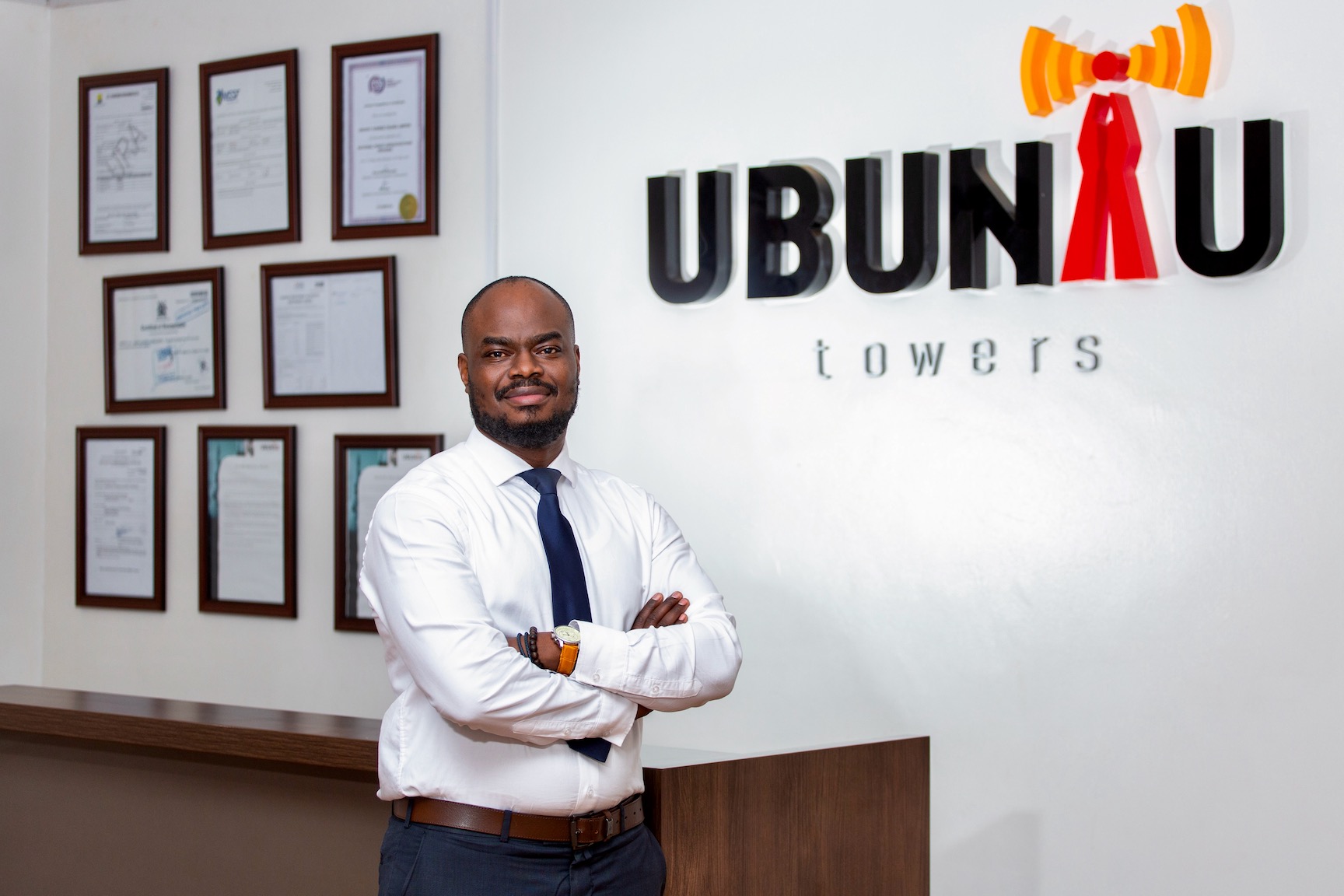
Ubuntu Towers is now part of Towerco Of Africa (TOA), a subsidiary of AXIAN Telecom, operating in Madagascar, Tanzania and DRC. TOA company brings together industry expertise, and diverse and established partnerships founded in ease of doing business with next-generation innovation to drive a transition towards a carbon-neutral towerco infrastructure across Africa. Three years down the road, CEO East Africa Magazine’s Muhereza Kyamutetera sat down with him, to learn about his experience and his shared optimism about the future.
Let us start by understanding you as a person⏤how do you describe yourself?
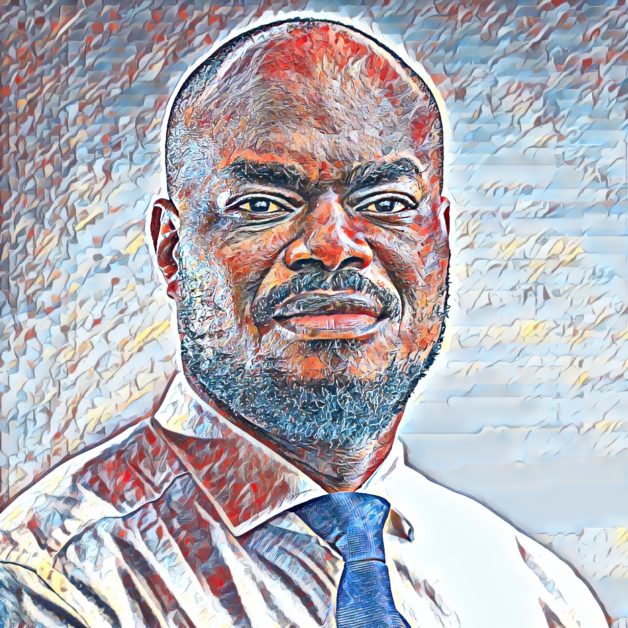
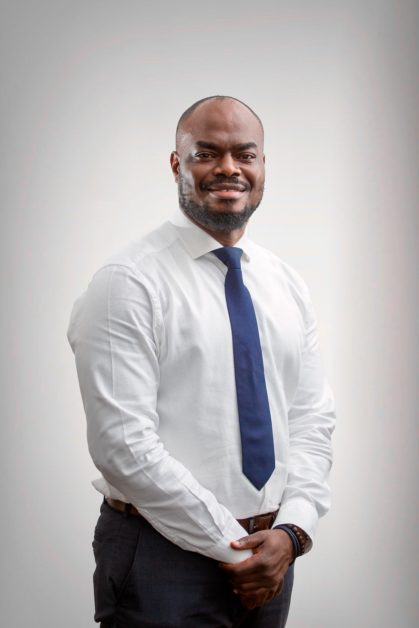
My name is Geoffrey, Donnels Oketayot. I’m the CEO of Ubuntu Towers. I’ve been in this position since the idea of founding the company was conceptualised- after the sale and merger of Eaton Towers to American Tower Corporation. I have been CEO of Ubuntu Towers for three years now. Previously, I used to work at Eaton Towers, as the National Key Account Manager on the MTN account. Before that, I worked with American Towers itself in Uganda as Account Director, Managing all business clients within the portfolio. Before that, I worked for a support company for MTN in Nigeria for three years. Throughout my work life, I have been a lot more in technology and have transitioned from IT⏤ software to networks, and then to telco.
Again, in terms of education, I am predominantly, from a technology background, with a degree in software engineering from Uganda Martyrs University and a Master’s in ICT from the University of Pretoria. I’m also a graduate of Harvard Business School.
Tell us more about Ubuntu Towers. Why Ubuntu and what differentiates you from the other players in the market?
The name Ubuntu, yes there is a connection between Ubuntu- Bantu people’s word for humanity, and what we do as a company. We decided to choose the name because as I said, the concept of the business came during the sale of Eaton Towers. And normally during such mergers, there will be always redundancy in terms of resources. When we looked into the market and looked at our colleagues and the valuable talent that was about to go redundant and to waste, this inspired us to start this company. The sale happened on the 31st of December 2019 and in the few months that followed, there was so much uncertainty with the coming in of Covid-19. Looking at the broader picture of it, and the skills and abilities that we had- a very rare skill set, especially in the passive infrastructure sector, we knew we could make it.
We were also inspired by the need to open up the market in terms of availability- we could see an opportunity.
What differentiates us is that we are the first Greenfield business in the tower business- I think in East Africa. It’s not common in the tower industry. Normally, in the East African towerco industry, most of the existing players purchased existing infrastructure from the telcos, who operated them before divesting out, but ours was 100% greenfield, which is very difficult to win the trust of customers as well as for potential investors as most prefer to buy an existing balance sheet. So that is the first uniqueness of the business.
Second of all, we are 100%, Ugandan in the towers business. Most of the players- in Uganda and most of the continent, it is dominated by international companies. Ours is a unique story.
The other differentiator is that, we want to operate on a lean model, where we keep very minimum stuff and subcontract the rest of the work. That makes it very easy for us in terms of agility, in terms of being nimble, quick at decision making and remaining focused in terms of service provision- and managing the real work on the ground.
Our principle as a towerco was to come and be the first green tower organisation. So in most of our implementations in terms of towers, we ensure that we have a site either connected to the grid, connected to solar, or both. We also recycle batteries in some of the sites where we cannot achieve both- we do run a hybrid energy strategy. That is largely the uniqueness or what differentiates us from other passive infrastructure providers in the market.
Yours is indeed an unusual story. Most times when there are such mergers and layoffs, most people go into self-preservation mode and try to save the little they have. What really inspired you to start a greenfield business, especially at the onset of the Covid-19 pandemic? Where did you get the courage to start a whole new company in such a capital-intensive sector and a country like Uganda where capital is so scarce and most financiers are not willing to give startups a second look?
It was tough. It was a very tough decision. It was a learning curve decision. But we had no option but to go all in. If it was to fail, or if it failed, it was going to have very serious ramifications, individually, in terms of our ability to survive thereafter. But when you have hope and faith in something, and you have the ability to execute, it is easy to bet on your ability. We did a bet and it turned out the right way because sometimes you take a bet and it doesn’t turn out the right way. But we knew our ability in terms of skills, in terms of engagement with the customers and we knew exactly what we could achieve. The only limitation we had was financial.
As individual founders, we had proven ourselves in Eaton Towers. We basically ran much of the organisation⏤ yes, we had MDs and CEOs but half the time they were out of the country and the running of the organisation had to be done by us. So we knew that we had the right skill resources, if well aligned, and we maintained that level of professional relationship we would eventually make a successful business.
Towers or passive infrastructure as you call them, are vital infrastructures in the communications business- an important gateway. As we digitalise almost everything, we are increasingly relying on your services to do almost everything⏤ a very vital responsibility. How do you sleep at night well-knowing thousands of people are relying on you to run a big part of their lives?
Sometimes they say, you have to carry your cross. That said, it is something that we do- well, I guess when you like what you do, you’re comfortable doing it no matter the adversities you face.
What gaps did you identify in the industry that motivated you to join and to what extent would you say those gaps have been filled by Ubuntu Towers?
As I initially indicated, our inspiration was to create opportunities or create jobs. We wanted to be able to create an opportunity for Ugandans and be able to retain some of that value here since most companies are owned by international players. We wanted to challenge ourselves to have a Ugandan-owned and efficiently run entity. It would also be an opportunity to attract more investment into the country and further enrich the livelihoods of our people- Ugandans in the sector.
Of course, we were also inspired by the fact that the market had a monopoly, which is not a good thing, especially in the services sector. If not checked, a monopoly player can enslave and distort the market in many ways. Even when we had a duopoly under Eaton Towers and ATC, there were issues in the quality of service, because monopolistic/duopolistic players, become too big to control. The other thing is that in terms of costs, it will lead to an increase, which then has a direct impact on us the users, of the telecommunication services. So we thought that coming in to bridge that gap would actually help to either not escalate the cost of communication, or even bring it down.
We also saw this as an opportunity to gain experience, so that in the future, maybe we can, we can have the agility and pedigree to grow into other markets.
What has been the market response? Have they warmed up to you?
Yes indeed, I think initially, the market was a bit cold being a new entity. The fact that this is a capital-intensive business, your customers need partners who can support their business with little stress. I mean, on average it costs USD150,000 to put up just a single site. And normally these rollouts are in the hundreds, so if you’re doing up to 100 or 200 sites, you’re looking at almost USD30 million in terms of Capex alone without Opex. So they thought that would be a challenge.
But, working through different partners and engaging them, while also leveraging a little bit of our history we managed to wade through the tide – we first engaged locally to see if there was anybody who would be interested in the business, but then talking to the various “potential business people”, they thought it was an uphill task to get that sort of financing locally and that it would not be possible. We then moved on to the local banks. At first, the financial industry also was non-committal. Being a greenfield, without actual assets that would serve as security, they told us it was difficult for them to invest in just a good idea. Good enough, we were able to pitch almost for close to a year to Uganda Development Bank who then eventually gave us a funding opportunity, and they risked with us to see how it would work out. So the first facility we got was for USD7 million, which we drew down about USD2.8 million and once we made that draw-down and built a couple of sites, that’s when Standard Bank London through their US office got interested and said, lets now do business because they saw that we were serious. That is how we started. And then once we had a few sites on the ground, we were able to attract an equity investor in Axian Telecom. Attracting an equity player without anything on the ground was hard. All Equity players first wanted to see if it is a viable business or whether we could do it. So, sometimes it’s a chicken and egg situation. The challenge for entrepreneurs and people with great ideas is that we are caught in a catch-22 situation. One needs to first put up something on the ground before any external parties are willing to invest. This is where most business ideas fail.
 Ruparelia Group Wins Key Entebbe Land Case, Clearing Path for the New Mega Speke Resort and Convention Centre, Entebbe
Unlike in other parts of especially the Western world where ideas attract funding, most of the investors and funders insist on seeing something get off the ground first. What do you think needs to be done to bridge this gap- because the country could be missing out on very great ideas that are not funded.
While I understand the something-on-the-ground-first model, we also need an ideas-first ecosystem to complement it. I know many people in the Western world, including some, who are my relatives, who just finished school, and then wrote a proposal to the bank and the banks were able to finance them based on just their ideas. And most of these ideas are now successful businesses. I think the challenge with our industry is that the banking industry has never looked evolving to that approach, they have a whole department of trade that is supposed to look at unique ideas and concepts and try to align those ideas towards the money but the default ask is always security or invoice financing. There should be at least a certain level of leverage that they should be able to give the entrepreneurs because without that, then it’s all about collateral.
Even if you have a very good idea and you show them (the banks) where the money is; even with a contract in hand and a written confirmation from the contracting company, a formidable one at that, they will begin giving you other ideas and questioning if you have ever done it before. A genuine question of course which is a risk in their eyes. They start doubting if you can do it. Yes, they are pertinent questions, but then the thing is that how can the bank be able to help the entrepreneur, either through, you know, bringing in somebody to bridge the gap in terms of management/governance⏤ yes, they can say, we don’t trust you with our money, but we have people who will be sitting with you, to ensure that you invest the money in the right place, people who may be can run it for some time, and then hand it over to you when they are comfortable. I know many banks claim to have training programmes for entrepreneurs but training is one thing, and doing the actual work is a whole different animal.
Speaking about the Equity Partner that you have been able to attract, whom we understand is the Axian Group, what does it mean for the industry and yourselves?
As I’ve already indicated, the industry is very capital-intensive. For you to be able to meet the mobile network operators’ (MNOs) requirements, you need to guarantee 99.9% uptime. To be able to guarantee this and give them that sort of uptime, because their revenue is made per second⏤ if they are off for even two seconds, it means they are losing revenue, you have to be able to invest significantly and it takes a bit of money. So our equity partners bring that to the table. They’re able to bring us that cash to ensure that we operate efficiently.
There are also several other benefits of their coming to the market as this helps us bridge the gaps that existed in the market and go into spaces where service never existed. So we are taking better service provision to the underserved like access to education, banking, better health services and access to grid power. We have noticed on several occasions that services such as banking cannot move to certain locations unless there is telecommunication services are being provided.
Whenever you see a tower site, especially if it is in a rural area, then that means we were able to pull grid electricity to the site and that means all the villages and homes along the line now have access to electricity and so many other additional activities will begin to spring up along that path.
We are now more financially stable than ever before and can maintain a wide base of subcontractors, which means increased employment and more livelihoods support. We are creating jobs – as the telecom industry grows and as coverage continues to grow more and more jobs are being created in other subsectors such as agency banking, mobile money agents, or mobile money spin-offs. All these are springing up with increased penetration of the telco business via our towers.
The Ministry of Education itself has been providing cyber school schools within the different government schools and all that can only be realised once, technology gets closer to the users via our towers.
Speaking of impact- what are the key facts and figures that bring alive the impact created by Ubuntu?
By the end of last year, we closed at about 350 sites for an organisation that has been around for three years. We intend to close the year with about 500 sites which is almost half the portfolio that we had in eight years at Eaton Towers. This is significant growth.
In terms of employment, indirectly, we employ about 250 people and we directly employ about 150 people. So that is the impact we have created so far.
Some time ago, you dragged Airtel Uganda to the regulator over what you said were uncompetitive clauses in one of the contracts with a tower company. Of course, the regulator ruled in your favour. Has the competitive environment, improved since then? Do you feel there’s a level playing field or there is more that needs to be done to ensure a level playing field for especially newer players?
First of all, we need to appreciate the role that the regulator is playing. I think we have a very strong regulator. Unlike in other markets where regulators can easily be manipulated, here we have a strong regulator, for example, look at this scenario where MTN could not renew its licence until it had to adhere to certain key aspects, of regulation. But still, there’s a lot that needs to be done, to make the ground even for new players, as well as existing players.
The market isn’t yet fully opened up in terms of dominance. If you have a player who is 90% dominant in the market, the ripple effects may not be that immediate and direct, it could take up to three years to see the effect. So we believe that the UCC ruling in the Ubuntu vs. Airtel and ATC was a step in the right direction, but we are yet to begin seeing the experience of a levelled playing ground because, with such a portfolio, there is a lot that a dominant player can do to sway the market and to benefit from their size. Dominance is still one thing that needs to be dealt with because there are ways in which a dominant player can sabotage other businesses. The key question is to be able to persuade the MNOs to support both towercos in their rollouts especially if it comes to the offering of services so that it is fairly balanced. You do not want one player to have so much control over the tower infrastructures in a way that can sway the market and box the industry in one corner which sometimes is not good for business and can either run all of us out of the market or make it very difficult for us to give quality service.
Towers or passive infrastructure as you call it, do form a significant component of the end-user cost in the telecoms industry. In a bid to bring down the cost of communication in Uganda which is still said to be high, what can or should the government do to help bring down costs in this industry?
I think one of the key cost centres for our market is energy generation- we are one of the biggest consumers of the grid and also one of the biggest consumers of fuel. So, if there is a way in which that can be subsidized, it will help to bring that cost down. Because most of that cost has to be passed on to the operator who also has to pass it on to the end user.
The cost of steel has always been a challenge, the world over, but the government can step in to cut taxes. Taxation on the materials we use will remain an issue but also many other components that are used by the sector such as end-user devices. If end-user devices such as smartphones, laptops etc are taxed out of reach for many, then that means we are limiting the benefits of the technology on one hand, but also if we can’t have many users at the end of the line, then that means the few who can access, will have to do it at a higher cost. The more smart devices we put in the hands of the users, the cheaper communication will get through economies of scale. That level of scalability is what government needs to drive because without it there will only be a few people who will be taxed and these have to pay for the rest. That service that is being taxed on the few is what is making telecommunication expensive.

We have always engaged the government to look at the telecommunication industry as one of the major pillars of the economy with wider ripple effects across all sectors. If you are to look at the 4th Industrial Revolution, it is premised on the telecommunication industry. If not well done, or fully invested in, it will always be a challenge to get that through.
There’s a lot government needs to do in terms of supporting the industry. I know through the UCC’s Rural Communications Development Fund (RCDF), the government is moving to create increased access, In terms of infrastructure, there’s a lot that needs to be done as well, either through NITA-U’s fibre backbone but also buying internet in bulk so that it regulates the prices and eventually we’ll see the cost of communication coming down.
The story of Ubuntu Towers is quite phenomenal- starting up during the pandemic in a capital-intensive sector and now past three years, over 300 towers built and finishing well by attracting an equity investor. What lessons have you learnt in all this?
One thing for sure is that there are opportunities in Uganda. There’s enough for everybody and if you put your heart into something where you know that you have the ability, to do it, you shouldn’t give up. It took us over 267 Zoom calls of introductions⏤ who we are, and what we intended to do, to a point where sometimes if you were to be woken up from sleep, you would begin by saying, “We are Ubuntu Towers and so and so….” All those over 267 Zoom calls were rejections, until finally, we got somebody willing to take us up. Everybody needs to learn that a “No” does not mean it is the end of your idea. It should just be the start of the next preparation. It is possible. No matter how big you see certain organisations, they all started small- as Nelson Mandela said, “It always seems impossible until it’s done”. That is the inspiration that we get. We believe that if anybody has an idea, they should constantly continue to look at the different ways how to execute it.