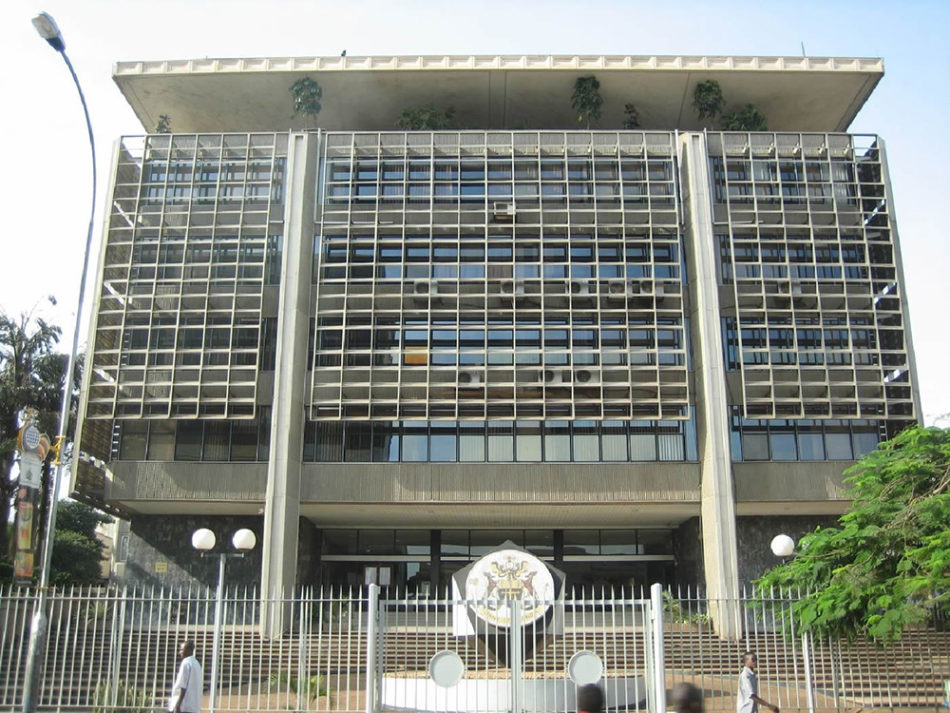
In a bid to curtail inflation, the government of Uganda, through the Bank of Uganda (BoU) has increased the Central Bank Rate (CBR) by 1 percentage point to 8.5%.
At the extra-ordinary Monetary Policy Committee (MPC) meeting that was held in July 2022, the BoU increased the Central Bank Rate (CBR) by 1 percentage point to 8.5 percent.
“Inflation continues to rise, largely influenced by external cost pressures stemming from higher global food and energy prices, persisting global production and distribution challenges, as well as rising domestic food crop prices due to dry weather across the country,” reads an extract from a monetary policy statement released by BoU today on 5th July 2022.
The statement which was signed by the Deputy Governor of Bank of Uganda, Michael Atingi-Ego on Tuesday 5th July 2022 which is today goes on to clarify that;
“While the inflationary pressures are likely to be temporary, the MPC assessed that a markedly higher policy rate is needed to stabilize inflation around the target.”
Adding that; “accordingly the MPC raised the CBR to 8.5 % and maintained the band on the CBR at +/-2 percentage points.”
The margins on the CBR for the rediscount and bank rates remain at 3 percentage points and 4 percentage points respectively.
“Consequently, the rediscount and bank rates are now 11.5 percent and 12.5 percent, respectively,” says the Deputy Governor.
The BoU also increased the Cash Reserve Requirement by 2 percentage points to 10 percent, effective 23rd June 2022.
The MPC considers that the monetary policy stance will have to be tightened even further so as to ensure that inflation eases back to target in the medium-term.
“The annual headline and core inflation rose to 6.8% and 5.5% in June 2022 from 6.3% and 5.1% in May 2022, respectively. Annual food crop inflation has sharply risen from 0.7% in February 2022 to 14.5% in June 2022,” notes Governor Atingi-Ego.
He goes on to state that, the rising food and energy prices, intensified by a weaker Uganda shilling, have worsened the inflation outlook for the remaining part of 2022 and into 2023.
“The headline and core inflation are now forecast to average 7.4% and 6.3% respectively, in 2022, slightly higher than the 7.2% and 6.1% that were projected in the June 2022 forecast round,” he notes.
According to the BoU Monetary Policy statement, Inflation is forecast to peak in the second quarter of the 2023 before gradually declining to stabilize around the medium-term target of 5% by mid-2024.
The inflation outlook is significantly uncertain, with balance of risks tilted to the upside, including:
- Global inflationary pressures amidst persistently higher world food and energy prices.
- A faster shilling depreciation as advanced economies raise their policy rates to control escalating inflation.
- Higher prices in the global markets that could further increase the demand for foreign exchange (US $ in particular) required to purchase about the same quantity of goods, which may further weaken the shilling.
- Potential worsening of disruptions of global production and distribution due to stringent controls of Covid-19 outbreaks especially in Asia.
- Higher domestic food crop prices due to the effect of prolonged dry weather conditions on food harvests.
The downside risks include;
- Weaker domestic consumption and investment as higher inflation reduces consumer’s real incomes and tighter financial conditions constraining private sector access to funding.
- Escalation of global inflationary pressures could ease much faster than currently assumed, resulting in decline in imported inflation.
The June 2022 preliminary GDP estimates by the Uganda Bureau of Statistics (UBOS) indicate that the economy grew by 4.6% in Financial Year (FY) 2021/22 from a revised growth rate of 3.5% the previous year.
The economic growth was driven largely by private investment despite imports far exceeding exports.
On the production side, the industry and services sectors were the main drivers of growth, with some of the services sector activities, such as education and trade recovering.
However, the statement reveals that; “households and businesses expectations about economic developments have grown more tepid, and the global economic outlook is highly uncertain.”
Overall, economic activity is projected to remain modest as the shocks to commodity prices, production and distribution disruptions and global inflation continue to dim the prospects for the domestic economic growth.