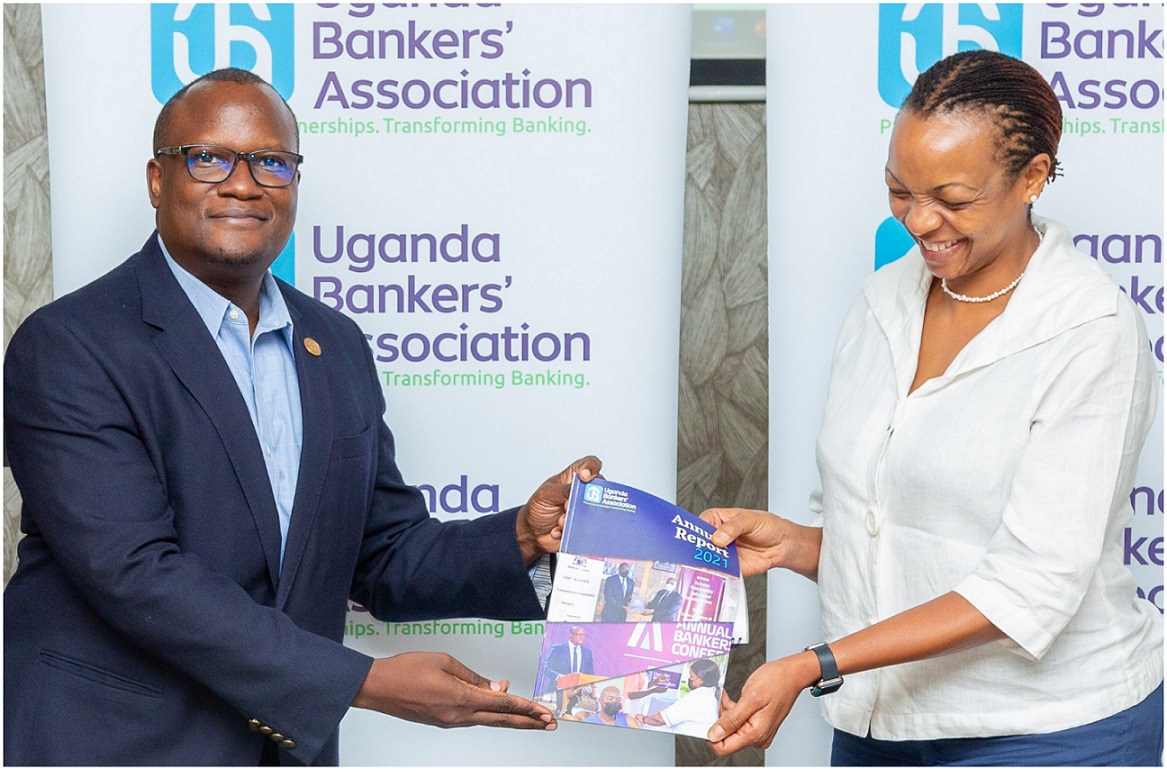
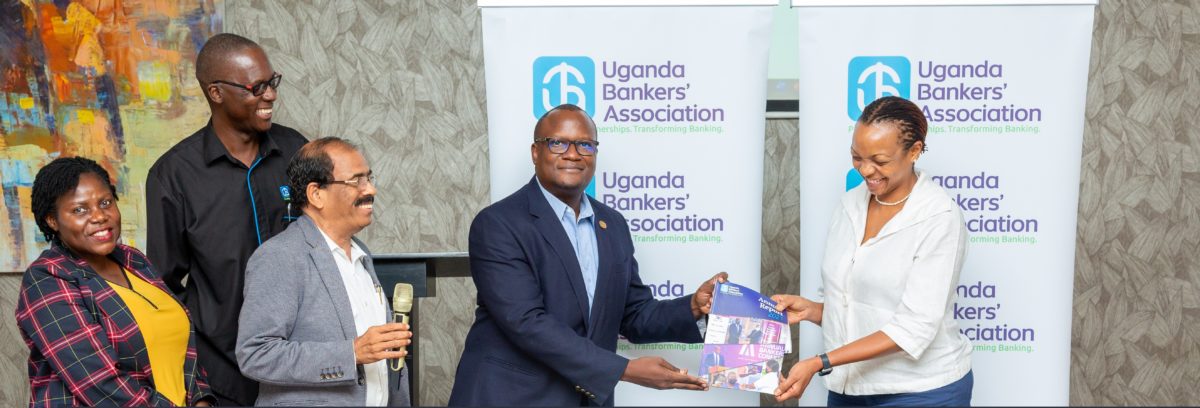
Members of the Uganda Bankers’ Association (UBA) held their Annual General Meeting on the 13th of May 2022 and elected Sarah Arapta, as the new Chairperson of the association’s Executive Committee.
Arapta, the Chief Executive Officer of Citibank Uganda, takes over from Mathias Katamba, the Managing Director of dfcu Bank, whose two-year term (2020 and 2021) has elapsed.
Arapta has been Katamba’s deputy on the outgoing committee which also included Varghese Thambi, the Chief Executive Officer of Diamond Trust Bank as the treasurer as well as Sam Ntulume the Executive Director, of I&M Bank Uganda as the Auditor. Albert Saltson, the CEO Emeritus of Standard Chartered Bank and Veronicah Gladys Namagembe, CEO of Pride Microfinance, have been Committee Members.
According to a statement released by the association, the new Arapta-led committee has Julius Kakeeto, the CEO, of Post Bank Uganda, as the Vice-Chair, while Shem Kakembo, the CEO, of EFC Uganda, is the Treasurer. Raj Kumar Meena, CEO, of Bank of Baroda is the Auditor while Mr Olalekan Sanusi, CEO, of Guaranty Trust Bank and James Onyutta, CEO, of FINCA (U) Ltd, are Committee Members.
Uganda Bankers’ Association (UBA) is an umbrella organization for financial institutions licensed and supervised by the Bank of Uganda. Established in 1981, UBA is currently made up of 26 commercial banks, 2 development Banks and 8 Tier 2 & Tier 3 Financial Institutions.
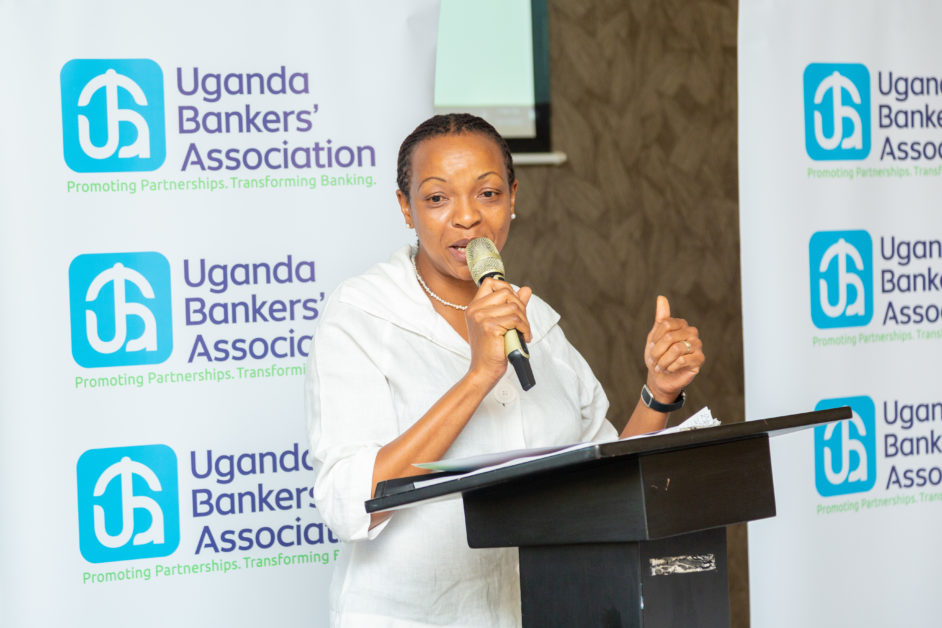
The members are represented by their respective CEOs while the Executive Committee- the Apex Governance body is made up of the member bank CEOs. The day-to-day work of the association is carried out by the Secretariat, which is headed by an Executive Director, presently, Wilbrod Owor.
A resilient and more functional banking industry
An exclusive report obtained by CEO East Africa Magazine that details the achievements of the Association under Katamba’s regime, shows a resilient industry that continued to “play its role as an engine to facilitate activities in all sectors of the economy by providing a range of relief measures and interventions to support growth and economic recovery during & post covid-19 pandemic lockdown.”
The report highlights the fact that despite the years, 2020 and 2021 being the most challenging for the industry, due to the Covid-19 pandemic the industry, especially in 2021 was able to remain resilient, with total industry assets growing by 8.4% year on year, from UGX 38.2 trillion at end of December 2020 to UGX41.4 trillion at the end of December 2021.
Aggregate industry profitability, according to the report, improved in 2021 despite the challenging macroeconomic and other conditions. Total comprehensive income for the banking sector was recorded at UGX1.04 trillion by end of 2021, compared to UGX 782.7bn reported on December 31, 2020. Eighteen (18) of the twenty- six (26) commercial banks recorded profits (69%), compared to nineteen (19) of the twenty-four (24) in 2020.
The total number of banking accounts, according to the report, grew by 9.5% year-on-year from 17,762,123 as of December 2020 to 19,447,332 as of the end of December 2021. The number of Agent Banking outlets recorded was 20,106 as of the end of December 2021 compared to 15,716 at the end of December 2020.
This is despite having restructured up to UGX3.1 trillion in loans as of the end of December 2021. Further accommodations for sectors such as education and hospitality that remained under lockdown were put in place to enable Supervised Financial Institutions (SFIs) to continue providing credit relief till the end of September 2022.
Reshaping the industry to increase relevance, innovation and resilience
Financial performance aside, the report also details other key achievements made by the outgoing Executive Committee, under the leadership of Mathias Katamba, which among others included a set of proposals to reform existing laws and regulations in the banking sector. The review covered 11 thematic areas including Governance, Legal, Compliance, Credit, Credit Reference Bureau (CRB), Information and Communications Technology, Digital Financial Services & Agent Banking, Operations, Clearing & Settlements, Finance and Treasury.

Key, among the proposed reforms, was a proposal to review and reform, especially the operations of the Financial Intelligence Authority (FIA), its supporting regulations, guidelines, circulars, and risk management guidelines. The proposals touched on how to identify limitations impacting business opportunities for the sector and other areas of improvement in products and services.
A report, containing the proposals and recommendations, that also included benchmarking from other financial jurisdictions was presented by the association to the Deputy Governor of the Bank of Uganda on 15th October 2021 together with the Executive Director of Financial Sector Deepening Uganda (FSDU).
The Association also successfully delivered the Electronic Know Your Customer (E-KYC)/ access to the National Identification & Registration Authority (NIRA) database project. The project, implemented together with the Financial Sector Deepening (FSD) Uganda, Laboremus Uganda, Uganda Bankers’ Association (UBA) and Bank of Uganda enables banks to update records of their customers as well as electronically validate the identity of their customers using their National Identity Number (NIN) both for existing customers as well as for new account opening and transaction validations. By the end of 2021, 25 SFIs had connected to the system successfully.
The remaining SFIs are to be connected this 2022.
The association also kick-started moves to establish a Cyber Security Operations Centre to enable financial institutions in Uganda to collaborate, share knowledge and best practices in cyber security as well as leverage the lessons and unique experiences to mitigate emerging cyber threats and vulnerabilities.
“Shared cyber security capability and a centre of excellence will provide key services to foster cyber resilience for the entire industry & its members. UBA outsourced a consultant to develop the model and framework for the Centre and in 2022, implementation of phase I of the Cyber Security Operations Centre is expected to commence,” according to an end-of-term report presented by Mr Katamba, the outgoing Chairman.
Supporting MSMEs and green financing
On 23rd November 2021, the association signed a tripartite participation agreement between itself and the Ministry of Finance, Planning and Economic Development (MOFPED), and Bank of Uganda, for the establishment and rollout of the Small Business Recovery Fund. The purpose of the UGX200 billion fund is to extend credit to small businesses that suffered financial distress arising from the effects of COVID-19 and yet show potential for recovery.
The Government of Uganda, through MOFPED, provided UGX100 billion (50%) for the SBRF for MSME support while the SFIs are contributing the other UGX 100 billion (50%) of the seed capital. The SFIs will also undertake loan administration as a revolving fund.

To support the development and/or embedding of green financing in the banking sector, UBA partnered with the Uganda Green Enterprise Finance Accelerator (UGEFA) project to launch the Green Finance Academy in July 2021. Fully funded by the European Union, and in partnership with Adelphi, an independent think-and-do tank in Europe for climate, environment and development, the academy will provide capacity building support for financial institutions in Uganda, including a comprehensive package for activities like training and an innovation hub as well as solution pitching.
UBA, in 2021, also applied for and received financial support from GIZ PREEP (Promoting Renewable Energy Efficiency Project) of EUR 100,000 (UGX 387 million) towards improving the uptake of renewable energy and energy efficiency products and services in four (4) target districts in Acholi and Lango Subregions including Arua, Lira, Gulu and Soroti. The support is intended for strengthening the capacity of the private sector SMEs working in the renewable energy (RE) and clean energy (CE) sub-sectors to develop bankable proposals and be able to access funds from financial institutions that have a presence in the four (4) districts of implementation. The project focuses on gap analysis, product development, SME de-risking, SME profiling and ensuring SME readiness by way of bankable proposals.
In total, during Katamba’s leadership of the association’s Executive Committee, UBA raised a total of UGX3.9 billion from development partners to support the association’s activities.
Other achievements include the operationalization of the International Center for Arbitration and Mediation in Kampala (ICAMEK) which offers Alternative Dispute Resolution mechanisms as opposed to long-drawn-out litigations in courts of law, particularly for recovery cases.
Plan 2022-2024 and an optimistic looking into the future
According to the end of term report, the outgoing Executive Committee also finalized the association’s Strategic Plan 2022-2024. The strategic plan that was adopted by members among others focuses on positioning the industry to continue supporting Uganda’s post-COVID-19 pandemic recovery, the operationalization of the cyber security centre, as well as the creation of national payments switch.
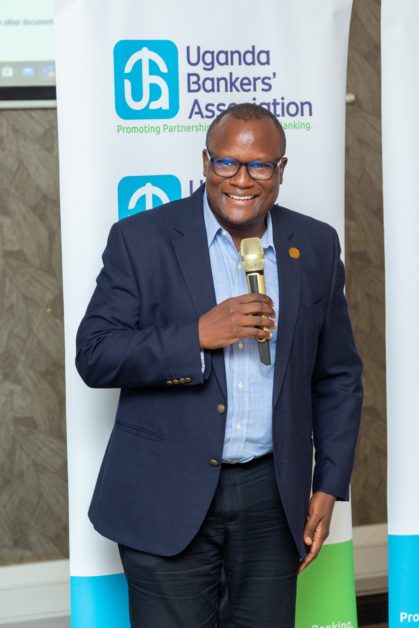
The plan also will enhance industry resilience to shocks as well as “continue consolidating the gains of the 2019/2022 strategy, especially championing and collaborating on initiatives intended at driving down the average industry cost of delivering financial services in Uganda; championing the growth, development, and adoption of robust, 24/7, secure, integrated multi-channel digital infrastructure required to transform the industry and harness financial service opportunities in intermediation, credit, and payments space.”
Other gains to be consolidated include championing initiatives to promote financial inclusion, the penetration of banking services, participation by the banking industry in key national projects driving the economy and overall expansion and leadership in the financial services sector.
Addressing members, on the outlook, Katamba told members, that with the government’s focus now turning to vaccination and public information, there was a very low expectation of lockdowns/restrictions re-emerging and therefore a significant rebound in trade, education, and tourism sectors was expected.
He also said that with up to USD10 billion expected in the oil and gas sector and an estimated 5-7% of that being directed to local spending, this would activate growth in key sectors including construction, services and agriculture. Increased, public sector investments in infrastructure particularly roads, airports, and power dams, were also expected to spur growth.
“We remain optimistic that the economy will rebound, with hopes hinged around services (ICT), agriculture, trade, manufacturing, tourism, oil & gas, as well as new markets access in the DRC Congo. The financial sector is well-positioned to support the current and emerging needs of customers and to support the economy in recovery mode now and in the medium-term period,” Katamba concluded in his report.