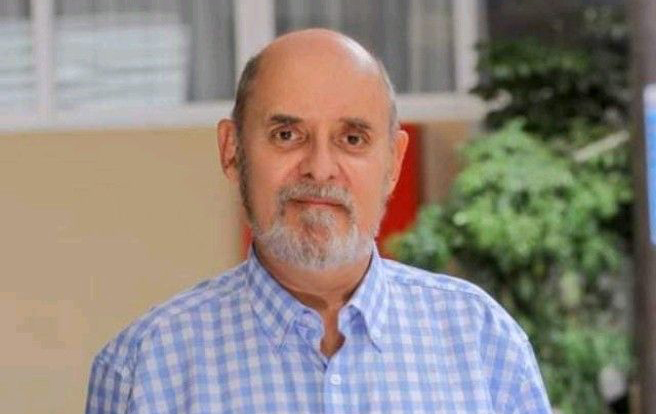
The Uganda Agribusiness Alliance (UAA) has named Steve Hodges the new Chief Executive Officer as per the board meeting held 9th March 2022.
Steve joined Uganda Agribusiness Alliance as a volunteer the month after its launch in 2014, and since then has served 7 years as its Chief Operating Officer, coordinating much of UAA’s work with commodity value chain development and multistakeholder platforms.
He replaces Edward Katende, who will remain as a member of the UAA Board but has resigned as the UAA CEO in order to concentrate on his leadership role in the development and launch of the Parish Development Model and associated activities.
Hodges is experienced in agribusiness project development and management, including private sector-led multi-stakeholder platforms, research and training in agricultural risk assessment and management and risk-led agribusiness planning.
As well as his role at Uganda Agribusiness Alliance, he is managing director at African Agriculture Risk Management Services, LLC where he provides training services in agricultural risk assessment and management to major Ugandan banks and universities as well as to groups of farmers and youth
In 2017, Hodges was Lecturer at an Agricultural Risk Management Training Week, at the College of Agricultural & Environmental Sciences, Makerere University
Prior to that he served as a Contractor for Land Tenure Training and ResearchContractor for Land Tenure Training and Research for the UN Food and Agriculture Organisation – Uganda
 Stanbic Accelerates Uganda’s Digital Future with “Kikole Ku Speedii” Campaign
Before that, he was Lecturer at the Uganda Institute of Banking and Financial Services/Mountains of the Moon University lecturing on Agricultural Risk, for the Post Graduate Diploma in Agricultural Risk and Finance
Hodges did Agricultural Risk Management mitigation work in South Sudan from 2010-2012 for Development of Village Empowerment of SSDUMC. This included: addressing production risks by training 256 farmers in 18 villages in conservation farming methods that increased drought resistance and maintained soil fertility, with a 43% implementation rate, some implementing farmers increased maize yields 4.5 times per hectare; addressing financial management risks by training 177 rural farmers, 70% of them women, in small business record-keeping and management skills; and addressing market/price risks by developing a 2-day workshop for 20 key farmers in market/price risk management.
Between 2011 and 2013, he was Consultant for Farmer Business Training and Sustainable Agricultural Policy DevelopmentConsultant for Farmer Business Training and Sustainable Agricultural Policy Development United Methodist Committee on Relief Yei Program Office
From April 1991 to August 2010, he founded and served as Executive Director of Jubilee Project, a community nonprofit organization promoting community and economic development, in targeted sectors: youth, health, leadership development, entrepreneurship, business incubation, agricultural value-addition, formation and capacity-building of marketing cooperatives in arts, agricultural produce, and value-added products.