
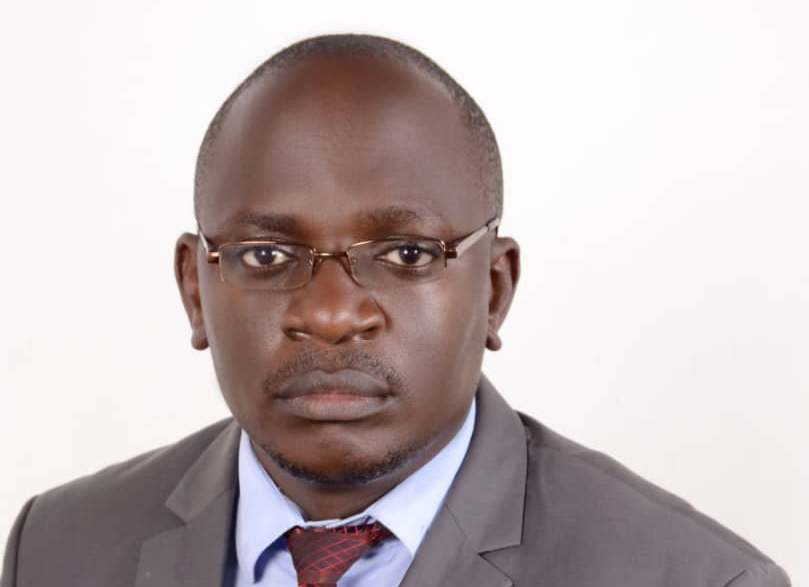
By Patrick Tutembe
The article by Dr. Ezra Suruma on “Ugandans will remain poor until they own their bank” catches my attention. Unfortunately, I sense a good degree of intellectual dishonesty in this Dr. Suruma’s narrative which he has espoused in a number of his writings about the Ugandan economy and local banking system.
Whenever the Dr. advances this narrative, there are four main personal events that have to feature:
1. His exit as the deputy Governor;
2. His sacking from UCB when he had just “turned the bank into profit-making”; and,
3. His sacking as the Minister of Finance, Planning and Economic Development “at a time when he had been voted as the best Minister of Finance in Africa”.
4. The closure of the National Bank of Commerce, a lower tier bank that “did its best” until it was closed by BoU at a time when the Governor was considered a long-time close an ally and associate to the shareholders, one of whom was Dr. Suruma. How this bank that was in operation for about two decades failed to attract local and foreign capital to meet the “Capital adequacy” requirements is a story that needs to be heard especially if the bank was profitably attractive before the alleged central bank squeeze.
Given the timing of Dr. Suruma’s article, I will take it that a veiled account of Mutebile’s (RIP) legacy is one of the objectives of this article, on the basis of the good Dr’s accusations against the institution that Mr. Mutebile led for 21-years till his recent demise.
Of course the good Dr. never tires to lambast the with neocolonial accusations. In my view, he belabors to exonerate himself from what he considers a system beleaguered by neo-colonial agenda even when he happens to be one of the few Ugandans that have had an opportunity to advance financial independence in Uganda. Who should the rest of us cry to?
Were we to be fair and accept the Dr’s theory of witch hunt and Dr. Suruma’s life as sacrificial lamb, who else in Uganda is expected to listen to his cries and take action? Is it a cry to the wind? Would these cries make a difference if the Dr. cites any time when he ever resigned for being forced to toe a line that would have advanced financial independence of Ugandans? Whereas the reasons for the cited sackings may only be known to the appointing authority and whereas the public may be subjected to a one-sided narrative that is uncorroborated to date, to a bystander, one wonders why a person persecuted for repugnant anti-neocolonial views would be appointed and dropped repeatedly under the same appointing authority for same reasons.
Back to the Dr’s hypotheses and theories, we need to look at financial independence and inclusion broadly. A fair diagnosis of poverty in Africa cannot be solely blamed on bank ownership especially if the blame is meted by an academic. My knowledge of bank ownership in some of the African poor countries like Ethiopia and Nigeria is that the biggest portion of the banks in these countries are either state-or-indigenous and locally-owned.
Bank Regulation: The global connectednesss of financial systems and cross-border payments, the need to maintain stability of currencies and promote growth is one of the reasons why institutions like the IMF were formed and it remains the goal of global Bank regulation. It should be known that the IMF has been central in stabilizing economies following runaway inflation not only in Africa, South America and beyond. Admittedly, one of the major ills of the IMF and WB prescriptions has been the “one-size fits all” approach in addressing the global economic and financial challenges especially in the developing world.
Whereas there is no global body that regulates banking for example, the Basel Committee on Banking Supervision which is responsible for prescribing standards for regulating commercial banks globally does not only focus on Uganda but is on all banks internationally.
Related
 Looking Over the Fence: Kenya's transparent judicial appointments and Uganda's troubling secrecy
Basel III (or the Third Basel Accord or Basel Standards) is a global, voluntary regulatory framework on bank capital adequacy, stress testing, and market liquidity risk. This third installment of the Basel Accords was developed in response to the deficiencies in financial regulation revealed by the financial crisis of 2007–08. It is intended to strengthen bank capital requirements by increasing minimum capital requirements, holdings of high-quality liquid assets, and decreasing bank leverage.
It is important to highlight that the requirement for banking regulation and standards is not to kick out any category of owners. Generally, regulation is aimed at ensuring that the banks are sound, depositors can transact without fear or worry of bank failure and capital is mobilized based on appropriate incentives for demand and supply of capital. More specifically, regulation aims, among others, to:
1. Protect depositors from outright theft by bank owners especially through dubious lending to themselves, family, kith and kin and eventual collapse of banks with depositors’ money along the drain;
2. To protect depositors from bank failures caused by mismanagement and incompetence of owners and managers;
3. To protect the financial system from collapse if a big financial institution is to collapse;
5. To send incentives for proper credit allocation—to direct credit to favored/crucial sectors.
Other reasons include prevention of money laundering etc.
It is true that a country needs local and inexpensive capital to develop, one of the ways of mobilizing this capital is not to own banks but to INCREASE SAVING RATES whether through SACCOS, banks, retirement funds etc. Banks without capitalization and deposits remain shells.
With adequate savings, the cost of capital can easily come down. it would become easy to get capital from Saccos, stock market, banks etc. Even with foreign owned banks, Uganda, just like other developing nations continue to depend on foreign capital, borrowed and repaid in dollars. This leads to financial hemorrhage and exchange rate volatilities.
The gospel that we should all preach is ” LET US INCREASE SAVINGS”. When we do that, we can own local banks, and whether or not we succeed, increased savings avails ready capital for those who need it (deficit spending units) and reduce dependence of foreign capital. Some people ask, where should savings come from, and the answer is: from any income a person earns. One of the bottlenecks to capital growth is low savings rates which stand at less than 20% compared to the more than 30% in developed countries.
Whereas Dr. Suruma’s contribution to the Ugandan and global economy and his achievements in his numerous appointments should be appreciated and cannot be undone, the Dr needs to forget what he considers past betrays and disappointments. Let’s forget about spilt milk and work to change what we can. The believers of Government-owned banks could focus on the existing government institutions like the Uganda Development Bank, Post Bank and ensure that they are adequately capitalized, well managed and responsive to the needs of Ugandans while of course taking lessons from the running and functionality of other existing government businesses like the Uganda Telecom (UTL).
Patrick Tutembe is an Economist