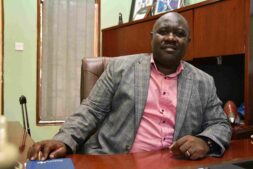
The Minister of State for Tourism, Wildlife and Antiquities, Hon. Bahinduka Mugarra Martin has urged Ugandans to rally behind domestic tourism, as a key driver of the post-Covid-19 tourism sector in a bid to revive the sector.
The minister made the call during the launch of “My Breathtaking Uganda”, a domestic tourism campaign, a move he says is critical for building resilience to international shocks with newly reinstated travel restrictions but also a major driver of word-of-mouth marketing since most tourists believe travel recommendation from friends and family.
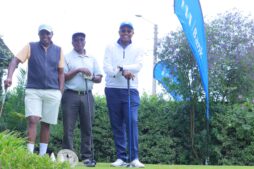
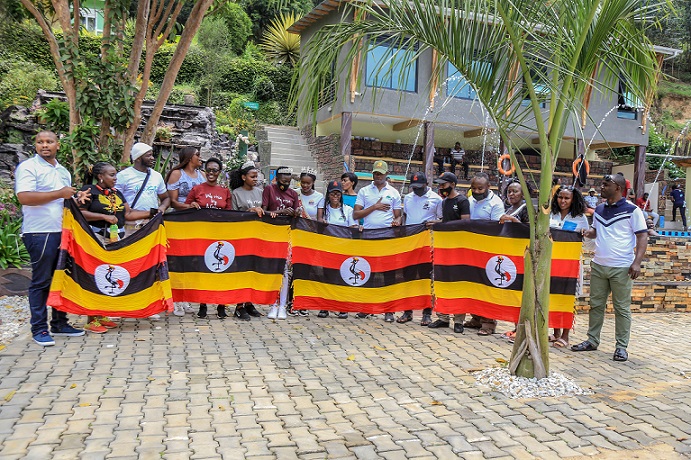
He made the call during the just concluded independence weekend where the minister led an expedition of 40 domestic tourists on a 3 Lakes, 4 Hotels deep-dive experience to Western Uganda.
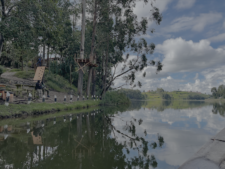
Day 1 of the expedition saw the group tour the Equator, Lake Mburo National Park and had lunch at the new Lake Mburo Lakeside restaurant in the national park. The expedition was then treated to a sunrise boat cruise on Lake Mburo before retiring to the Igongo Cultural Centre and Country Hotel.
On Day 2, the group headed to Kabale in Southwestern Uganda where they spent the night at the Birdnest Resort and Bunyonyi Safaris Resort after touring the famous Lake Bunyonyi.
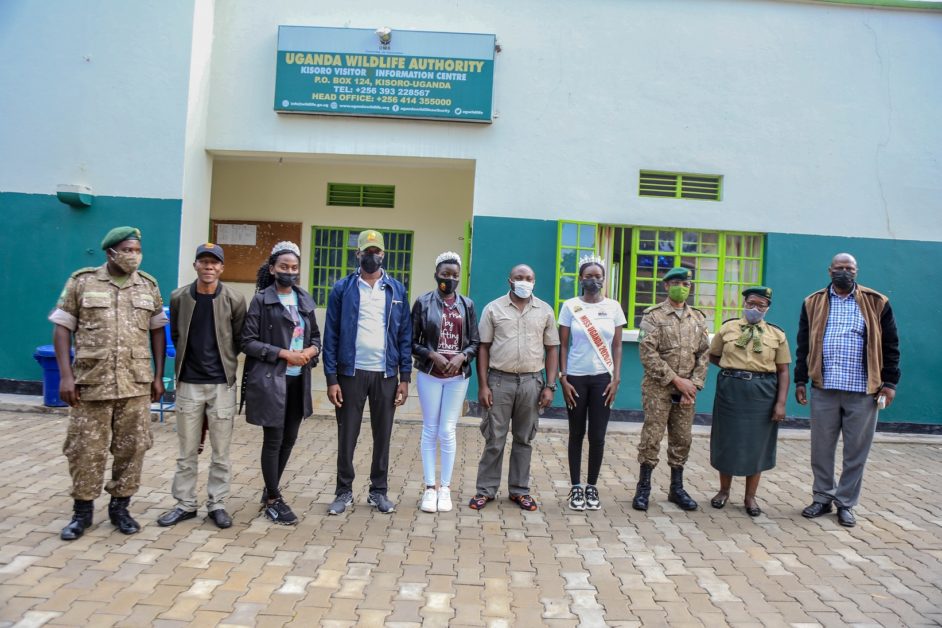
Day 3’s activities saw the expedition, led by the minister and Isaiah Rwanyekiro, the CEO of Breathtaking Uganda head to Kisoro district in the South-Western part of the country, where they toured Lake Mutanda in Kisoro, before retiring at Gahiza Island Resort on the lake.

The group also relished the Batwa experience- a unique 2-in-1 cultural/eco-tourism hands-on experience that highlights how the Batwa lived for millennia in the Bwindi Impenetrable forests. The experience includes learning how these people live and hunt, tapped medicinal plants from the forests as well as their hearing their ancient legends and traditional songs, watch and learning their energetic dances amongst others.
The trip also featured the reigning Miss Uganda, Elizabeth Bagaya who vowed to use her institution to promote Uganda to the rest of the world.
Domestic tourism is the foundation of every destination tourism strategy
Mugarra reiterated the importance of domestic tourism in sustaining Uganda’s tourism sector, one of Uganda’s largest foreign income earners but is now stressed due to global travel restrictions and uncertainty over the pandemic.
“There is no country in the world that has developed its tourism industry by over-relying on foreign tourists,” Hon Mugarra says, urging all able Ugandans to prioritise both touring their country as well as leveraging their networks and social media to spread the news about Uganda’s unrivalled beauty.
Demonstrating the strategic importance of the tourism sector, the minister quoted a recent Ministry study— the Uganda Tourism Expenditure and Motivation Survey 2019 report that showed that every USD1 spent by a tourist in Uganda generates an average of USD2.5 of GDP- both directly and indirectly along the value chain compared to an equivalent of USD 2.3 of GDP generated per USD1 earned from traditional exports.
“If a fraction of each 3-4 million Ugandans on social media made it a point to travel from their homes for at least 7 nights a year as well as use their social media to share something good about the locations they are visiting, the impact created both in Destination Uganda awareness as well present and future tourists would be immense,” he explained. He added that subsequently, the investment and jobs created would equally be phenomenal!
Tourism product diversification and increase tourism earnings
Mugarra said that the independence weekend excursion which blended a mix of wildlife, marine, cultural and adventure tourism should be promoted as the ultimate tourism package to Uganda as an alternative to the wildlife-heavy tourism sector.
“The diversification and promotion of tourism products beyond wildlife tourism to include among others, religious, cultural, culinary (food) and other forms of tourism is key to accelerating post-Covid-19 recovery and catching up with the sector’s National Development Plan III (NDP III) targets,” he said.
Under the Tourism Development Programme of the NDP III (FY 20/21 to FY 24/25), the government of Uganda has set targets to increase the contribution of Tourism to GDP from 7.3% to 8.5%.
This will be achieved by increasing annual tourism revenues from USD 1.45 billion to USD 1.862 billion.
To achieve these revenue targets, the sector must increase international tourism arrivals from 1.4 million in 2017/18 to 2.1 million and domestic tourists from 646,000 to 967,000 by 2024/25.
If this is achieved, the sector will be able to retrieve the lost tourism sector jobs to pre-Covid-19 levels of 667,600 people. The government will also be able to increase inbound tourism revenues per visitor from the current USD1,052 to USD1,500.
“Therefore, tourism is too important a sector be to be left to the Tourism Ministry, its agencies and the private sector tourism companies alone. Each of us as Ugandans owe our motherland this responsibility and we couldn’t have chosen a better time than the independence weekend to stress this message,” the minister explained.
Impact of Covid-19 on the tourism sector and moderate recovery
According to a sector performance report presented by Mrs Doreen Katusiime, the Permanent Secretary of Ministry of Tourism, Wildlife and Antiquities, by December 2020, Uganda lost up to 1 million foreign tourist arrivals, translating into a loss in foreign exchange earnings of up to US$ 1.06 billion (UGX 3.91 trillion) in 2020 alone.
However, the industry had, by March 2021, begun picking up, aided by especially increased domestic tourism activity as well as the reopening of the borders. Tourism bookings, according to the report, had started recovering from 27,542 bookings recorded by end of August 2020, at the peak of the first Covid-19 wave to 83,464 bookings by the end of March 2021.

Foreign tourist bookings increased faster, growing fourfold between August 2020 and March 2021 while domestic tourist bookings tripled over the same period. Bookings registered by Airlines and Accommodation facilities doubled by end of March 2021 while bookings recorded by tour operators increased eleven-fold between August 2020 and March 2021.
At least 30% of tourism jobs were recovered by end of March 2021 as Hotel occupancy rates increased by 10 percentage points by end of March 2021 to an average of 31% down from 20.1% at the end of the year 2020.
It is not yet clear, how the sector was impacted by the second Covid-19 induced 42-day lockdown that started at the end of June 2021.
The minister also applauded the individual and organisational tourism players that had partnered with Breathtaking Uganda on this leg of the campaign. They include James Tumusiime of Igongo; Charlie Kalyango of Birdnest; Doreen Mulenga of Little Ritz, Kabale and Charlotte Kanabahita of Bunyonyi Safaris Resort. Others are David Bakeine of Gahiza Island on Lake Mutanda in Kisoro; Ivan Batuma Chairman of the Kigezi Tourism Cluster and owner of Bunyonyi Overland Camp; the Uganda Wildlife Authority and Acacia Hotel in Mbarara.