
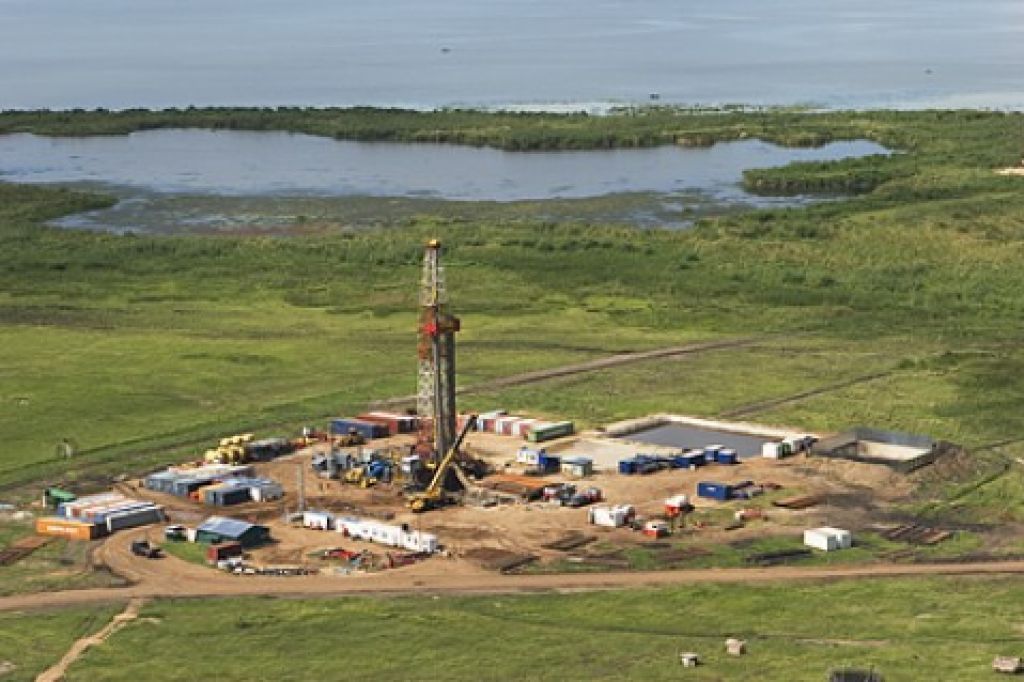
Uganda seems to be ready to make a final investment decision for her first oil and gas production, Dr. Eria Hisali, the Principal College of Business and Management Sciences at Makerere University has revealed.
He said this during this year’s national oil and gas symposium held at Makerere University. According to Dr. Hisali whereas Uganda seeks to wait for a perfect deal, which isn’t forthcoming, it is wise for government to take the second best decision given the available market indicators.
He stresses that with several agreements signed between government and international oil companies, further delays mean that the costs incurred by the latter will greatly affect Uganda’s gain as they will be charged on the resource.
“We know that whatever negotiations there are being been done in good faith to maximize revenue and other benefits for the country. The issue we must be addressing then is that we have already engaged international oil companies. The costs that they are incurring now are what we technically call recoverable costs. This money will have to be recovered. Once you have these, do you want to continue incurring these for longer, or you want to say that now we have the basic, why don’t we then start.”
Hisali notes that the protracted delays will among other things lead to value erosion of the expected revenues from all entitlement through escalation of costs and inflation, reduce confidence in the sector .and thereby affect further investment in other stages.
He also points at the increased debt burden as the country continues to borrow to support economic development, which could have otherwise been funded by oil revenue.
“So we need to be looking outside of only the short term benefits that we get in terms of taxes. The timing is also good because this would contribute on the on-going efforts to ensure that the economy recovers faster from the depression caused by COVID.”
No perfect deal
Kiryowa Kiwanuka, a board member at the Petroleum Authority of Uganda notes that there is never a perfect deal in the oil and gas sector, which makes it difficult to tell what could have been or what is the right time for the anticipated investment decision.
He however notes noting that whereas there are impacts of delaying the Final Investment Decision, the main focus should be on how better the resource can be managed in the long run.
According to Kiryowa, government should take advantage of any further delay to prepare adequately to be able to participate in the sector optimally.
He further argues that since over 90 percent of Ugandan’s oil resource remains unlicensed, the decision taken on the available 10 percent must be well thought out so that it does not negatively affect future investments.
The discussion comes at a time when Tullow is in the final farm down stages having sold off all their interest in Uganda’s sector (33.3 percent) to Total E&P at USD 575 million (UGX 2.2 trillion).
Analysts have since described the deal as a huge vote of confidence in the Lake Albert project and Uganda’s investment climate with other thinking that it takes the country nearer to the much-awaited FID.
Uganda’s oil and gas sector potential was revealed in 2006 when sizeable amounts of oil were discovered in the Albertine graben by Tullow Oil.
Since then, development towards the extraction of the resource has been made with more players joining. According to World Bank reports, if Uganda’ economy is expected to grow at a rate of over 10 percent per annum from oil production and related activity.