- 2015: For much of 2015, interest rates rose sharply, opening the year at an average 21.69% and by February 2016, had reached a 4-year high of 25.22%. This was partly due to a Bank of Uganda spike in the Central Bank Rate which opened 2015 at 11% but closed 2015 at a 3-year high of 17%. This dragged on until March 2016. As night follows day, borrowers started defaulting across the industry. Crane Bank, which was the fourth-largest lender at the time, got severely injured.
- March 2016: As a result of the default on the loans, BoU wrote to CBL directing it to inject more capital- specifically UGX 32 billion by 15th September, 2016. By October, 2016, the shareholders had brought in USD 8 million (approximately UGX 28 billion) as a shareholder loan, and were in the process of having the balance paid.
- 1st July, 2016: Due to the continued default by some of the customers, BOU directed Crane Bank to increase its provisions and write off more loans. An increase in the provisions created a wider caital inadequacy problem.
- June/July 2016: BOU wrote to CBL forcing it to stop the issuance of letters of credit, bid bonds, overdrafts, loans, bank guarantees, and various other financial services to its customers. BOU also placed a lien on CBL’s treasury bills and bonds worth UGX 169 billion, further choking the troubled bank and leading to a loss of confidence, capital flight, and serious reputation damage. Ongoing negotiations with potential partners were also thwarted, thus accelerating Crane Bank’s problems. Efforts by Crane Bank to borrow from the Central Bank as a lender of last resort were frustrated by BoU.
- 19th October 2016: Bank of Uganda takes over management of the Crane Bank as a Statutory Manager under sections 87(3) and 88(1) (a) and (b) of the Financial Institutions Act 2004. Ironically that morning, CBL had written to BoU accepting terms of a rescue loan.
- 28th October 2016: BoU in its capacity as Statutory Manager, hires PriceWaterhouseCoopers (PWC) to compile an inventory of assets and liabilities of CBL as at 20th October 2016 (date of takeover). The inventory would be important in understanding the value of Crane Bank.
- 9th December 2016: Before PWC had produced the inventory report of the assets and liabilities of CBL, BoU on 9th December 2016 invited bids for the sale of CBL. dfcu Bank is one of the bidders in a bidding process that closed on 20th December 2016, just a day before inventory report was presented to BoU, leaving questions of on what basis was a price reached since the valuation was not done by the time of the closure of the bids. The final inventory was produced by PWC on 13th January 2017. A parliament investigation would later find that BoU never bothered to value the bank, but instead, relied on the value provided by dfcu.
- 20th January 2017: Bank of Uganda places CBL Crane Bank under Receivership according to section 94 of the Financial Institutions Act. It is important to note that January 20th was a Friday.
- 25th January 2017: Bank of Uganda sells Crane Bank within just 2- working days after placing it under receivership. The bank which months before had assets of over UGX1 trillion, was sold for just UGX200 billion, payable over 30 months at no interest. The Auditor-General in his report to parliament would later fauld BoU for not only failing to value the bank and selling it on the cheap, but also faulted BoU for failing to charge dfcu interest on the 30 months payment plan, thus causing taxpayers a loss of UGX39 bn.
- 30th June 2017: Bank of Uganda, through Crane Bank (In Receivership) files Civil Suit No. 493 of 2017 against Dr. Sudhir Ruparelia and Meera Investments. BoU alleges that Dr. Sudhir Ruparelia owned 100% of Crane Bank, contrary to Sections 18 and 24 of the Financial Institutions Act. It also claims that Dr. Sudhir wrongfully extracted a sum of USD 92,830,172 from Crane Bank, which they sought to recover from him. BoU also claimed another UGX. 52,083,953,995 which they claimed was owed to NSSF. BoU also lays a claim on 48 freehold titles, previously occupied by Crane Bank, but belonged to Meera Investments.
- 3rd August 2017: Dr. Sudhir lawyers, Kampala Associated Advocates file a written statement of defense denying all allegations against them and indicated that they would raise preliminary objections against BoU the effect that Crane Bank in Receiverships, had no locus standi (basis to sue), no cause of action and that its case was barred in law.
- 28th November 2017: Following several public complaints, Parliaments Committee on Commissions, State Authorities and State Enterprises (COSASE) requests the Auditor-General to undertake a special audit on the closure of 7 commercial banks by Bank of Uganda. The report covers Teeefe Trust Bank, International Credit Bank, Cooperative Bank, Greenland Bank, Global Trust Bank, National Bank of Commerce and Crane Bank. The report would unveil several corporate governance failings at the Central Bank as well as multiple breaches of the Financial Institutions Act in all the 7 closures. Bou was also faulted for under-pricing several of the closed banks’ assets.
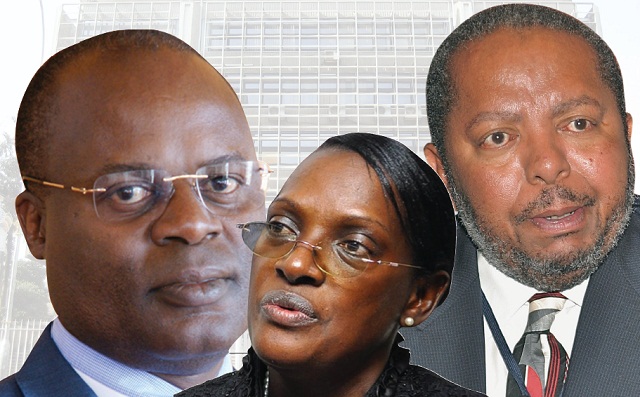
- 1st November 2018: Parliament’s COSASE kick-starts its probe of BoU on the closure of the 7 banks. The probe, led by Bugweri South MP, Hon Abdu Katuntu, unearthes further rot in the Central Bank. COSASE puts a lot of the blame on former Deputy Governor, Dr. Louis Kasekende and former Executive Director, Bank Supervision, Justine Bagyenda.
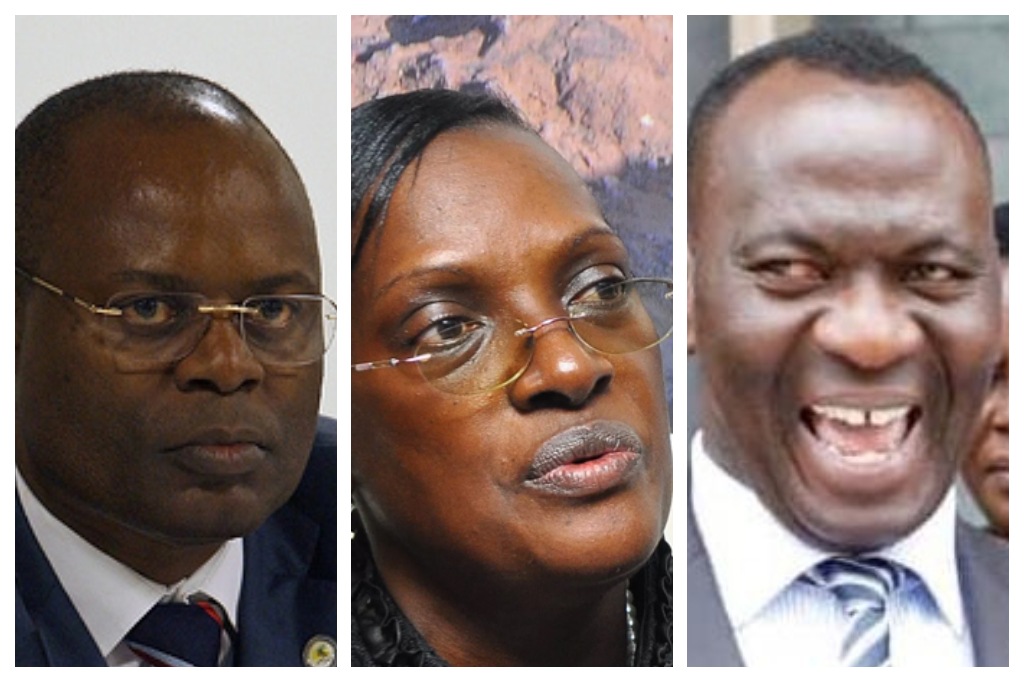
- 22nd February 2019: COSASE presents its findings. Fings BoU guilty of negligently disposing off several defunct banks and breaking several provisions of the Financial Institutions Act (2004). The MPs on the Hon Abdu Katuntu led committee found that the process of selling Global Trust Bank, National Bank of Commerce and Crane Bank on several instances “contravened section 95 (3) of the FIA 2004” and lacked the principles of “prudence, transparency and fairness” enshrined in the constitution and the FIA Act. The MPs recommend that the Bank of Uganda officials involved in the seizure and irregular sale of the banks held responsible.
- 30th April 2019: Dr. Sudhir Ruparelia and Meera Investments, file Miscellaneous Application 320 of 2019 in the High Court in which they raised preliminary objections that the said Crane Bank in Receivership has no locus standi to sue and therefore no cause of action. They further ask that the orders sought against them on the 48 branches, were barred in law and prayed the case to be dismissed and costs provided for
- 26th August 2019: Commercial Court’s Hon Mr. Justice David K. Wangutusi agrees with Dr. Sudhir’s lawyers that indeed BoU/Crane Bank had no locus standi and the orders sought were barred in law. He dismisses BoU’s case in whole and also awards Dr. Sudhir and Meera Investments the costs of the suit.
- September 2019: Dissatisfied with the Commercial Court Ruling, BoU/Crane Bank (in receivership) files Miscellaneous Application No. 320 of 2019 in the Court of Appeal on 9 grounds, maintaining that Justice Wangutusi erred in ruling that BoU/Crane Bank (In Receivership had no locus standi and that the orders sought were barred in law.
- 23rd August 2019: Coram of 3 judges dismisses BoU’s/Crane Bank (in receivership) entire 9 grounds of appeal and uphold the decision of the Commercial Court that BoU’s case was lacking in the preliminary points of law as raised by Dr. Sudhir Ruparelia and Meera Investments. They hold that BoU/Crane Bank (In Receivership) has no legal basis to sue and therefore its case is a non-starter. They also hold that Crane Bank (In REcievership) is majority foreign-owned and therefore cannot sue to own freehold land. Doing so would be an illegality. also wholly dismissed BoU’s main case- HCCS 493 of 2017 and award costs to Dr. Sudhir Ruparelia.