Shs5 trillion of the Shs29 trillion is not to be spent
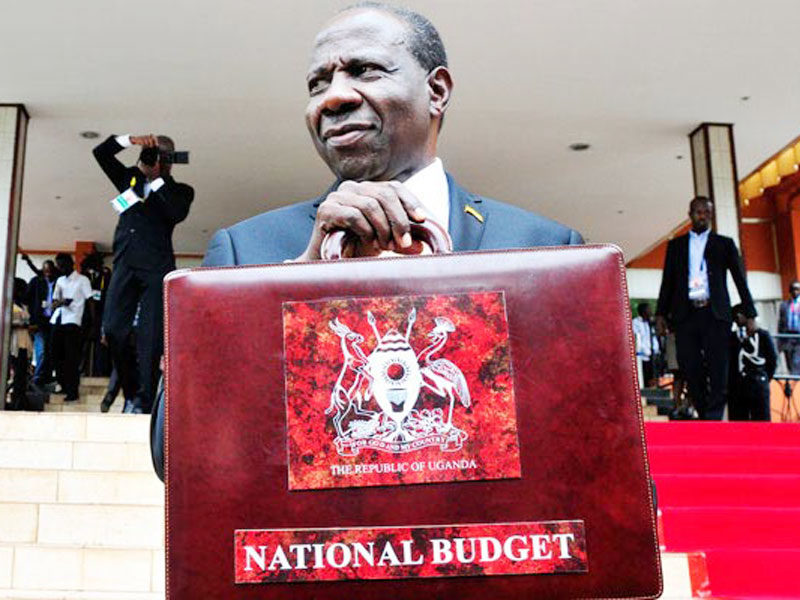
The presentation of the 2018/19 Budget before Parliament included nearly Shs5 trillion of the maturing government securities in 2018/19 that will be rolled over in line with the requirements of the recently enacted Public Finance Management Act.
These are also known as treasury redemptions. On average over 2015/16 -2018/19, Shs4.9 trillion has been provided every financial year for treasury redemptions reflecting the nature of short term maturities of current outstanding domestic securities of Shs12 trillion. The trend is likely to continue as 40% of the current domestic securities will mature in year.
Interest payments is the largest component of budget to be funded by domestic resources
While works and transport sector is the largest share of the proposed budget, the sector is funded 46% by external resources (loans and grants). This leaves the work and transport sector domestically funded at just 11% of the Budget (Shs2.5 trillion) compared to Shs2.7 trillion for interest payments making it largest funded by domestic resources.
Including external resources, interest payments are second largest share of the budget. 84% of the interest payments accrue to domestic government securities. This is attributed to high borrowing rates from the domestic rates increasing from 13% in 2013 and reaching 20% in 2016.
In 2016, the differential in interest rates (risk premium) between commercial lending rates and Treasury bill rates was smaller and such increased banks holding of government securities to about 45% of the total.
Ponzi style
Government plans to borrow Shs940 billion in FY2018/19 but at the same time will be spending Shs2.2 trillion on payment of interest rate on the domestic debt (outstanding government securities).
Over the last year Government has been largest borrower from the domestic market, which epoch coincided with sluggish private sector credit growth compared to historical averages.
The percentage of public debt to private sector credit remains in excess of 100% contrary to the set threshold of 75% set in the government debt strategy. Another indicator that is also in violation is the interest rate as share of domestic revenue which surpassed the limit of 15%.
Public debt to GDP to cross the 45% mark
Public debt stock is usually the existing public debt stock plus fiscal deficit (expenditure minus domestic revenue) then subtract debt service (external).
In Uganda’s case, Debt to GDP was at 38.6% end of June 2017. This FY (2017/18) fiscal deficit adjusted for external debt service (1% of GDP) is 4% of GDP and when added to 38.6% means debt to GDP will be at 42.6%.
 Burnt Investment, Broken Claim: A Tourism Lodge Owner’s Legal Battle with CIC Life Insurance
Similarly in 2018/19, fiscal deficit adjusted for external debt service is about 4%, implying debt to GDP reaching 46.6% in 2018/19 and could cross the 50% mark by 2020. This then would raise red flag on sustainability.
Qualified opinion
The spending agency that accounts for the largest of the budget continues to receive a qualified audit opinion. A qualified opinion is where financial statements contain material misstatements or errors which are not pervasive.
Uganda National Roads Authority continues to get qualified audit opinions and the reasons underpinning the qualification include and not limited to: inadequate controls for management of arrears, lack of accountability, land compensation anomalies, diversion of maintenance funds to land acquisition, purchase of ford pickups and some capital expenditure, inadequate project designs, poor quality works, poor project planning and change in scope of work and unit costing.
Parliament Budget committee in its report on the current budget proposal reiterated the need to match budget allocations with the ability to absorb.
Social spending per capita poised to reduce
While social development and water and sanitation sectors will get an increase in the budget allocations, the largest human development sectors of education and health are expected to respectively decline by 2.3% and 14% compared to the current FY approved budget.
With population increasing at 3% per annum, the per capita spending is reducing as also argued in the IMF eighth PSI review July 2017 where Uganda compared to peers, social spending (including pensions and social assistance payments, such as cash transfer programs) was below the average of the other EAC countries for period 2009 and 2014.
No provision for inflation adjustment in the salary/wages and budget also remains largely recurrent
While the infrastructure sectors (transport and energy) account for largest share of budget, the development and recurrent budgets are nearly evenly split. 51% of the resources are to be allocated for development while 49% are to recurrent expenditure.
The recurrent budget is comprised wage (16% of the budget) and non-wage recurrent (33%). The wage budget has been left at the same Shs3.5 trillion without even a provision for inflation adjustment. With inflation of projected at 4.7% in 2017/18, the real wages will be lower.
Lastly, historically, no budget has been spent according to appropriations. There are usually supplementary budgets usually up to 3% of the budget spent. In FY2017/18, Shs870 billion was presented to Parliament as supplementary. While it is 3% of appropriated Shs29 trillion, if we strip out treasury redemptions (Shs4.9 trillion), more than 3% was spent in contravention with the PFM Act. 20% of the current supplementary goes to Thermal Power Plants subsidy.