
Faith Athnus
On December 18th, 2015, Arinaitwe Rwakajara (Workers Representative) tabled the Minimum Wage Bill 2015 and it was subsequently sent to the Parliament Committee of Gender, Labour and Social Development for processing.
Two years later, Uganda still has no minimum wage.
At the time of the publication, the Committee was still interfacing with the various stakeholders to gather their input about the Bill, before a final report is tabled on the floor of Parliament for MPs to debate on the findings.
As highlighted by Rwakajara, the Bill is aimed at providing for the determination of a minimum wage Bill based on different sectors of the economy.
Among the key highlights, the Bill seeks to sort-of dictate the minimum wage for the public sector and for the private sector to determine the rate.
Under the bill, the public minimum pay mechanism will be determined by the board, while the private will provide for a process in which the two parties (employee and employer) agree to the minimum wage bill contractually with the Bill providing for the said contracts to be reviewed every two years.
The scrutiny of the Bill comes at a time when the Minimum Wages Advisory Board set up in 2015 by the Ministry of Gender recommended that the lowest minimum wage should be set at Ushs136,000 per month.
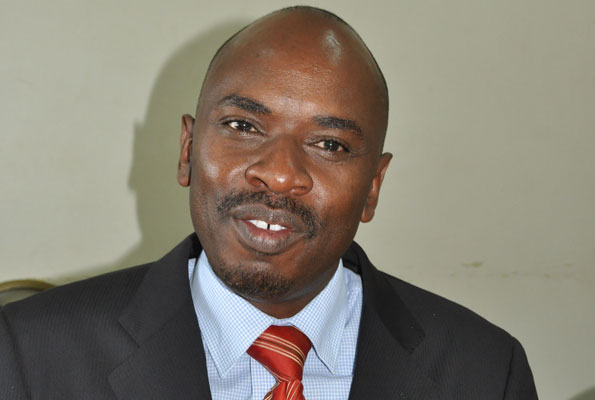
Activists Punch Holes In Bill
The Committee recently interfaced with two Civil Society organizations; Initiative for Social and Economic Rights (ISER) and Uganda Consortium on Corporate Accountability (UCCA).
The two bodies led by Arnold Kwesiga Coordinator UCCA and Salima Namusobya Executive Director ISER welcomed the development but pointed out a number of controversial clauses in the Bill.
“This Bill presents an opportunity for Uganda to enact a law that will promote economic integration within EAC. It also creates a platform for Parliament to critically assess the current challenges in the employment sector especially the informal sector and enact a law to strengthen the labor productive regime,” the Activists presentation read in part.
Although Kwesiga welcomed the provision that the minimum wage will be determined by each sector, he noted that the reality still stands that the cost of living differs from region to region and asked the Committee to put this into consideration.
He explained; “The proposed law should start with the most critical sectors including agriculture, manufacturing, extractives, construction, private security and fisheries where high levels of exploitation of labor have been reported. It is particularly important to ensure that the sectoral or occupational minimum wages are not inherently discriminatory.”
Clause 4(2) of the proposed constitution of the Minimum Wage Bill, makes no provision or representation on the Board by non-unionized workers which the activists say is wrong urging for the Bill to provide for representation of non-unionized workers.
“The composition of the Minimum Wages Board is too narrow and doesn’t reflect the representation of all workers including the non-unionized laborers,” Kwesiga argued.
 Shashi Dhar Drives Bank of Baroda Uganda Profit to UGX 156.8 Billion After Three Years of Strong Growth
Clause 2 of the Bill spells out the groups of employees excluded from the minimum wage bill provisions, among which include Uganda Police Force and Uganda People’s Defence Force (UPFD) and Public Servants.
The members of Civil Society were left perturbed by this provision saying it is in contrast with clause 3 that defines an employee and the description includes local authorities and government parastatals.
The activists argued that the Bill is both unclear and ambiguous on who government employee is and called on the MPs to ensure that the bill provides for all workers in Uganda including public servants.
Clause 10 of the Bill provides for the requirement of the Board submitting its report with its recommendations to the Minister, and the Bill gives the Minister powers to approve the report.
But the activists protested the contents in Clause 10(2), calling for restraint to be put in place that bars the Minister from altering the report of the board arguing that the
Minister should only be allowed to make reservations and any other recommendations.
The Civil Society team recommended that the report be submitted to Parliament instead of Cabinet, saying this would give an opportunity to Parliament to carry out its oversight function.
The proposal to give employees an opportunity to initiate negotiations with their employers to establish a minimum wage applicable to various categories of employees was also rejected by the activists.
The group noted that the establishment of a contractual minimum wage is impracticable because the particular provision makes an assumption that the employer and the employees have equal bargaining power whereas not.
Another point of contention was the proposal in the Bill to have all disagreements between employees and employers on the Minimum Wage forwarded to Industrial Court.
The Activists argued that Industrial Court is already grappling with case backlog and recommended for such disputes to be forwarded to the Board.
The Platform for Labour Action also appeared before the Committee and cautioned that Uganda should draw from the case of Kenya where the minimum wages are set and revised annually by the Ministry of Labour and adopted by the trade unions and employers including the Government and apply to workers aged 18 and above and are in the informal sector.
Additionally, the Platform for Labour Action noted that Clause 3 of the Bill needs to define a wage and minimum wage for clarity as to whether the minimum wage refers to the gross pay or the net pay, what it includes and excludes such as insurance, medical care, welfare, education, and training as defined under section 2 of the Employment Act.
The body threw their support behind the Bill saying it was timely because Uganda’s minimum wage has not been reviewed since 1984, therefore there is need to have a mandatory provision that propels the Minister responsible for Labour to review the minimum annually.
The proposal to set a new minimum wage was also backed by the Uganda Law Society (ULS). While presenting their position to the same parliamentary committee at the end of September, ULS delegation led by vice president Alice Namuli noted in a joint statement that “Uganda last set a minimum wage at sh6,000 per month for all workers in 1984. This renders Uganda non-compliant to its international obligations of having a framework for ensuring that all workers have fair wages.