
By Silvia Nyambura
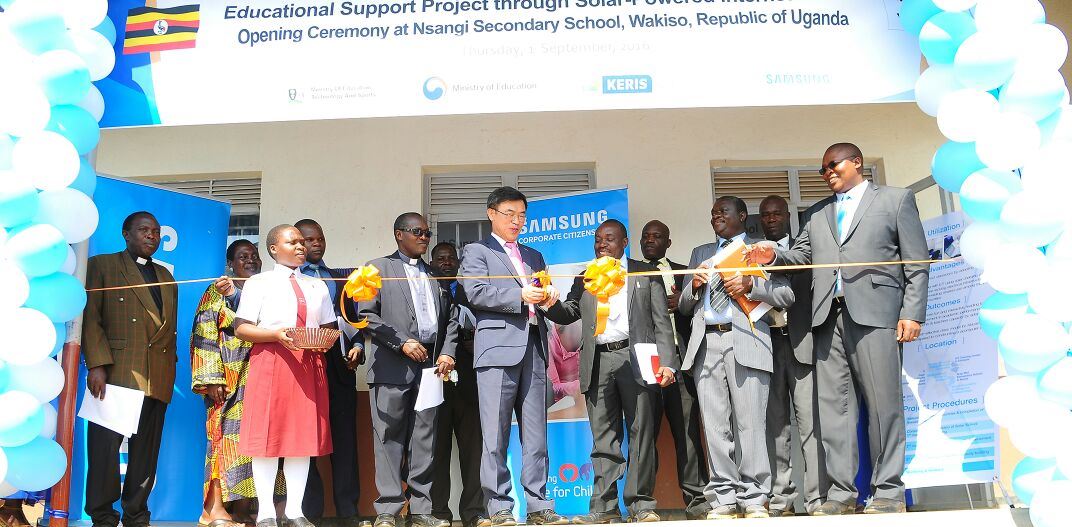
Samsung Electronics in partnership with the Korea Education and Research Information Service (KERIS) and the Ministry of Education in the week ending 2nd September launched two technology solutions in the Kyengera region in Kampala. These included a Solar Powered Internet School (SPIS) at Mackay College and an E-Learning Centre at Nsangi Secondary School.
The SPIS is built in a 12-metre repurposed container that can accommodate up to 24 pupils and is fitted with solar panels that power the equipment. It is additionally equipped with an interactive whiteboard, Samsung Laptops, a printer, and fans to cool the container. The E-Learning Centre at Nsangi on the other hand is a Solar- Powered Internet Classroom with 49 computers. It boasts of a monitoring and controlling feature which allows teachers to keep constant track of educational content on their learners’ screens. The screens include a screen-sharing feature, as well as real-time question and answer feature.
These initiatives are part of Samsung’s investment in corporate citizenship on the continent with a keen focus on education.
Research done by the World Bank reveals only seven countries in Africa have electricity access rates exceeding 50%. These include Cameroon, Côte d’Ivoire, Gabon, Ghana, Namibia, Senegal and South Africa. The rest of the Sub Sahara region has an average grid access rate of just 25%, resulting in isolated communities with limited access to education and connectivity – both of which are key to fast-tracking a nation’s development.
Speaking at the launch event, Samsung Electronics Uganda Country Manager Amos Mulago said, “As a company we are keen to support communities in many different ways. We believe these solutions will provide better knowledge transfer, learning and research opportunities both for learners and teachers alike. They will also equip them with the necessary employable skills for the future.
