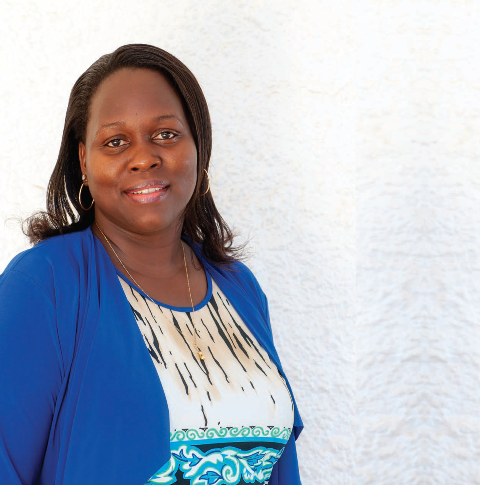
By Ronnie Wonder
Entrepreneurship is the ability to seek out opportunities and turn them into profitable businesses. The failure of businesses in Uganda, particularly the public sector, has been attributed to poor management and political interference. The failure of many private companies is attributed to the entrepreneurial factor among others.
The emerging pattern of business in Uganda is that small businesses will continue to be the source of jobs and growth in the economy. Studies undertaken have identified lack of finance and access to it, lack of market information, lack of managerial skills and many other problems being associated with small businesses.
Entrepreneurship, the underlying factor to the development of any business will do a lot to prop up many women’s businesses.
To examine the role of women in business and entrepreneurship, Ronnie Wonder sought the views of Barbara Asiimwe, DFCU’s Head of Women in Business/Small to Medium Enterprises (SMEs) in light of the bank’s commitment to empowering women in business to enhance their contribution to the Ugandan economy.
What ignited the start of the women in business program, and why target women?
The reasons that inspired this program and continue to be relevant today – are solid. The contribution of women to the economy has steadily grown over the years. Today, women own approximately 40% of SMEs in Uganda and employ nearly two million people. This translates into considerable direct and indirect contributions to the country’s Gross Domestic Product. Despite, these unquestionable growth trends, women in business tend to have fewer opportunities due to; lack of adequate business skills and knowledge on how to operate in the marketplace and limited access to credit and lack of collateral.
So, the program arose to address the above concerns by offering its members business training, local and international business study trips, networking opportunities, preferential borrowing rates, a dedicated Relationship Manager, mentor-mentee programs.
How long has the program been in existence and what are the milestones reached so far?
This program has been in existence since 2007 when we received a line of credit from International Finance Corporation, part of which was reserved for women-owned SMEs.
Since then, in recognition of the economic contribution of women the bank made strategic decisions to put in place these measures to address the needs of women in business. We have established a Women Advisory Council (WBAC) in 2012 which advises on business segments to support and undertaken customer segmentation with the objective of identifying the needs and appropriate value proposition for women in various sectors of the economy. The bank has gone ahead to set up preferential lending terms to women in business up to Uganda Shillings 50 million for three months; Financial literacy and business skills training; Business development support; value addition training and exposure; savings and investment opportunities. We have also put in place networking and marketing drives such as the annual Women In Business Expos – 2013, and 2014 where renowned speakers talked about good business practices, members show cased what they do, and business stakeholders like Uganda Registration of Business Services and Uganda Revenue Authority imparted knowledge on the need for entrepreneurs to formalize their businesses and meet their tax obligations respectively. Today, the program supports over 4,000 women.
What does it take for the woman entrepreneur to join this program?
To join, the women in business and enjoy market defining services, a lady must be a sole proprietor, or own 50% shares or more in a company, and must have an account with dfcu bank. Ideally, she must be engaged in any sector of the economy such as agriculture, education, manufacturing, trade and commerce among others or be part of a profession like accounting, medicine, law.
Is there any age limit for one to join?
Well, no but we look at the adult and productive age group that are engaged in some economic activity across key sectors. As for girls, 2013 saw us engaging Gayaza Girls’ School prefects Savings Club where we let them experience the value of saving and investing. They sat at our bank counters where they appreciated the art of customer services, the need to save and invest in a bid to nurture their entrepreneurial spirits. It was wonderful experience for them.
Are there any recent undertakings or achievements you can celebrate with us?
Yes, as part of our core value addition enjoyed by ladies on the dfcu Women in Business Program are the study opportunities provided by the bank. For instance, last year, 20 ladies visited the Uganda Industrial Research Institute (UIRI) on a study tour. They toured the bamboo, fabrications, juice processing, coffee making, bakery sections, as well as research and development centers among others.
At the Uganda Women’s Entrepreneurs Awards 2014, our very own Lydia Mwesigwa the Proprietor of Mesha Steel and well known Barbara Ofwono, the Proprietor of Victoria Kindergarten and Day Care got recognition for their works in the Ugandan business industry. Lydia stood out for her bravery to tread down the unbeaten path to earn recognition as the pioneer lady in the steel business. Others worth mentioning are Anna Mbogo of Sseeta Parents School and Julian Adyeri of Delight Supplies. These go on to inspire other women in business with our support.We have conducted local and international study tours in Kenya and the Netherlands in 2014 respectively for business net working and linkages for our members. For instance, the Uganda Women in Business mission to Netherlands enabled Ugandan women entrepreneurs meet Dutch entrepreneurs for purposes of business match making, attracting technical support and creating business linkages.
Given the social and economic challenges for women in business, what’s the way forward?
Since women are naturally nurturers and often determined to succeed amid challenges, a lot has to be done to enable them nurture and grow their entrepreneurial undertakings in a sustainable manner to contribute to our economy. As the pioneer financial institution focusing on women in business, our approach is to provide them with comprehensive and innovative financial business development support.
We have set up business advisory centres at our head office on Kyaddondo Road and dfcu Bwaise Branch and are yet to open another advisory centre where dfcu and non dfcu customers will obtain free business advice toward the end of March 2015. We are dedicated to helping women entrepreneurs see their ideas come to fruition, from the very beginning right through to the end. We won’t stop at that.
‘‘We will continue to offer advice and guidance because to them, we are more than a bank, we are a partner