Uganda’s fourth quarter budget release for the 2025/26 financial year reveals a clear hierarchy of national priorities, with debt servicing, wages, and infrastructure emerging as the dominant beneficiaries of government spending.
The Treasury released UGX 17.444 trillion for the quarter, bringing total releases for the financial year to UGX 77.001 trillion, equivalent to 106.4% of the approved budget and 95.1% of the revised budget.
The scale of the release underscores government’s effort to sustain economic momentum while maintaining fiscal discipline under the tenfold growth strategy.
But a closer look at the allocations shows where the real weight of spending lies.
Debt and wages dominate the budget
The single largest allocation continues to go toward debt and treasury operations, which absorbed UGX 6.38 trillion in the fourth quarter alone. This represents more than a third of the entire quarterly release and highlights the growing fiscal pressure of debt obligations.
Government wages and salaries follow as the second largest expenditure item, taking up UGX 2.04 trillion, reinforcing the rigidity of recurrent expenditure in the national budget.
Other statutory obligations, including pensions and gratuity at UGX 343.39 billion, Parliament at UGX 204.04 billion, the Judiciary at UGX 73.01 billion, and the Office of the Auditor General at UGX 12.66 billion, further lock in spending that is largely non discretionary.
Together, these commitments leave limited fiscal space for transformative investments.
Infrastructure leads development spending
Among development focused sectors, infrastructure stands out as the largest beneficiary.
The Ministry of Works and Transport received UGX 1.762 trillion, making it the single biggest allocation outside debt and wages.
Of this, UGX 585.2 billion is government funded, while UGX 1.176 trillion comes from external financing, reflecting Uganda’s continued reliance on borrowed funds to drive infrastructure development.
The allocation covers key projects including Uganda Airlines, Uganda Railways, Kalangala Infrastructure Services and the Standard Gauge Railway.
Energy infrastructure also received significant funding, with the Ministry of Energy and Mineral Development allocated UGX 331.03 billion, including UGX 71.8 billion in government funding and UGX 259.24 billion in external financing, to implement rural electrification projects, finance the development of transmission lines and power generation projects.
Kampala’s urban development is also supported through two allocations.
The Ministry of Kampala Capital City and Metropolitan Affairs received UGX 293.18 billion, of which UGX 2.2 billion is government funding and UGX 290.97 billion external.
Kampala Capital City Authority received UGX 60.51 billion, including UGX 27.8 billion government funding and UGX 32.71 billion external financing, for the provision of social services including education and health and implementation of development projects within the city, especially roads and drainage, among others.
Security remains significant but not dominant
Security continues to receive substantial resources, reflecting its role as a key enabler of stability.
The Ministry of Defence and Veteran Affairs received UGX 414.5 billion, the largest allocation within the security cluster.
State House received UGX 116.9 billion, while the Uganda Police Force received UGX 19.9 billion.
Additional allocations include UGX 81.5 billion for the Uganda Prisons Service, UGX 45.8 billion for the Office of the President, UGX 37.2 billion for ISO, and UGX 18.8 billion for ESO.
Combined, the security sector absorbs a sizeable share of spending, although it remains below allocations to debt, wages, and infrastructure.
Human capital receives steady funding
Compared to infrastructure, allocations to human capital development are significant but more modest.
 Nigeria’s Zenith Bank Acquires Kenya’s Paramount Bank as Profits Hit ₦1.04 Trillion
The Ministry of Health received UGX 372.88 billion, including UGX 72.7 billion government funding and UGX 300.19 billion external financing.
National Medical Stores was allocated UGX 342 billion for purchase of essential drugs and medicines, including meeting the shortfall that was occasioned by the withdrawal of USAID.
Specialised healthcare institutions, including the Uganda Cancer Institute and Uganda Heart Institute, received UGX 92.2 billion for specialised oncology and cardiovascular health services, while referral hospitals were allocated UGX 50 billion.
The National Council of Sports received UGX 67.81 billion, while in education, the Ministry of Education and Sports received UGX 257.54 billion, and public universities were allocated UGX 113.76 billion.
Wealth creation and growth sectors receive targeted funding
Government continues to fund its wealth creation agenda, with UGX 542.3 billion released for the Parish Development Model, alongside an additional UGX 74.7 billion for other wealth creation funds.
These include the Agricultural Credit Facility at UGX 7 billion, interest payments to large scale farms at UGX 4 billion, capitalisation of Uganda Development Bank at UGX 13 billion, and capitalisation of Uganda Development Corporation at UGX 50.7 billion.
Within the ATMS, allocations remain targeted. Agro industrialisation received UGX 314.9 billion, tourism UGX 48.6 billion, mineral based industrial development including oil and gas received UGX 24.3 billion, and science, technology and innovation including ICT and the creative industry received UGX 184.5 billion for expanding internet connectivity and digitisation of the economy.
Local governments and revenue agencies supported
Local governments received UGX 519.8 billion, of which UGX 328.69 billion is for conditional and non conditional grants and UGX 191.08 billion for capital development to enable timely implementation of local government projects.
Revenue generating institutions also received funding. The Uganda Revenue Authority received UGX 133.18 billion, the Uganda Registration Services Bureau received UGX 10.33 billion, the National Citizenship and Immigration Control received UGX 34.50 billion, the Uganda National Bureau of Standards received UGX 24.79 billion, and the National Lotteries and Gaming Regulatory Board received UGX 2.64 billion.
Arrears clearance reflects fiscal pressures
Government also released UGX 454.2 billion in the quarter to clear domestic arrears, bringing the total release for domestic arrears this FY2025/26 to UGX 973.1 billion.
This reflects ongoing efforts to clear the current stock of verified arrears while ensuring non accumulation of new arrears.
A budget shaped by obligations and growth ambitions
Overall, the Q4 release reflects a budget shaped as much by fiscal obligations as by growth ambitions.
While government continues to fund growth drivers such as infrastructure, energy, and wealth creation, a substantial portion of resources remains tied up in debt servicing, wages, and statutory obligations.
The result is a fiscal structure where transformative investments are present but constrained by existing commitments.
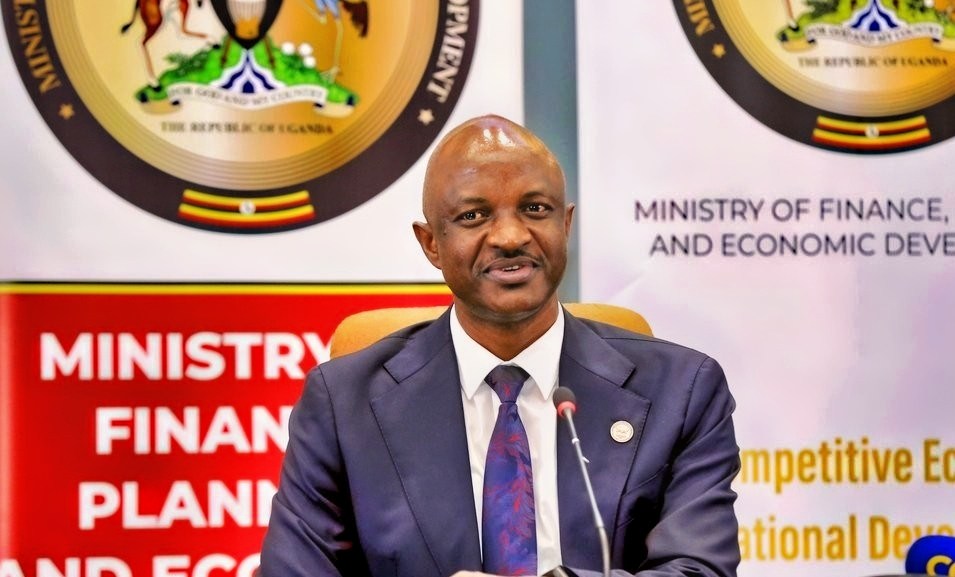
As Permanent Secretary and Secretary to the Treasury Ramathan Ggoobi emphasised, the allocations are designed to sustain the momentum for implementation of the tenfold growth strategy while maintaining macroeconomic stability and fiscal discipline, guided by principles of aligning expenditure within available resources, sustaining financing to priority ATMS sectors, supporting enablers such as security, infrastructure and human capital development, and providing for critical operational expenditure across government.
But the numbers tell a deeper story.
Uganda is investing heavily in the foundations of growth, including infrastructure, energy, and security, while gradually building capacity in human capital and digital infrastructure.
The question going forward is whether these allocations will translate into the productivity gains needed to meet the country’s tenfold growth ambitions.
For now, the Q4 spending pattern makes one thing clear.
Debt, wages, and infrastructure remain the dominant beneficiaries of Uganda’s budget, while other sectors continue to compete for the remaining fiscal space.