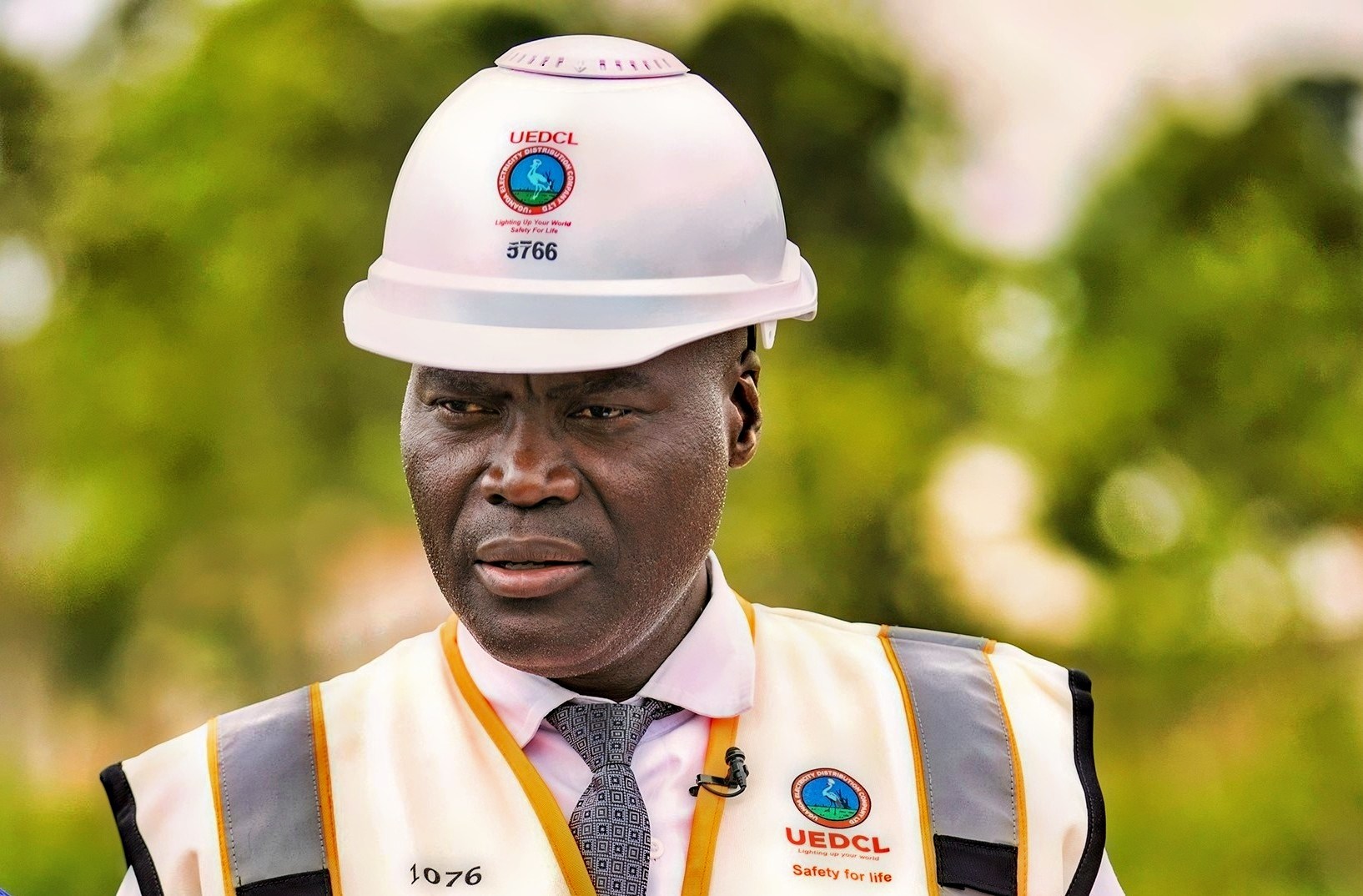
One year after the Uganda Electricity Distribution Company Limited (UEDCL) took over Uganda’s electricity distribution network from Umeme, Managing Director Paul Mwesigwa is emerging as the technocrat at the centre of a difficult but increasingly measurable turnaround.
Under his leadership, the state utility had generated UGX 1.71 trillion in revenue by February 2026, expanded its customer base to 2.43 million, and launched a $994 million investment master plan aimed at stabilising and modernising the grid between 2026 and 2030.
To understand the significance of that progress, one must return to where it began.
When the clock struck midnight on April 1, 2025, Uganda’s electricity sector entered a new era.
The familiar “Umeme Yaka” prompt disappeared from mobile phone menus and, almost instantly, “UEDCL Light” took its place. It was more than a brand switch.
For households, factories, and investors, the question was immediate and simple: would the lights stay on?
At the centre of that question stood Mwesigwa, the man tasked with leading the utility through a transition that was never going to be neat, easy, or instantly popular.
If the state was reclaiming the grid, Mwesigwa was the executive expected to make that decision work.
A trained economist with a degree from Makerere University, a fellowship from the Association of Chartered Certified Accountants (UK), membership in Uganda’s Institute of Certified Public Accountants, and an MBA from Oxford Brookes University, Mwesigwa is not an outsider brought in for optics.
He is a long-serving power-sector technocrat who has spent more than two decades in electricity distribution.
Before becoming Managing Director in July 2019, he served in roles that built his reputation for financial discipline and internal controls, including Financial Controller, Chief Internal Auditor, and later Chief Finance Officer.
That background has shaped his leadership style: cautious, technical, numbers-driven, and acutely aware that in electricity distribution, operational failure quickly becomes political failure.
That made him a fitting, if tested, choice to lead the transition. He was not inheriting a clean slate; he was inheriting a stressed system, anxious consumers, a politically charged handover, and a public mood that oscillated between hope and suspicion.
A year later, on April 1, 2026, which marked exactly one year since the handover, the evidence suggested that while this had not been a straightforward success story, Mwesigwa has led UEDCL through turbulence and appeared to be slowly stabilising a grid he inherited under strain.
A transition 25 years in the making
To understand the scale of what happened on April 1, 2025, one must go back a quarter century.
Uganda’s electricity sub-sector underwent major restructuring about 25 years ago, giving rise to three successor companies: the Uganda Electricity Generation Company Limited (UEGCL), Uganda Electricity Transmission Company Limited (UETCL) and Uganda Electricity Distribution Company Limited (UEDCL).
Since the first and second generations of reforms, UEDCL granted out seven concessions. Over time, however, the distribution business increasingly came to be defined by private operators, most prominently Umeme.
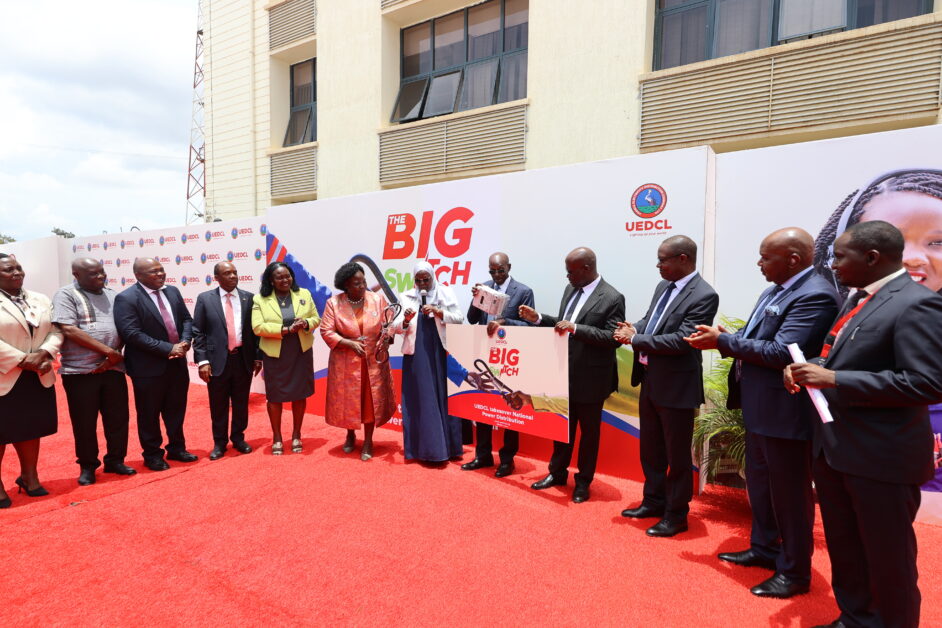
That changed with the asset retransfer of March 31, 2025, when government formally returned the largest electricity distribution network in the country to UEDCL.
The decision, politically sensitive and commercially consequential, was backed by what government described as a favourable political, economic, and regulatory environment.
Government framed the handover as part of a broader national strategy: restoring public control over a strategic utility, supporting industrialisation, widening access, and linking the power grid more directly to Uganda’s social and economic transformation.
Inside UEDCL, the moment became known as “The Big Switch.”
The Umeme legacy: gains, gaps, and a fragile network
Umeme did not leave behind an uncomplicated legacy. For years, the company had been credited with improving revenue collection, reducing losses, and expanding grid access.
But when government announced in 2022 that the concession would not be renewed, officials argued that capital investment slowed sharply.
By the time UEDCL took over in April 2025, the state utility says it inherited a network with deep physical and operational weaknesses.
The condition assessment conducted after the takeover painted a sobering picture. The network had expanded over the years, but many of its critical components had aged and, in some cases, outlived their recommended functional life.
UEDCL identified ageing transformers, sections of medium- and low-voltage pole equipment nearing the end of life, and several transformers operating without sufficient protection mechanisms.
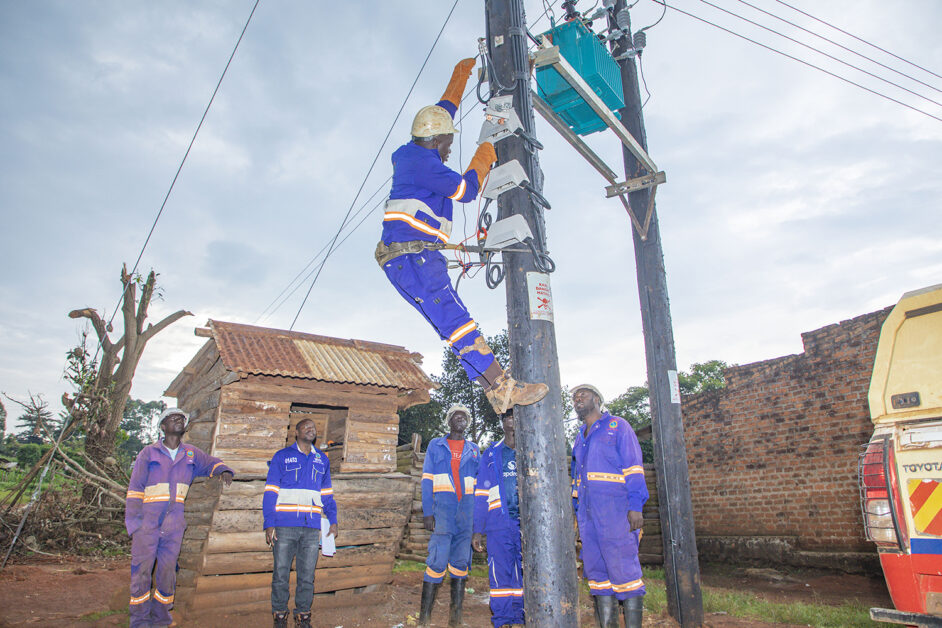
In practical terms, the problems were visible everywhere: rotting wooden poles, overloaded substations, unrepaired transformers, weak protection systems, and feeder faults that quickly translated into outages and public frustration.
At handover, Energy Minister Ruth Nankabirwa captured that dual reality. Government appreciated Umeme’s work in improving collections and reducing losses, but it was now UEDCL’s responsibility to protect infrastructure and deliver more reliable power to Ugandans.
That was the burden Mwesigwa inherited: not just maintaining supply, but proving that a public utility could repair a network many believed had been allowed to age dangerously.
The first six months: firefighting and diagnosis
The first half-year after the takeover was, by UEDCL’s own admission, a punishing test.
“The last 12 months have been an amazing test for UEDCL because of the many power outages and transformer problems that occurred during the first six months of the big switch,” the company says.
But that difficult period also gave UEDCL time to understand the asset it had taken over.
Mwesigwa’s team used those early months to study the network, identify bottlenecks, begin capital and operational procurements, optimise overloaded substations, and realign the workforce, all while trying to keep electricity flowing.
This is where the story of UEDCL under Mwesigwa becomes more analytical than political. The company’s challenge was never merely to take over distribution.
It was to do four hard things at once: repair inherited weaknesses, build its own operating systems, stabilise a merged workforce, and convince the public that the transition had not been a mistake.
The ICT decoupling that had to work on day one
One of the least visible but most critical tests came immediately at transition.
By March 31, 2025, UEDCL had fully decoupled from Umeme’s systems and migrated core vending and billing platforms, ensuring that revenue collection and customer service could continue without interruption from day one.
In a distribution business, failure at that level would have been catastrophic: customers unable to buy power, billing gaps, revenue leakages, and instant public panic.
Instead, the digital backbone held. From there, the focus shifted from continuity to resilience.
UEDCL says that by the end of 2026, it expects to have built the digital foundation required to support a larger, more efficient, and more accountable national distributor.
That ICT transition mattered because distribution today is not only about wires and transformers. It is also about data integrity, billing visibility, fault monitoring, collections, and service responsiveness.
On that front, the company avoided what could have been an early reputational disaster.
The human transition: absorbing a utility-sized workforce
The second major test was people. Nearly 2,200 former Umeme employees returned to UEDCL after the handover, bringing institutional memory but also uncertainty.
The approved manpower structure stood at 2,712 staff, spread across 12 departments, three regions, central, western, and north west, 15 territories, and 98 service centres.
By mid-2025, about 96% of positions, equivalent to 2,601 staff, had been filled from the combined UEDCL-Umeme pool, while some specialised roles were advertised externally.
Inductions were conducted across about 100 service offices to try to forge a unified performance culture and stabilise customer service delivery.
The staffing push continued. To support last-mile access targets aligned with ERA and World Bank ambitions, UEDCL recruited and deployed 550 technicians nationwide, with plans to add 400 more by the end of July 2025.
By February 28, 2026, the utility says it had achieved 99.5% staffing of the approved establishment through its phased stabilisation approach.
That progression matters. It shows that what began as a hurried personnel integration after the takeover has gradually settled into a near-complete workforce structure.
It also explains why Mwesigwa’s first year has been as much about internal organisation as public service.
Substation stabilisation: moving assets before buying new ones
One of the earliest tactical responses under Mwesigwa was a substation stabilisation programme built around targeted transformer relocations.
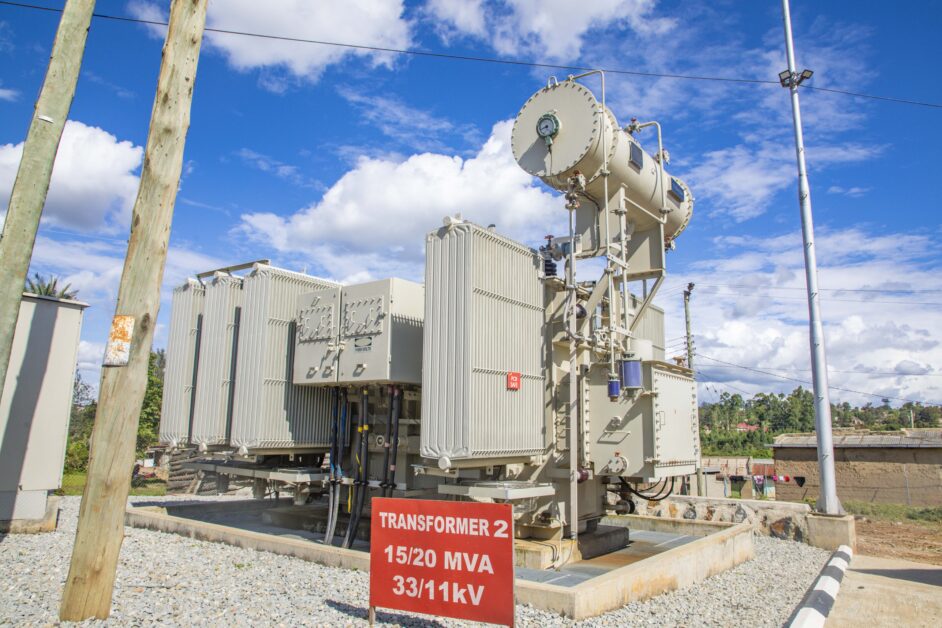
Rather than waiting for entirely new equipment, UEDCL moved transformers from areas of comparatively lower demand to overstretched substations facing load growth.
Before these relocations, substations such as Kumi, Masaka Central, Kabale, Kakiri, Kampala South, and Mubende had limited capacity.
Through these interventions, smaller units were upgraded, and the installed capacity in the aforementioned substations was effectively doubled.
The company says more than 138,000 consumers benefited from the transformer relocation programme, especially in high-demand areas such as Masaka and Entebbe Road(Kampala South).
At the same time, UEDCL undertook 18 feeder and protection-system interventions across substations and zones, including Kasese, Bombo, Mbale Industrial, Kitgum, Mukono, Soroti, Jinja Industrial, Kajjansi, Hoima, Kisugu, Mutundwe, and Kapeeka.
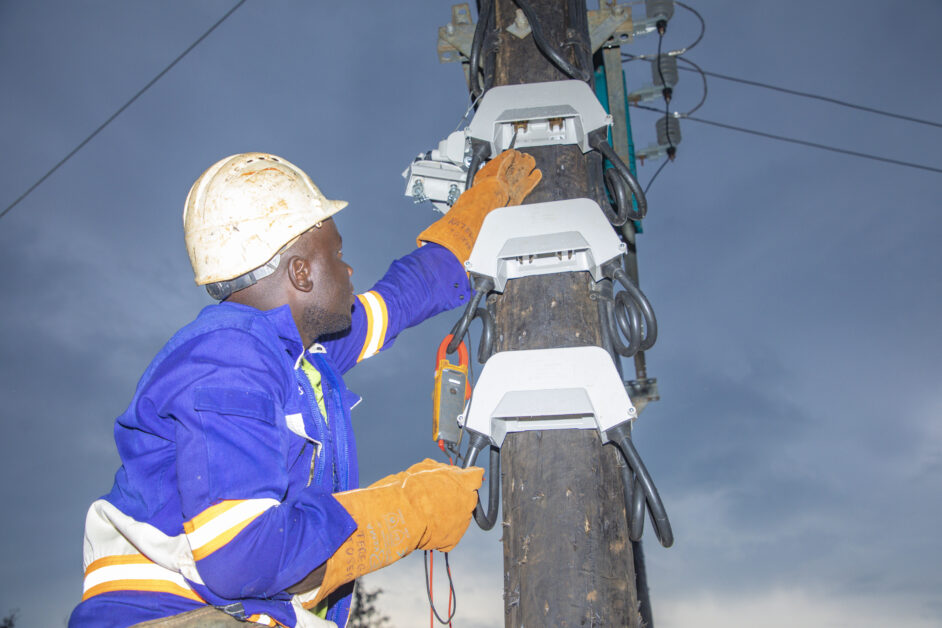
These works focused on replacing and installing auto reclosers, circuit breakers, and associated protection equipment on 11kV and 33kV feeders.
The objective was straightforward: improve fault detection, isolate problem sections faster, reduce restoration time, and shorten the duration of outages.
UEDCL says these feeder interventions benefited more than 66,000 customers, with some of the highest-impact improvements recorded in Bombo, Kajjansi, Mutundwe, and Kapeeka.
For a utility accused of being reactive, these early measures were important. They showed that stabilisation was beginning with technical triage.
Procurement as a measure of seriousness
 OPINION: 623 Cases, UGX 2 Trillion at Stake: Why Uganda Must Rethink How Banking Disputes Are Resolved
If the first months were about diagnosis, the next were about commitment.
Since the takeover, UEDCL has approved major procurements covering transformers, cables, meters, protection systems, network materials, labour, and operational support services. The scale is significant.
The company says the major approved procurements represent about UGX 412 billion, equivalent to roughly $110 million, while more than UGX 20 billion has been committed for labour and transport services to support execution across the country.
Contractors have already been deployed across 15 service territories, with each territory structured to have at least two contractors: one focused on new connections and expansion, and another on maintenance and capital investment works.
This matters because one of the sharpest criticisms levelled at UEDCL early on was whether it had the operational muscle and procurement systems to manage an asset this large.
The scale of signed contracts suggests that UEDCL has, at a minimum, moved beyond emergency repairs into structured network rehabilitation.
Follow the money: from fragility to financial credibility
If network stability is one side of the story, financial credibility is the other.
At the start of 2025, the Auditor General’s report raised concerns over UEDCL’s debt profile, pointing to a debt ratio of 70.4% and fueling doubts about whether the company could absorb a distribution business of this scale.
Yet the numbers emerging in the first year of operation suggest a utility beginning to establish a financial footing.
For the 2025/26 financial year, results up to February 2026 show revenue of UGX 1.71 trillion, a gross margin of 22%, and an EBITDA margin of 9%.
Full-year revenue is projected at UGX 2.62 trillion, with EBITDA expected to improve to UGX 251 billion, lifting the EBITDA margin to 10%.
The significance of that UGX 1.71 trillion figure is both financial and symbolic. It means that, a year after the takeover, UEDCL has grown into a utility generating revenue at a scale that places it squarely at the centre of Uganda’s infrastructure economy.
It also paid UGX 1.71 trillion to UETCL within the first 10 months of operations for bulk electricity purchases, demonstrating an unusual degree of payment discipline in a sector where delayed settlements can destabilise the entire value chain.
By the end of 2025, UEDCL had also remitted UGX 132.5 billion in taxes to government, reinforcing its dual role as both service provider and major public revenue contributor.
These numbers help explain why Mwesigwa’s tenure so far cannot be judged only by outages. The company’s ability to collect, pay upstream obligations, and remain on course toward a positive operating position is central to whether this transition becomes sustainable.
Sales, demand, and collections: signs of a system under expansion
Operational performance metrics offer another lens. From April 2025 to February 2026, domestic maximum demand rose from 986MW to 1,188MW, representing 20.4% growth.
That is a significant increase in network utilisation and points to growing consumption driven by new connections, economic activity, and supply expansion.
At the same time, average daily energy purchases from UETCL increased by 12%, from 17.2GWh to 19.1GWh over the 12 months.
UEDCL attributes this to a stronger distribution backbone serving industrial customers and a substantial increase in the customer base.
Here, the figures show two phases of the expansion story. In the first six months after the takeover, UEDCL added 648,404 new customers, taking coverage from 1.78 million to 2.43 million households, while grid length expanded from 3,431 kilometres to 5,140 kilometres and installed capacity rose to 2,049MW, boosted by the commissioning effect of Karuma Hydropower Plant.
By the more recent 12-month operational update, the company reported a customer-base increase of 236,326, likely reflecting the pace of measurable active growth over a later period after the initial post-transition expansion.
What is consistent across both datasets is the broader direction: UEDCL is expanding the network and serving more customers at scale.
Cash collections have also remained strong. UEDCL says collection performance averaged 101%, while earlier operational reporting had pointed to a collection efficiency of about 104%.
In utility terms, anything at or above 100% is significant because it means the company is not only collecting current bills effectively, but also recovering arrears.
That collection discipline has helped support sector obligations and finance ongoing recovery efforts.
Losses: progress, but not victory
For all the gains, losses remain one of UEDCL’s hardest structural problems.
Within six months of the takeover, energy losses declined from 19.1% to 16.8%. That was important progress, but still well above efficient utility benchmarks.
UEDCL’s target is to reduce losses further to 13.7%, in line with ERA expectations, through network rehabilitation, improved metering, and stronger operational controls.
The regional disparities show why that will not be easy. In eastern Uganda, losses are around 11%, but in the western region they rise above 22%.
Losses in distribution are never just a technical issue. They reflect a blend of outdated equipment, long feeder distances, weak metering, theft, billing gaps, and enforcement weaknesses.
For Mwesigwa, reducing them will be one of the clearest tests of whether UEDCL can move from stabilisation to efficiency.
The bigger plan: $994 million to rebuild the distribution business
Perhaps the most consequential measure of confidence in UEDCL’s transition came from the financing market.
The company secured a $50 million facility from Absa, strengthening its capacity to fund infrastructure rehabilitation and expansion.
Combined with other resources, this forms part of a broader package that earlier estimates placed at around $74 million in near-term support.
The Absa facility is notable for two reasons. First, UEDCL describes itself as the first government agency to directly borrow for investment.
Second, the financing was obtained at an interest cost of about 8% inclusive of taxes, which the company contrasts favourably with the far higher effective returns associated with the previous concession model.
Behind this borrowing lies an important institutional point. UEDCL’s financing capability is supported by an ERA-approved tariff framework that allows for tariff-based recovery of prudent capital investments.
What also distinguishes the first year from pure crisis management is the emergence of a long-term investment road map.
UEDCL has developed a five-year investment master plan for 2026 to 2030 valued at more than $994 million.
The plan aligns with National Development Plan IV and government’s second-generation electricity sector reforms.
This is not presented merely as a capital expenditure list. UEDCL describes it as a systematic recovery and growth programme designed to transform an ageing network into a modern, reliable, scalable, and smart distribution system.
The investment is targeted across three fronts. First, access expansion and new customer connections, with the aim of accelerating electrification through last-mile rollout and grid extension.
Second, reliability and quality of supply, by dealing with outages, voltage problems, and weak infrastructure through feeder refurbishment, automation, and substation upgrades.
Third, asset replacement and modernisation, ensuring obsolete and end-of-life equipment is systematically replaced with technology-enabled infrastructure.
The spending is expected to be front-loaded in the early years to stabilise the network, followed by sustained investments to support industrial growth, reduce losses, and improve service quality.
The projected beneficiaries are substantial: more than 300,000 new customer additions per year over five years, equivalent to at least 1.5 million new customers.
If implemented well, this plan could define Mwesigwa’s tenure far more than the difficult first months after the takeover.
Vandalism: the silent saboteur
Not all of UEDCL’s problems are inherited mechanical failures.
The company says vandalism remains persistent and widespread, affecting low-voltage ABC conductors, medium-voltage lines, transformers, underground cables, and meters.
In some cases, sections of the network that have just been restored are vandalised again within a short period, forcing resources away from planned investments and into emergency response.
The geographic spread of these incidents has compounded operational strain. It lengthens response times, worsens insecurity, and undermines public confidence in restoration efforts.
The Economic Policy Research Centre (EPRC) describes vandalism as a “critical and dangerous problem,” not only for infrastructure but for the economy at large.
For Mwesigwa, vandalism may be the most frustrating variable of all: a non-technical problem with deeply technical consequences.
The branding and communication battle
The transition was not only technical and financial. It was also communicative.
Before the handover, a pre- and post-transition communications plan was approved by the Joint Technical Committee.
Officials from the Ministry of Energy, ERA, and UEDCL coordinated messaging to maintain calm and frame the March 31, 2025, retransfer positively under the label “The Big Switch.”
After the takeover, however, UEDCL identified major communication and stakeholder gaps: planned and unplanned outages, public doubt about UEDCL’s capacity, anger over tariffs, brand confusion, power theft, vandalism, and safety incidents.
In response, the corporate and stakeholder Affairs team launched more deliberate consumer-education campaigns.
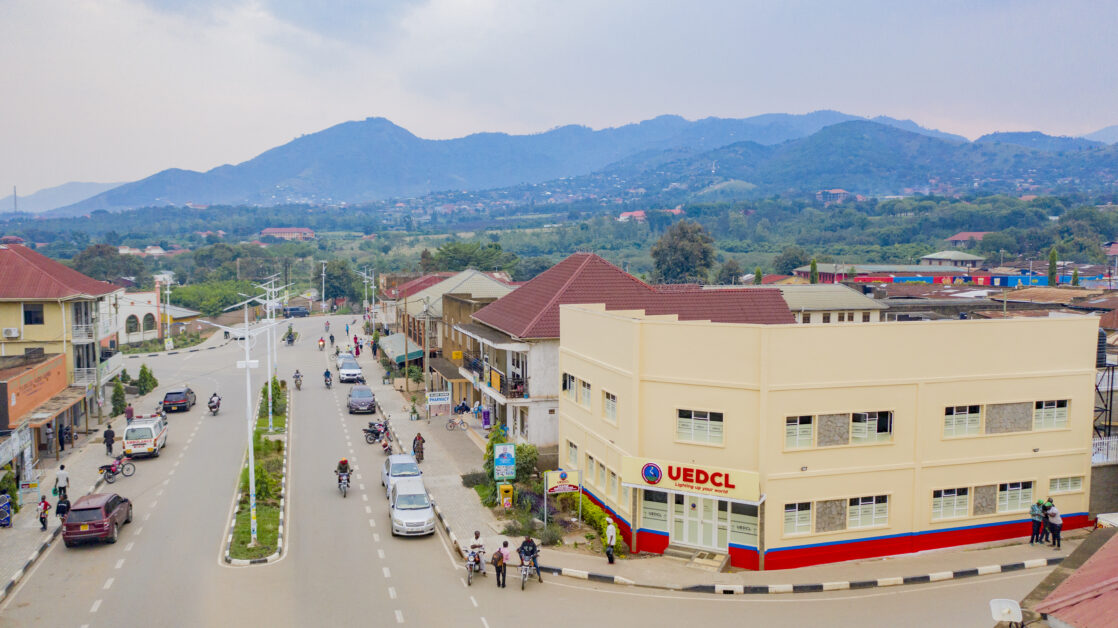
The company also undertook a visible rebranding exercise across its fleet, digital platforms, personnel, facilities, substations, switching stations, and service centres.
The shift from “Umeme Yaka” to “UEDCL Light” was therefore not a cosmetic change.
It was part of a larger effort to establish legitimacy in the eyes of consumers who had to be persuaded that the new operator was not simply a political replacement, but a utility with a credible service mission.