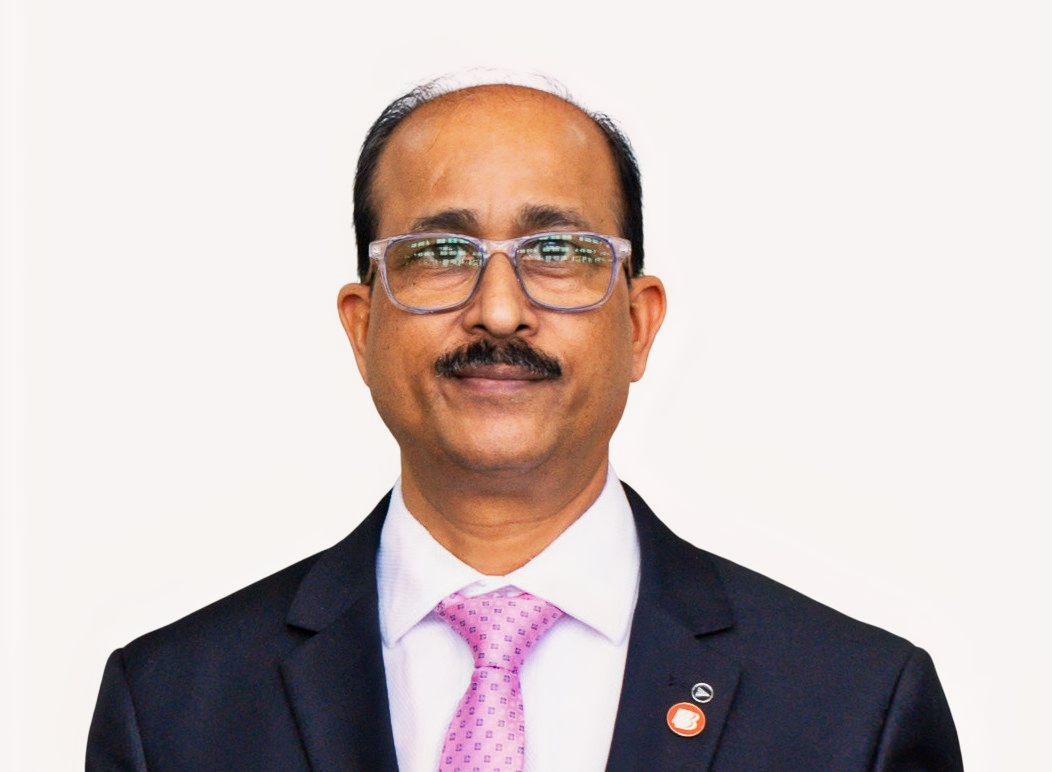
Bank of Baroda Uganda has reported a 17.1 percent increase in profit after tax to UGX 156.84 billion in 2025, up from UGX 133.95 billion in 2024, underscoring a period of sustained growth and improving efficiency under Managing Director Shashi Dhar.
The performance reflects three years of disciplined expansion since Dhar took over leadership in March 2023, with the bank strengthening its balance sheet, improving returns, and tightening cost controls.
The latest results point to a lender that is not only growing, but doing so with increasing efficiency, as profit continues to outpace both income and asset growth.
Taken together, the numbers show that this growth is being delivered from a position of strength. Profit growth has outpaced both income and asset expansion, signalling a bank that is not only growing in size but improving how it generates earnings.
Profit growth driven by efficiency and discipline
The increase in profit to UGX 156.84 billion represents a 17.1 percent rise, significantly higher than the bank’s income growth of 9.6 percent and asset growth of 13.5 percent.
This gap is important, as it indicates that earnings are being driven by improved efficiency and cost control rather than just expansion of the balance sheet.
In simple terms, the bank is extracting more profit from each shilling of income and assets.
This is reflected in the bank’s income performance. Total income increased from UGX 346.28 billion to UGX 379.56 billion, representing a 9.6 percent rise.
This reflects growth in both interest income from lending and investment activities, as well as non interest income streams.
While income growth is solid, it remains below the pace of asset expansion, indicating a conservative yield environment and disciplined pricing strategy.
At the same time, the strength of the bank’s funding base has continued to underpin this growth. Customer deposits grew from UGX 2.20 trillion in 2024 to UGX 2.52 trillion in 2025, representing a 14.3 percent increase.
Deposits form the backbone of a bank’s funding structure. Growth at this level signals strong customer confidence and provides relatively low cost capital that supports lending and investment activities.
The faster growth in deposits compared to other metrics shows that the bank is building liquidity and strengthening its funding base.
Balance sheet expansion remains measured
With a stronger funding base, total assets increased from UGX 3.08 trillion to UGX 3.50 trillion, a rise of 13.5 percent.
This expansion reflects growth in interest earning assets such as loans and investments. However, asset growth slightly lagged deposit growth, indicating that the bank is maintaining a controlled expansion strategy rather than aggressively leveraging its balance sheet.
This approach reduces risk while preserving flexibility for future growth.
Within this expansion, net loans rose from UGX 1.45 trillion to UGX 1.61 trillion, an increase of 11.6 percent.
The slower pace of loan growth compared to deposits suggests a deliberate focus on credit quality. Instead of rapidly expanding its loan book, the bank appears to be prioritising well priced and lower risk lending opportunities.
This cautious approach helps protect asset quality and long term profitability, even if it temporarily limits revenue growth.
Cost control emerges as key driver
Against this backdrop, the most significant contributor to profit growth is the bank’s cost discipline.
Total expenses rose marginally from UGX 173.63 billion to UGX 175.65 billion, an increase of just 1.16 percent.
In a high inflation environment, where operating costs typically rise, this near flat cost growth highlights strong internal controls and efficient management of operating expenses.
This limited increase in costs allowed a greater portion of revenue to translate into profit.
As a result, the divergence between income growth and cost control resulted in improved efficiency.
 From Profit to Loss: FINCA Uganda Sinks into Red with UGX 662 Million Loss, Tough Year Ahead for MD James Onyutta
The cost to income ratio declined from approximately 50.1 percent in 2024 to 46.3 percent in 2025. This means the bank is spending less to generate each unit of income.
Improved efficiency is a key indicator of operational strength and is one of the primary drivers of sustained profitability in the banking sector.
Returns strengthen across key metrics
These efficiency gains have translated into stronger returns.
Improved profitability translated into stronger returns.
Return on Equity increased from 17.31 percent to 18.16 percent, placing the bank among the top performers in the local market.
Return on Assets rose from 4.45 percent to 4.72 percent, a level considered high for a Ugandan bank and indicative of strong asset utilisation and margins.
These metrics show that the bank is generating more income from both its capital base and its assets.
At the same time, the bank’s liquidity position has strengthened. The loan to deposit ratio declined from 65.6 percent to 64.0 percent.
This indicates that deposits are growing faster than loans, strengthening the bank’s liquidity position and providing a buffer against potential financial stress.
However, it also suggests that some funds remain underutilised, which could weigh on margins if not deployed into income generating assets.
Capital base continues to grow
Alongside this, the bank’s capital base has continued to strengthen. Shareholders’ equity increased from UGX 807.62 billion to UGX 911.18 billion, representing a 12.8 percent increase.
A stronger capital base enhances the bank’s ability to support future lending, absorb potential risks, and sustain long term growth.
Shareholders benefit from rising earnings
This growth has also translated into improved shareholder returns.
Earnings per share rose from UGX 8.93 to UGX 10.46, reflecting the growth in profitability.
The bank proposed a dividend of UGX 90 billion, equivalent to UGX 6 per share, translating to a dividend yield of approximately 5.7 percent.
This demonstrates a balanced approach, where the bank continues to reward shareholders while retaining sufficient earnings to support expansion.
Outlook: deploying liquidity without compromising discipline
Looking ahead, the key challenge will be converting the bank’s growing liquidity into income generating assets.
With deposits growing faster than loans, there is room to expand lending. However, this will require maintaining the same disciplined approach to credit risk that has underpinned recent performance.
The balance between growth and risk management will define the next phase of the bank’s trajectory.
Bank of Baroda Uganda’s 2025 results reflect a bank that is growing through discipline rather than aggression.
Deposits have strengthened funding. Assets have expanded steadily. Loans have grown cautiously. Income has increased. Costs have remained tightly controlled. Efficiency has improved. Profit has accelerated.