Airtel Uganda has reported profit after tax of UGX 446.9 billion for the year ended December 31, 2025, an increase of UGX 130.2 billion from UGX 316.7 billion recorded in 2024.
The jump in earnings reflects not only higher revenue but also improved cost efficiency and operating leverage as the business scales.
Total revenue rose by UGX 264.6 billion to UGX 2.249 trillion from UGX 1.985 trillion a year earlier.
This growth signals rising demand for connectivity across voice, data and broadband services in both consumer and enterprise segments, even within a price sensitive market.
The revenue expansion translated strongly into operating performance. EBITDA increased by UGX 243 billion to UGX 1.235 billion from UGX 992.4 billion.
This means a larger share of every shilling earned was converted into operating cash flow before interest, tax and non cash charges. The EBITDA margin improved to 54.9 percent from 50.0 percent, showing that costs grew much more slowly than income.
EBITDA growth of 24.5 percent was driven by resilient revenue expansion and cost efficiency benefits. Operating costs rose by a modest 2.0 percent during the period, as cost optimisation measures offset expenses associated with expanded network scale and a growing distribution footprint across the country. Management says there will be continued focus on improving cost efficiencies to sustain EBITDA growth.
The most significant structural change in the results is the shift in revenue mix.
Data revenue increased by UGX 201.9 billion to UGX 1.102 trillion from UGX 899.8 billion. In contrast, voice revenue grew by UGX 44.4 billion to UGX 1.057 trillion from UGX 1.013 trillion.
Voice revenues grew by 4.4 percent year on year, supported by continued growth in the customer base driven by a comprehensive usage and retention strategy. This contributed to a 6.8 percent increase in voice traffic across the network. However, the growth in voice revenues was impacted by regulatory intervention following the reduction of the local interconnect rate from Ushs 45 to Ushs 26 effective September 2024.
This means data revenue exceeded voice revenue by UGX 44.3 billion during the year, marking a pivotal transition from traditional telephony to internet driven services.
Voice contribution to total revenue declined to 47.4 percent from 51.2 percent, partly due to regulatory reductions in interconnect rates and changing consumer behaviour.
The UGX 201.9 billion rise in data revenue was underpinned by both subscriber growth and heavier consumption.
Data revenues grew by 22.4 percent year on year anchored by a 19.6 percent growth in overall data customers to 8.7 million. Airtel added approximately 1.4 million data customers, taking the base to 8.7 million from 7.3 million.
This expansion reflects broader smartphone adoption and deeper digital engagement.
At the same time, average data usage per customer increased by 0.81 GB to 6.26 GB from 5.45 GB, representing a 14.8 percent rise in usage per subscriber. Overall data traffic rose 46.0 percent during the period, reinforcing the shift toward bandwidth intensive applications such as streaming, social media and digital financial services.
High speed connectivity now dominates network usage. 4G and 5G technologies accounted for 88.1 percent of total data traffic, up from 83.1 percent in 2024.
This five percentage point increase reflects continued investment in network coverage and capacity, coupled with improved smartphone penetration across the country.
The above initiatives have resulted in strong growth in overall revenues, with data revenue contribution to service revenues improving to 49.3 percent from 45.5 percent in 2024 for the twelve month period ended December 31, 2025.
The home broadband segment continues to expand with a 31.3 percent growth in the customer base for the year. On the fibre front, overall coverage across the country increased by 1,600 kilometres to support continued growth in enterprise business offerings and deliver faster speeds across the network. These segments are expected to support and drive future data revenue growth.
While volumes expanded, pricing pressures were visible in voice. Average revenue per user declined by UGX 225 to UGX 10,368 from UGX 10,593.
The decline is largely linked to the reduction in the local interconnect rate from UGX 45 to UGX 26 effective September 2024, which reduced the revenue Airtel earns on calls terminated from other networks.
Further pressure is expected after the mobile termination rate was revised downward again from UGX 26 to UGX 22.5 effective January 15, 2026. This regulatory change is expected to weigh on interconnect revenue, reinforcing the company’s pivot toward data and digital services.
On the cost side, operating expenses increased by UGX 19.7 billion to UGX 1.014 trillion from UGX 994.7 billion. The relatively modest increase compared to revenue growth demonstrates cost control and operational efficiencies, which allowed the company to widen margins.
Depreciation and amortisation for the period rose by 6.3 percent driven by continued investment in network infrastructure and the rollout of retail presence to support future growth. Continued network expansion led to higher lease liabilities, contributing to an increase in overall costs for the period.
EBIT rose by UGX 220.3 billion to UGX 849.2 billion from UGX 628.9 billion, reflecting stronger core profitability.
Profit before tax increased by UGX 188.7 billion to UGX 639.9 billion from UGX 451.2 billion, highlighting improved earnings capacity before tax obligations.
Net finance costs climbed by UGX 31.9 billion to UGX 209.3 billion from UGX 177.4 billion.
The increase of 18.0 percent was primarily due to interest costs on lease liabilities following the addition of 258 sites and the extension of the American Tower Company tower lease agreement late last year. Interest costs on borrowings and overdrafts declined by 4.0 percent following renegotiation of interest rates with banks during the year.
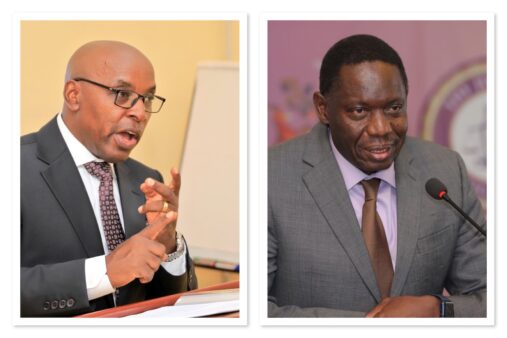
 Unresolved Bank-Client Disputes Climb to UGX 3.5 Tn as Chief Justice Zeija and BoU Governor Atingi-Ego Push for ADR
Income tax expense increased by UGX 58 billion to UGX 193 billion from UGX 135 billion. Total tax charges rose by 43.0 percent largely as a result of higher profit before tax in the current period. The effective tax rate edged up to 30.2 percent from 29.9 percent in the previous financial year.
Capital expenditure excluding leases rose by UGX 8 billion to UGX 252.5 billion from UGX 244.5 billion.
This investment funded the rollout of 258 new sites, the addition of 164 new 5G sites and the extension of 1,600 kilometres of fibre. All network sites are now 4G enabled, while 5G coverage expanded to 364 sites across key towns and cities, strengthening capacity to handle rising data demand.
Net debt increased by UGX 44.9 billion to UGX 1.878 trillion from UGX 1.833 trillion, reflecting ongoing network investments.
However, leverage improved to 1.5 times from 1.8 times because EBITDA grew faster than debt. Lease adjusted leverage improved to 0.6 times from 0.8 times, indicating stronger balance sheet resilience.
Cash generation remained robust. Net cash from operating activities rose by UGX 133.4 billion to UGX 1.013 trillion from UGX 880 billion, showing that the business is generating more internal cash to fund investments and dividends.
Airtel spent UGX 238 billion on investing activities and UGX 582.8 billion on financing activities, largely driven by dividend payments and lease obligations.
The board has proposed a final dividend of UGX 3.55 per share amounting to UGX 142 billion.
This brings the total dividend for the year to UGX 11.15 per share, equivalent to UGX 446 billion, an increase of UGX 131 billion compared to the previous year. The payout broadly matches the UGX 446.9 billion profit after tax, signalling management confidence in cash flow sustainability.
Managing Director Soumendra Sahu said Airtel Uganda has been instrumental in shaping the country’s broadband coverage and usage performance and thanked stakeholders and partners for their support.
“The results demonstrate the strength of our business model and the growing importance of digital connectivity in driving economic participation,” Mr Sahu said, adding that the growth in data customers and usage validates continued investment in network expansion and modernisation.
He noted that the company added 258 4G sites while expanding the number of 5G sites to 364 in major cities and towns like Kampala, Wakiso, Jinja, Mbale, Mityana, Masaka, Lira, Fort Portal, Gulu and Mbarara.
The 5G rollout is aimed at supporting the productive capacity of key sectors including education, health, manufacturing, agro processing and tourism.
Sahu said network quality and service remains a commitment, and that in 2025 the rollout of 258 new 4G sites in rural and peri urban areas greatly improved coverage, data speeds and customer experience.
He said strong technical, human and financial resources have been dedicated to ensure customers enjoy an excellent experience whether on the network, in shops, online, or through self service options such as the MyAirtel app and USSD.
Airtel is set to drive higher data consumption in 2026 by delivering a brilliant network experience; promoting wider smartphone adoption; expanding access to home broadband and strengthening customer experience while welcoming new individuals and businesses into the digital ecosystem.
However, as more digital access and usage grows so do cyber risks, and it is against that background that Airtel pioneered Africa’s first spam fighting service.
The Spam Alert service uses artificial and network intelligence to alert customers whenever spam messages drop into their SMS hence raising awareness, building trust and protecting customers from fraud.”
Sahu explained the company refined its Voice over LTE service and engaged more device partners to broaden access, noting that VoLTE allows customers to make high quality voice calls on the data network without pausing browsing sessions.
He said VoLTE contributes to more than 20 percent of total smartphone voice traffic.
Airtel has also indicated that it will continue to expand its network to support Uganda’s enterprises through Network as a Service offerings including connectivity and network security firewalls that give customers flexibility and ease of management.
The enterprises are expected to focus more on their core businesses while Airtel takes care of end to end ICT needs. The telco was a provider of Network as a Service during the construction of Hoima City Stadium.
Corporate Social Responsibility.
The Airtel Africa Foundation, the telco’s arm for corporate social responsibility partnered with UNICEF Uganda in March 2025 to mark the International Day of Digital Learning and by December 2025 had digitally connected 223 public schools across the country.
On the other hand, cultural and community institutions remain central to Airtel’s transforming lives agenda, citing sustained support for platforms such as the Kabaka Birthday Run and the Masaza Cup in reinforcing relationships with the Buganda Kingdom and supporting public health, unity and talent development initiatives.
Looking ahead, Sahu said the focus remains at delivering outstanding services and products, creating value for shareholders and society.
He said, subject to regulatory approval, Airtel will leverage partnerships with satellite technology firms as it delivers geographical coverage commitments for meaningful digital and financial inclusion for all.